
Written by Frode Skar, Finance Journalist.
Warner Bros Discovery weighs new Paramount Skydance offer while continuing to recommend Netflix agreement
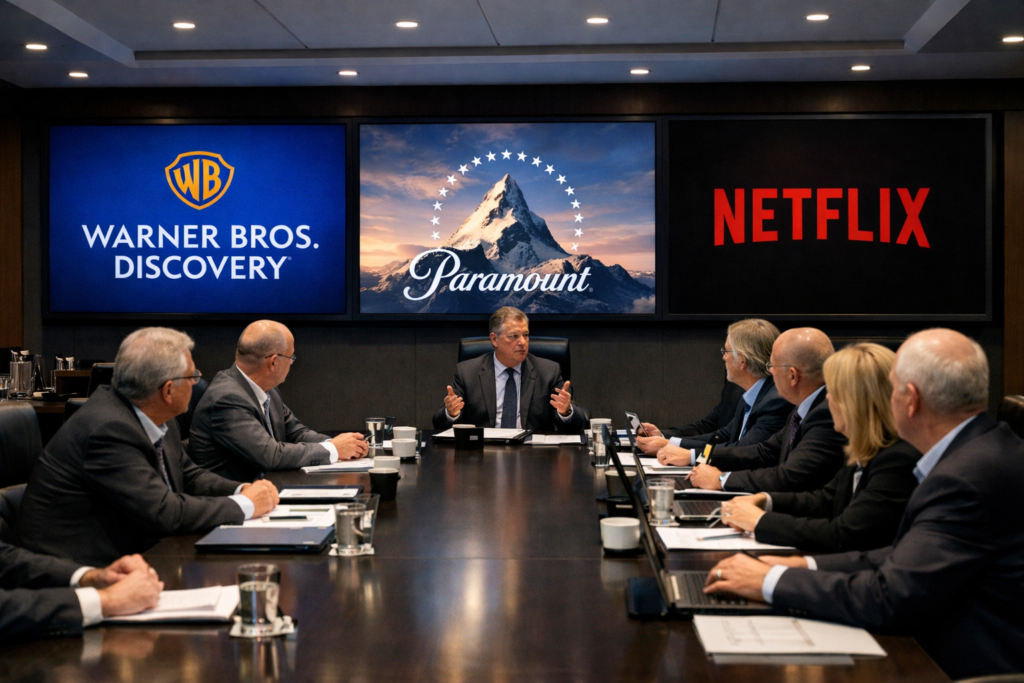
Warner Bros Discovery faces strategic choice between Paramount Skydance bid and Netflix deal ahead of shareholder vote
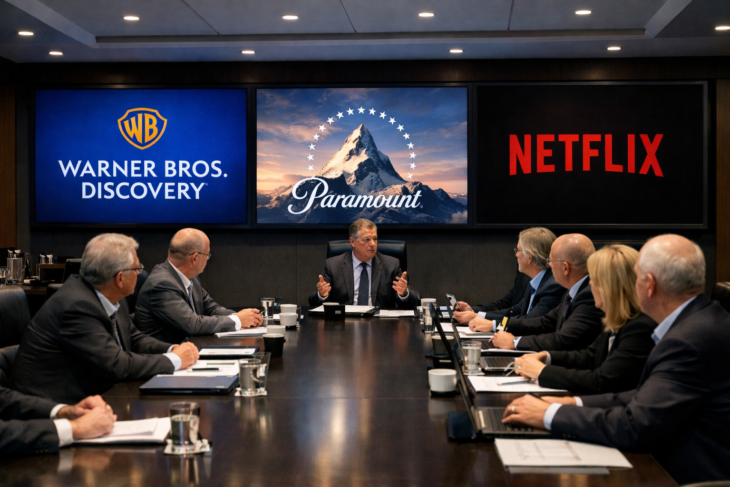
Warner Bros Discovery is at the center of a high stakes corporate battle that could reshape the global media industry. The board is expected to inform shareholders before the market opens that it is taking the new Paramount Skydance offer under review, while still formally recommending the previously signed agreement with Netflix.
The situation highlights the complexity of large scale media consolidation, where valuation, legal commitments and long term strategy must be balanced under intense time pressure.
Warner Bros Discovery caught between two major offers
Netflix has signed an agreement valued at nearly 83 billion dollars to acquire Warner Bros studios and the company’s streaming assets at 27.75 dollars per share in an all cash transaction. Under the structure of the Netflix agreement, shareholders of Warner Bros Discovery would retain equity in Discovery Global, a proposed spin off entity housing CNN, TBS and other linear networks as well as Discovery Plus.
In contrast, Paramount Skydance has submitted a bid reportedly valued at approximately 108 billion dollars for the entirety of Warner Bros Discovery, including its cable channels. Financial details of the revised Paramount Skydance offer have not been fully disclosed, but indications suggest a per share price above 31 dollars.
From a shareholder perspective, the difference between 27.75 dollars and above 31 dollars per share is material, particularly in a capital environment defined by higher interest rates and increased scrutiny of corporate leverage.
Legal constraints shape the board’s flexibility
Even as the board reviews the Paramount Skydance bid, Warner Bros Discovery is legally obligated to recommend the signed Netflix agreement unless specific contractual triggers are met.
If Warner Bros Discovery formally considers the Paramount Skydance offer, Netflix has four days to match or exceed the revised bid. Alternatively, Netflix may choose to withdraw from the process.
Netflix leadership has previously indicated a willingness to walk away rather than overpay for assets. That disciplined capital allocation approach could become decisive if bidding escalates further.
Strategic implications for the global media landscape
The Paramount Skydance bid is backed by significant financial power. Larry Ellison, along with RedBird Capital Partners, supports the transaction. Debt financing is reportedly secured from Bank of America, Citigroup and Apollo Global Management, alongside capital from sovereign wealth funds in Saudi Arabia, Qatar and Abu Dhabi.
This underlines that the Paramount Skydance bid is not only an industrial consolidation move but also supported by global institutional and sovereign capital.
For Warner Bros Discovery, the decision is not purely about headline valuation. It involves:
Strategic control
Long term corporate structure
Regulatory approval risk
Debt management
Future cash flow sustainability
What is truly at stake
The Netflix agreement creates a cleaner structure by consolidating studios and streaming operations while spinning off linear networks. This may allow for sharper capital focus and potentially improved balance sheet management.
The Paramount Skydance bid, on the other hand, implies full integration of Warner Bros Discovery into a larger combined entity. While potential synergies may exist, integration risk and cultural alignment challenges cannot be ignored.
In a media environment where traditional linear television continues to lose ground to streaming, the long term value of cable assets remains a central question.
Shareholder decision ahead of March 20 vote
Warner Bros Discovery shareholders are scheduled to vote on the Netflix agreement on March 20. While the board’s recommendation carries weight, a substantially higher Paramount Skydance bid could influence investor sentiment.
The gap between an 83 billion dollar transaction and a 108 billion dollar offer is significant. However, shareholders must also assess:
Execution risk
Financing certainty
Regulatory scrutiny
Integration complexity
Long term earnings potential
Financial reality check
The media sector has faced pressure following years of aggressive streaming expansion. High content spending, increasing competition and weaker advertising revenue have led to elevated debt levels and restructuring efforts across the industry.
Warner Bros Discovery represents a clear example of this structural transition.
The ultimate question is not only which bidder offers the highest price, but which transaction provides the most credible and sustainable path forward.
Conclusion
Warner Bros Discovery stands at a pivotal moment.
The board is reviewing the Paramount Skydance bid while continuing to recommend the Netflix agreement under existing legal obligations. The next move likely rests with Netflix.
For shareholders, this is a classic trade off between higher valuation and higher execution risk.
In a capital market environment increasingly defined by discipline and risk management, the outcome will be evaluated with strategic and financial rigor.
The decision may redefine competitive dynamics within the global entertainment industry for years to come.