US embassy removes Danish war memorial flags – a diplomatic misstep with political and institutional consequences
Written by Frode Skar Finance Journalist.
Background
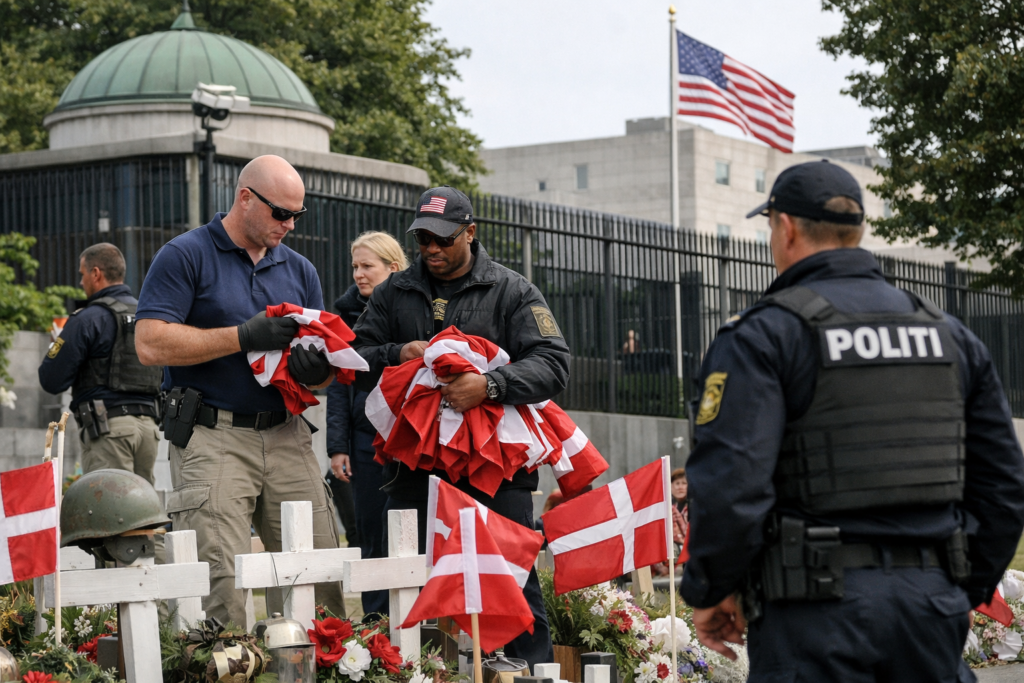
A seemingly minor symbolic incident in Copenhagen has escalated into a broader diplomatic issue between the United States and its European allies. When the US embassy in Denmark removed 44 Danish flags commemorating soldiers killed during the war in Afghanistan, the reaction was immediate and intense among Danish veterans and political figures.
The flags were intended to honour Danish soldiers who lost their lives as part of NATO operations following the September 11 attacks in 2001. What might have appeared as a local misunderstanding has instead exposed deeper tensions surrounding alliance politics, recognition of sacrifice, and the current state of transatlantic trust.
What happened
The 44 flags were placed outside the US embassy in Copenhagen to highlight Denmark’s contribution and losses during the NATO-led mission in Afghanistan. According to Danish reservists and veterans, embassy officials removed the flags, triggering widespread criticism.
The US embassy later stated that there was no ill intent behind the removal and claimed that the flags would have remained had the initiative been known in advance. Despite this explanation, the incident has already caused reputational damage. In diplomacy, symbolic gestures carry significant weight, and the removal was widely perceived as dismissive toward allied sacrifices.
Trump’s remarks amplify the controversy
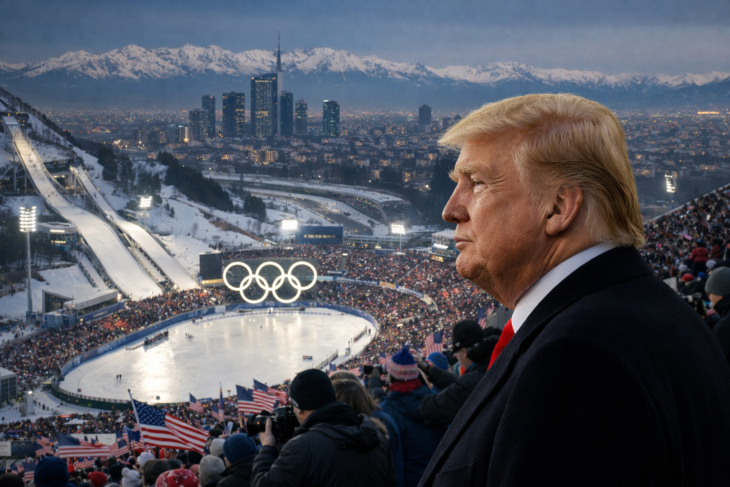
The incident gained further traction following comments made by Donald Trump at the World Economic Forum in Davos. Trump asserted that the United States had never truly needed its NATO allies and downplayed their military contributions, including those in Afghanistan.
These statements sharply contradict documented facts. Danish forces operated in frontline combat roles, and more than 450 British soldiers were killed during the conflict. As a result, Trump’s remarks were received as inaccurate and disrespectful, particularly among veterans and policymakers in Europe.
Institutional trust and alliance credibility
The episode highlights a broader challenge facing the transatlantic alliance: erosion of institutional trust. NATO is built not only on treaties and military capabilities, but also on mutual recognition of risk-sharing and sacrifice.
When allied contributions are minimised—whether through symbolic actions like the removal of memorial flags or through political rhetoric—the foundations of collective security are weakened. For many European states, this reinforces arguments for greater strategic autonomy and reduced reliance on the United States.
Strategic and economic implications
Even symbolic diplomatic disputes can carry strategic and economic consequences. Defence cooperation, security commitments, and geopolitical stability are critical variables in long-term investment decisions. Persistent friction among allies can influence defence spending priorities, joint procurement programmes, and industrial cooperation in the security sector.
For Denmark and the United Kingdom, the controversy also raises questions about the political return on military engagement. When human and financial costs are not acknowledged by a leading ally, domestic support for future international operations may erode.
Political and market reactions
Reactions in Denmark and the UK have been sharp. Veterans have expressed anger and disappointment, while British leaders described Trump’s comments as insulting and unacceptable. These responses signal that the issue extends beyond emotion and into the realm of formal political relations.
From a market perspective, the incident adds to a growing list of signals pointing toward increasing unpredictability in US alliance management. Alongside withdrawals from international agreements, such episodes contribute to perceptions of a less reliable transatlantic framework.
Risk and analysis
The principal risk lies in the normalisation of such incidents. If allies repeatedly experience perceived disrespect or dismissal, their willingness to contribute to future collective security efforts may diminish. Over time, this could fragment Western security structures.
At a broader level, episodes like this weaken the United States’ role as a unifying force within NATO. Symbolic actions and rhetoric that suggest unilateralism place additional pressure on Europe to develop independent military and institutional capabilities.
What this means going forward
The removal of Danish war memorial flags in Copenhagen is, on its own, a small event. However, it reflects deeper structural shifts in transatlantic relations. For Denmark, the UK, and other NATO members, the incident raises fundamental questions about loyalty, respect, and reciprocity within the alliance.
For the United States, it serves as another example of how symbolic diplomacy and political rhetoric can generate unintended strategic costs. In an increasingly unstable global environment, the loss of trust among close allies may prove to be a costly miscalculation.