

Written by Frode Skar, Finance Journalist.
PlayStation 6 May Be Delayed to 2029 Amid Global Memory Crisis
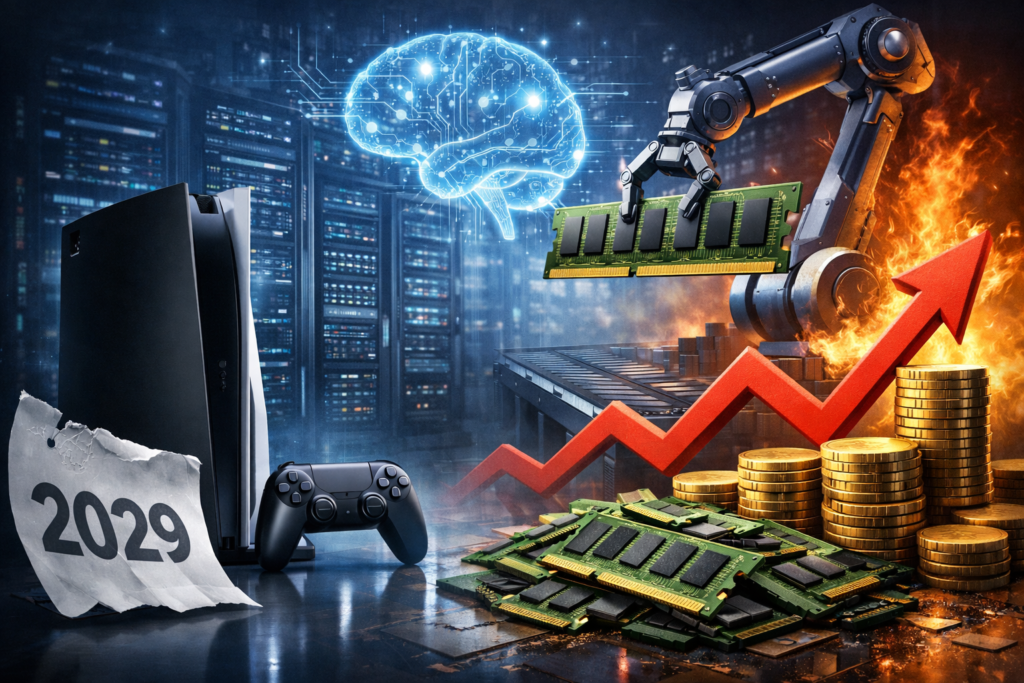
PlayStation 6 May Be Delayed to 2029 as RAMmageddon Disrupts Tech Supply Chains
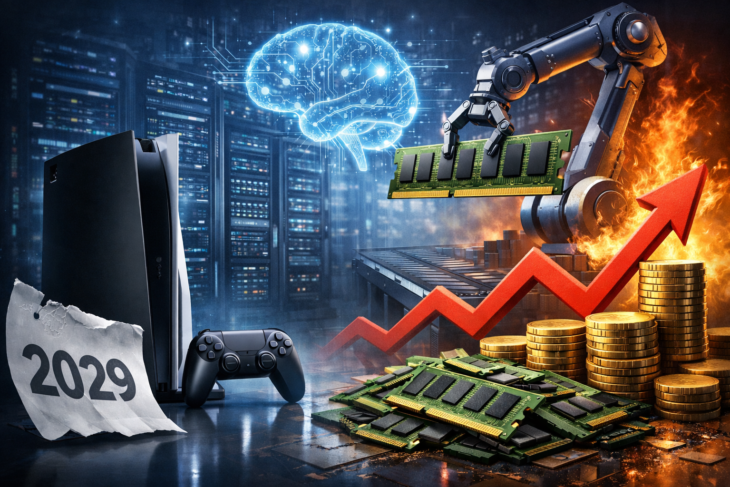
Sony is reportedly reconsidering the launch timeline of its next generation console, with industry sources suggesting the PlayStation 6 may be delayed to 2029 due to escalating memory shortages. If confirmed, this would make the current PlayStation 5 cycle the longest console generation in modern gaming history.
The PS6 had previously been expected around 2027, in line with traditional six to seven year hardware cycles. However, a global surge in demand for memory chips, particularly DRAM, is reshaping production economics across the technology sector.
One category of DRAM reportedly increased 75 percent in price within a single month. Analysts have begun referring to the situation as RAMmageddon, reflecting both the speed and scale of the disruption.
AI Data Centers Are Crowding Out Consumer Electronics
The primary reason the PlayStation 6 may be delayed to 2029 is not weak demand for gaming hardware, but intense competition for memory components. Major technology companies including Google, Amazon and Meta are purchasing vast quantities of high performance memory to power artificial intelligence infrastructure.
AI data centers require large scale memory capacity, and suppliers are prioritizing these higher margin enterprise buyers over consumer electronics manufacturers. This has created a structural imbalance in global semiconductor supply chains.
From a capital allocation perspective, manufacturers are directing limited production capacity toward segments offering higher returns. Gaming consoles, smartphones and laptops are therefore facing supply constraints and rising input costs.
The Longest Console Generation in History
If the PlayStation 6 may be delayed to 2029, the PS5 generation would stretch close to a decade. Historically, console refresh cycles have been carefully timed to maintain hardware momentum, stimulate software sales and reengage consumers.
A prolonged cycle carries mixed implications. Developers benefit from longer optimization windows, while platform holders reduce the risk of launching into a high cost component environment. However, delayed innovation could reduce hardware upgrade enthusiasm among core gamers.
For Sony, postponing the PS6 could represent a strategic move to protect margins rather than introducing a new console during peak memory inflation.
Broader Impact Across the Gaming Industry
Sony is not alone. Reports suggest Nintendo is evaluating potential price increases for its upcoming Switch 2 model as memory costs rise. If DRAM prices continue climbing, the entire gaming hardware sector could face either higher retail prices or postponed release schedules.
The fact that the PlayStation 6 may be delayed to 2029 underscores how AI infrastructure is now competing directly with consumer technology for semiconductor resources. Gaming companies are no longer only competing for market share, but for chip allocation.
Industry Leaders Warn of Structural Shortage
Executives across the technology industry have warned that the imbalance between memory supply and demand is not temporary. Major corporations including Apple and Tesla have indicated that component shortages may limit production capacity in the coming quarters.
Some semiconductor equipment leaders describe the current environment as more severe than previous cyclical downturns. Analysts warn that memory pricing may continue accelerating sharply, benefiting producers such as Samsung, SK Hynix and Micron, while squeezing margins for downstream electronics manufacturers.
If the PlayStation 6 may be delayed to 2029, it would signal that data center expansion is fundamentally reshaping the economics of consumer hardware.
Winners and Losers in the Memory Surge
For memory manufacturers, the surge represents a period of elevated profitability. For console makers, it introduces cost volatility and strategic uncertainty.
Modern gaming consoles rely heavily on high speed memory to deliver advanced graphics and processing performance. If DRAM prices double or triple, companies must choose between raising retail prices or absorbing lower margins.
In that environment, delaying a launch until component pricing stabilizes may be financially prudent.
A Structural Shift in the Technology Landscape
The memory shortage reflects a broader transformation in the technology ecosystem. Artificial intelligence workloads are consuming semiconductor capacity at a rate that traditional consumer markets cannot match.
As a result, hardware life cycles across smartphones, PCs and gaming consoles may lengthen in coming years. Investment flows are increasingly concentrated around AI infrastructure rather than consumer upgrades.
The PlayStation 6 may be delayed to 2029 not merely as a gaming industry adjustment, but as a signal of shifting priorities in the global semiconductor economy.