Written by Frode Skar, Finance Journalist.
Nintendo shares plunge after Switch 2 profitability disappoints
Market backlash to weaker margins
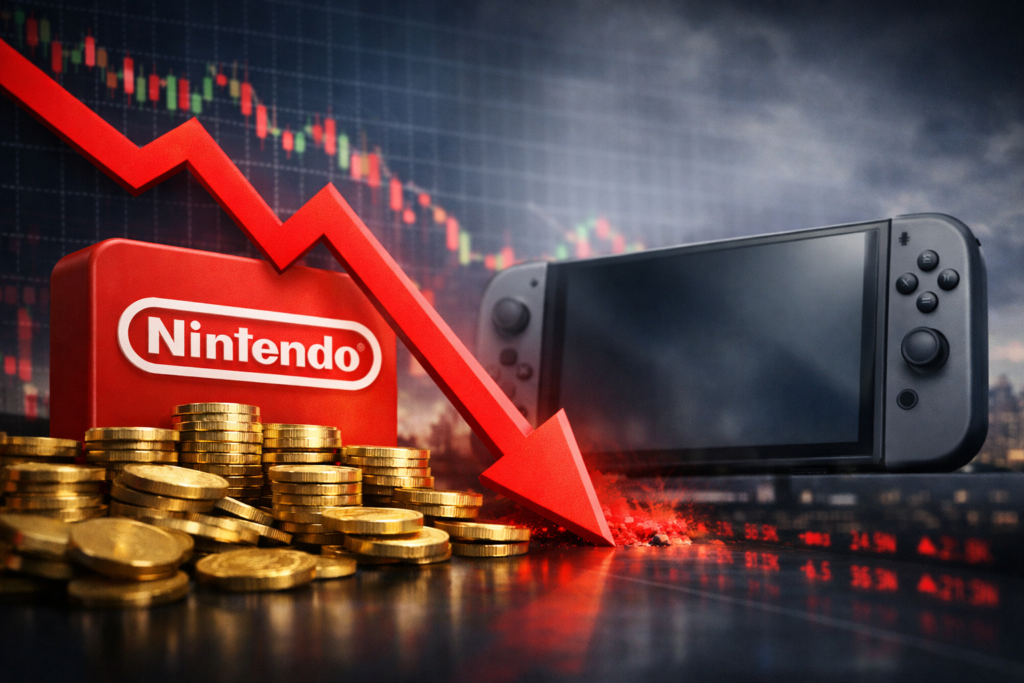
Nintendo shares fell as much as eleven percent in Tokyo after the company reported earnings that revealed significantly weaker profitability than expected. The decline marked the steepest drop in eighteen months and came despite a strong start for the Switch 2 in terms of unit sales.
The results shifted investor attention away from headline sales figures and toward margins, cost structure and long term earnings power. For a company traditionally rewarded for stability and disciplined execution, the reaction signaled a clear change in market sentiment.
Component costs and global disruption
The core challenge lies on the cost side. Prices for memory chips and other key components have risen sharply, affecting much of the consumer electronics industry. This trend is largely driven by heavy global spending on artificial intelligence hardware, which has tightened supply chains and pushed up prices.
At the same time, Nintendo is dealing with broader global disruptions, including the impact of US tariffs. Management confirmed it is engaged in long term discussions with suppliers to secure stable access to components, but acknowledged that sustained price pressure could weigh on profitability from the next fiscal year onward.
Strong sales, weaker earnings
Switch 2 sales reached about 7.01 million units in the December quarter, exceeding analyst expectations. Cumulative sales since launch are already close to levels that make Nintendo’s full year forecast of 19 million units by the end of March appear conservative.
Yet this sales momentum did not translate into comparable profit growth. Operating income rose only 23 percent, well below market expectations, despite revenue surging more than 80 percent. The shortfall was driven by lower hardware margins and a weaker contribution from software.
Software becomes the key issue
Analysts increasingly argue that the main concern is not hardware costs alone, but insufficient software performance. Historically, Nintendo has relied on high margin first party games to offset thin margins on consoles.
This time, software sales tied to the Switch 2 have lagged the rapid expansion of the installed base. That imbalance has raised doubts about Nintendo’s ability to fully monetize its growing user base.
Competition for player attention is also intensifying. Mobile titles and platforms such as Roblox are capturing a growing share of younger gamers, fragmenting engagement. Meanwhile, major releases from rivals, including the expected launch of Grand Theft Auto 6, threaten to absorb both time and spending later this year.
Price hikes considered, but risky
Nintendo executives acknowledged that a price increase for the Switch 2 is a possibility if memory prices remain elevated. At the same time, management emphasized caution. Higher prices could protect margins, but risk slowing demand in an increasingly competitive and price sensitive market.
In Japan, Nintendo deliberately priced the console lower to accelerate adoption. While this strategy boosted volumes, it also meant that lower margin domestic sales accounted for a larger share of holiday quarter revenue.
A strategic inflection point
The current situation highlights a structural dilemma for Nintendo. The company has long embraced a patient development philosophy, prioritizing polish and quality over rapid release cycles. That approach has built some of the most valuable franchises in gaming and a deeply loyal fan base.
However, the industry is moving faster. Player attention is more fragmented, competition for screen time is fiercer and cost pressures are more intense. This puts strain on a model that depends heavily on consistent blockbuster software to sustain profitability.
Investor focus going forward
Nintendo maintained its full year guidance for revenue and operating profit, a sign of confidence in its pipeline. The market response suggests investors want clearer evidence that margins can be defended as component costs rise.
Attention will now center on upcoming software releases and Nintendo’s ability to drive high margin revenue per console. Without that, Switch 2 risks becoming a volume success with weaker returns than its predecessor.
Strategic assessment
The sharp share price reaction underscores that investors are no longer satisfied with strong unit sales alone. For Nintendo, the next phase will be defined by its ability to convert hardware momentum into profitable software growth.
If software sales accelerate and cost pressures ease, the current sell off may prove excessive. If not, Switch 2 could mark the beginning of a period of structurally lower profitability for one of the gaming industry’s most iconic companies.