


Written by Frode Skar, Finance Journalist.
NATO deploys to Greenland to keep Trump onside
NATO Greenland Trump and the political logic behind the Arctic push
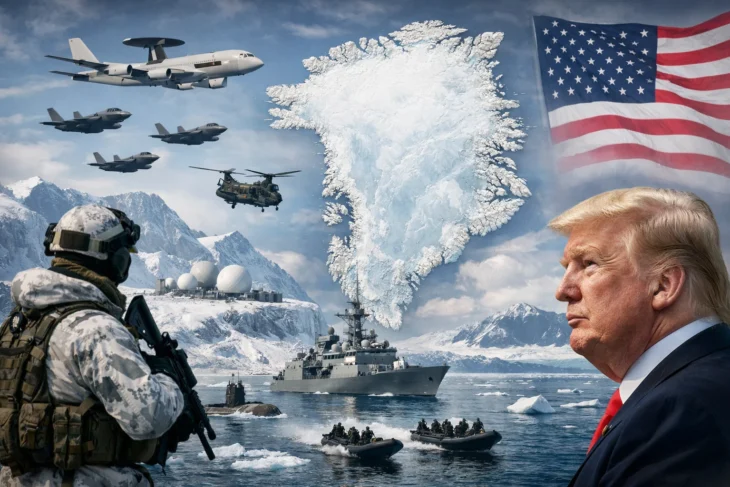
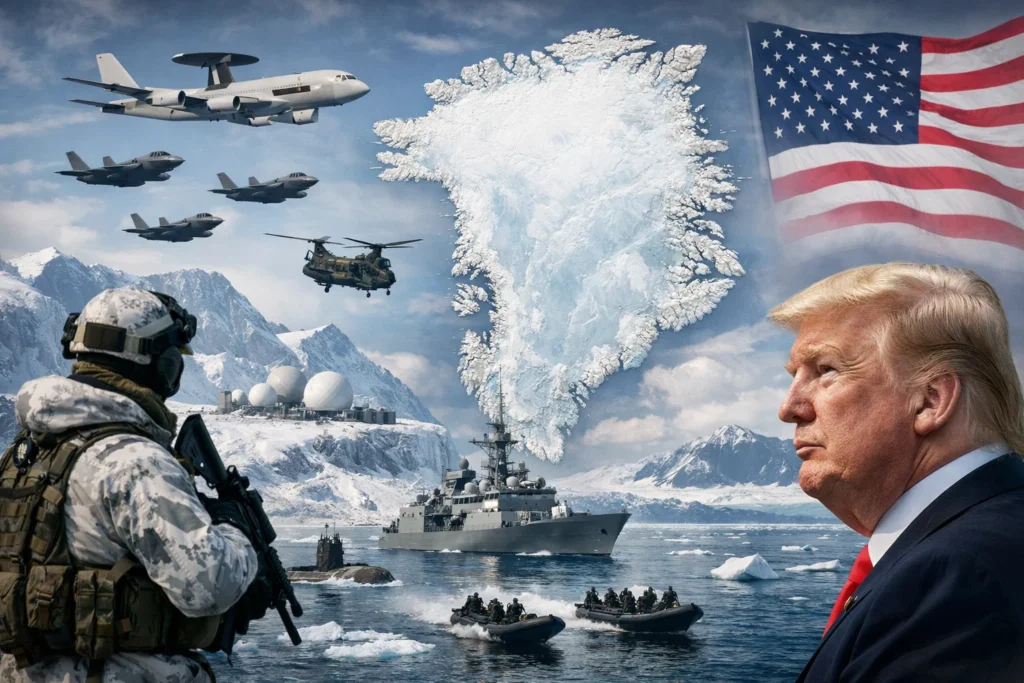
NATO is expanding its footprint in the Arctic with a new initiative officially framed as a security upgrade. In practice, diplomats and analysts say the move is driven far more by alliance politics than by immediate military necessity. The effort is widely seen as an attempt to reassure US President Donald Trump following his earlier threats to take control of Greenland.
The initiative, branded Arctic Sentry, is presented as a response to growing Russian and Chinese interest in the high north. Internally, however, it is described as a largely symbolic rebranding of existing activities, prompted by sustained pressure from Washington rather than a clear shift in the threat environment.
Trump pressure reshaped NATO’s Arctic agenda
Trump’s refusal earlier this year to rule out the use of force to acquire Greenland marked a turning point for many European allies. For several governments, the episode reinforced the perception of the United States as a more unpredictable and transactional partner.
That concern now hangs over alliance discussions. According to NATO officials, the aim of increasing visibility in the Arctic is to demonstrate to the White House that allies take Greenland’s security seriously, reducing the risk that Trump questions NATO’s relevance or America’s commitment to it.
Arctic Sentry as a political signal
NATO leaders have justified Arctic Sentry by pointing to Russia’s military activity and China’s expanding interest in the region. Secretary General Mark Rutte has argued that doing more in the high north is necessary to protect alliance territory and deter future challenges.
Privately, many diplomats acknowledge that the threat is overstated. NATO already enjoys overwhelming military superiority in the Arctic, supported by US capabilities and long standing allied experience operating in extreme conditions.
Experts dismiss the need for major new deployments
Security specialists say NATO does not face a capability gap in the Arctic. The United States can deploy substantial forces from Alaska to Greenland within hours, and the alliance regularly conducts large scale exercises in cold weather environments.
From this perspective, the challenge is primarily one of communication rather than defense. The emphasis is on signaling unity and resolve, not on establishing permanent new bases or large troop formations. Stationing additional forces in Greenland on a long term basis is widely viewed as expensive and unnecessary.
A largely exaggerated threat picture
Washington has cited a range of potential future risks to Greenland, including Russia’s icebreaker fleet, hypersonic missiles and closer Russian Chinese cooperation, as well as melting sea ice opening new shipping routes.
Arctic experts argue that these concerns do not fundamentally alter the security balance. New commercial shipping lanes primarily benefit routes along Russia’s northern coast, not near Greenland. Icebreakers have limited military value and are easy to track, while Chinese involvement in the Arctic is seen as largely symbolic rather than operational.
Where the real military risk lies
The most credible military challenge from Russia is not around Greenland but in the European Arctic. Russia’s Northern Fleet, based on the Kola Peninsula, includes several nuclear armed submarines and remains a strategic concern.
Even there, analysts say NATO holds a clear advantage. Since launching its full scale war against Ukraine, Russia has lost much of its ground force presence in the far north, with rebuilding expected to take many years. At the same time, NATO has strengthened maritime surveillance through new patrol aircraft, while Sweden and Finland joining the alliance has significantly reinforced its Arctic posture.
NATO Greenland Trump and fears of alliance fragmentation
For many allies, the political calculation outweighs military considerations. Several diplomats argue that the cost of expanded exercises and symbolic deployments is minor compared with the risk of further alienating Trump and destabilizing the alliance.
In this light, Arctic Sentry functions as a form of insurance. If the price of keeping NATO together is a handful of ships, aircraft and occasional troop deployments, some see that as a reasonable trade.
Greenland’s future as a strategic variable
Another concern within NATO is Greenland’s long term political trajectory. If the island were to become independent and, in theory, choose to leave NATO, it could become more exposed to external influence.
By increasing its engagement now, NATO aims to maintain awareness and presence in a strategically critical area regardless of future political developments involving Denmark and Greenland.
Limited military value, high symbolic impact
Initially, Arctic Sentry will place existing exercises under NATO’s joint command. Over time, it could expand to include more air and maritime patrols and possibly a more permanent coordination structure. Still, there is broad agreement among experts that a standing force in Greenland would deliver limited security benefits.
Continuous operations in Arctic waters are costly and risky, especially near Russian controlled territory where support infrastructure is sparse. A permanent presence could even increase tensions without delivering proportional strategic gains.
Costs weighed against political returns
Former NATO leaders have warned against permanent deployments in Greenland, citing high costs and weak justification under current conditions. Yet diplomats acknowledge that the alternative could be worse.
For some allies, the conclusion is pragmatic. If increased NATO activity in the Arctic helps keep the United States engaged and prevents deeper fractures within the alliance, the measures may be justified even if their military value is modest.
An alliance managing its own cohesion
NATO’s Arctic initiative highlights a defining feature of today’s security landscape. Alliance decisions are shaped not only by external threats but also by internal political dynamics.
In the case of NATO Greenland Trump, Arctic Sentry appears less as a response to a concrete military danger and more as an effort to manage relations with the alliance’s most powerful member. It underscores a reality in which symbolism, messaging and internal cohesion matter as much as traditional deterrence.