Written by Frode Skar, Finance Journalist.
Modern Milkman expands deliveries to collect unwanted electronics and toys
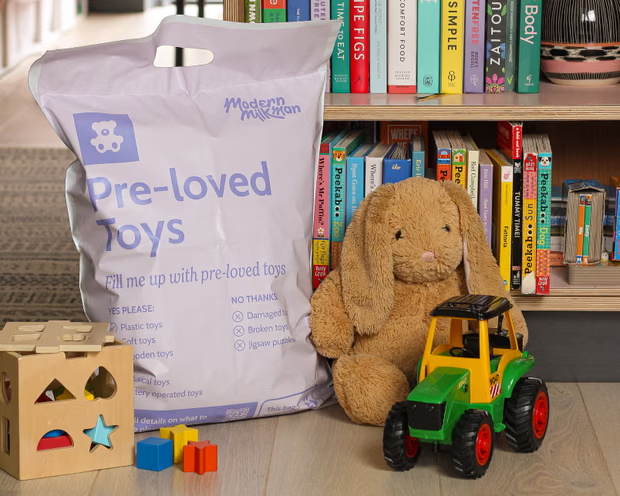
New add on services aim to strengthen profitability and sustainability in a crowded grocery market
The UK based grocery delivery company Modern Milkman is taking a new strategic step to expand its business model by collecting unwanted or broken electronic items and toys alongside regular milk and grocery deliveries.
The initiative comes at a time when grocery delivery firms face intense competition, tighter margins and rising pressure to differentiate their services. By combining food logistics with waste collection, Modern Milkman is seeking to create a broader value proposition while addressing the growing problem of electronic waste.
Paid collection of small electronics and toys
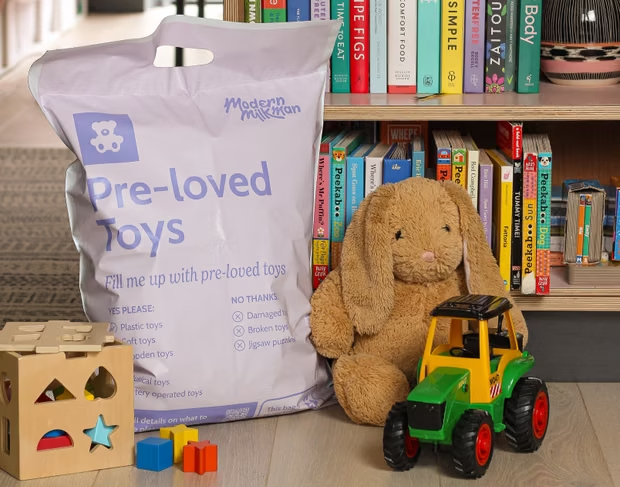
Under the new scheme, customers can request a dedicated collection bag that is delivered and picked up during routine grocery drops. Consumers are charged £2.50 per bag. The collected items are passed on to recycling specialist EMR Group, which will either repurpose usable components or recycle materials responsibly.
The service focuses on smaller household items such as old mobile phones, laptops, chargers, cables and broken toys, products that often remain unused in homes due to the inconvenience of disposal.
Growing stockpiles of unused tech in UK households
According to figures from non profit organisation Material Focus, British households now hold an average of around 30 broken or unused tech items each, up from roughly 20 just four years ago.
Britain generates an estimated two million tonnes of electronic waste every year. While retailers are required to offer take back schemes and some councils provide kerbside collections, disposing of small electronics remains inconvenient for many consumers.
Modern Milkman believes this gap has created demand for a simple, doorstep solution.
A strategy focused on added value rather than rapid expansion
Founder and chief executive Simon Mellin has described the initiative as part of a broader strategy to deepen customer relationships rather than pursue aggressive growth.
The collection service has already been trialled in four regions and will now be rolled out across the company’s wider operations. Mellin has also indicated that the business is exploring future collection services for other waste streams, including soft plastics and textiles.
The aim is to increase the relevance of Modern Milkman in customers’ daily lives while aligning the brand more closely with sustainability focused services.
A decentralised delivery model built on local suppliers
Founded in 2019, Modern Milkman operates through a network of local independent suppliers and franchisees. The business currently covers around 40 percent of the UK and delivers groceries to more than 100,000 households, with operations spanning cities such as Newcastle, Preston, Blackburn, London and Bristol.
The decentralised model provides flexibility and local engagement, but also requires careful management of logistics and costs to maintain profitability.
Volatility following the pandemic delivery boom
Like many delivery businesses, Modern Milkman experienced sharp swings in demand during and after the pandemic. Home delivery volumes surged during lockdowns before easing as consumers returned to physical shopping and faced rising living costs.
Despite these challenges, the company has reported continued sales growth in the UK, supported by geographic expansion and the introduction of new services. However, profitability has remained under pressure.
Expansion in the US alongside continued losses
Modern Milkman has also expanded into the United States through the acquisition of smaller local delivery businesses in states including Connecticut, Massachusetts, Rhode Island, Ohio and New York. Management says the US operations are growing rapidly, though they remain at an early stage.
Group revenue rose 13 percent to £52 million in 2024, driven largely by US expansion, but the company reported a pre tax loss of £6.3 million, an improvement from the previous year. Sales rose by around 20 percent last year, supported in part by the launch of a customer loyalty scheme.
Grocery delivery faces structural change
The move highlights broader structural shifts across the grocery delivery sector. Since the pandemic, competition has intensified while margins have come under pressure from inflation and higher operating costs.
Several rapid delivery specialists have exited the market, while major supermarket chains have strengthened their own delivery capabilities or partnered with large platforms.
In this environment, niche services and add ons are increasingly becoming a key competitive lever.
Sustainability as a commercial tool
Modern Milkman’s electronics collection service illustrates how sustainability is increasingly being used as a commercial strategy rather than purely a branding exercise. By charging for waste collection, the company creates a new revenue stream while lowering barriers for consumers to recycle responsibly.
At the same time, the service makes use of existing delivery routes, improving efficiency and potentially strengthening customer loyalty.
Small services with strategic impact
While electronics collection is unlikely to become a core revenue driver on its own, the initiative may carry broader strategic significance. It embeds Modern Milkman more deeply into household routines and increases the utility of its logistics network.
In a sector characterised by slim margins and rising expectations around convenience and environmental responsibility, such incremental services could prove decisive for long term survival.