Written by Frode Skar, Finance Journalist.
Minneapolis protests push Trump’s America toward a breaking point
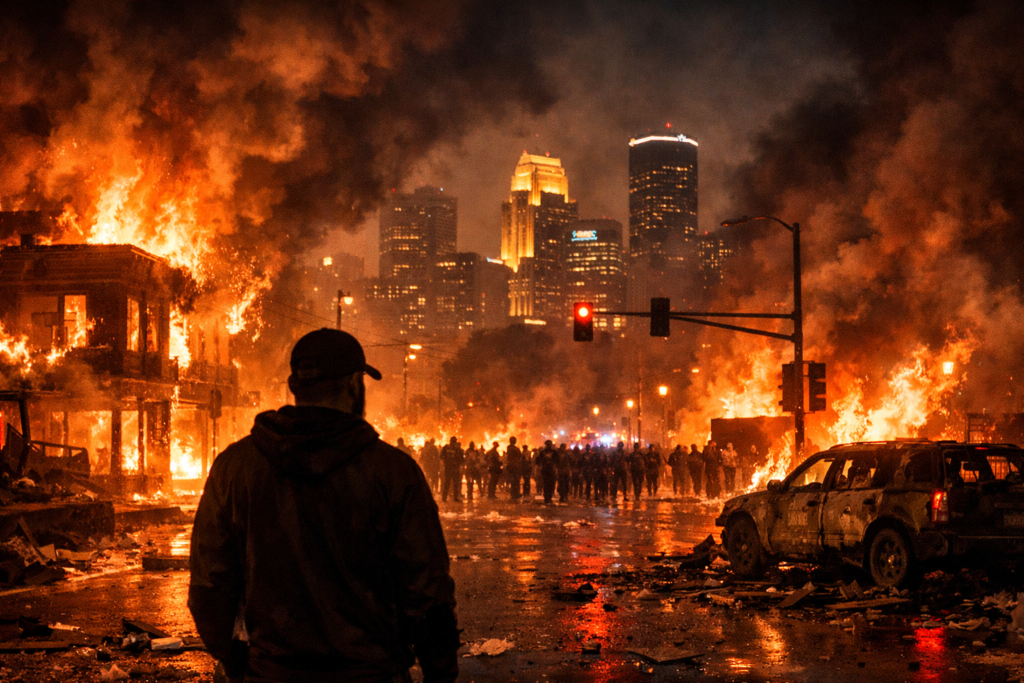
Minneapolis has once again become a flashpoint for national unrest in the United States. Two fatal incidents involving federal immigration agents within less than three weeks have triggered protests, political backlash and renewed questions about the direction of the country under President Donald Trump.
The images emerging from the city evoke memories of 2020 and the killing of George Floyd. Yet the current crisis differs in one crucial respect. This time, it is not local police at the center of the controversy, but heavily armed federal immigration forces operating under a White House that has deliberately militarised immigration enforcement.
Two deaths that reignited the streets
The latest wave of protests followed the killing of Alex Pretty, a 37 year old man shot dead by federal border and immigration agents during an operation in Minneapolis. His death came just days after another demonstrator, René Gou, was killed under similar circumstances.
Video footage widely shared online shows Pretty filming an immigration raid targeting a migrant. A confrontation follows. He is sprayed with tear gas, forced to the ground and disarmed. Moments later, multiple shots are fired while he lies on the pavement. Pretty was an intensive care nurse at a veterans hospital and legally carried a firearm.
Federal authorities have described the shooting as self defence. That explanation has been sharply disputed by witnesses, legal experts and civil rights advocates. Two federal agents were suspended, a response many critics argue falls far short of accountability.
Federal force in democratic cities
Minneapolis is governed by Democrats and sits in Minnesota, a traditionally blue state surrounded by more conservative territory. This has made it a symbolic target in Trump’s confrontation with so called sanctuary cities, municipalities that limit cooperation with federal immigration authorities.
Mayor Jacob Frey has openly stated that the city will not enforce federal immigration law. The White House has responded by accusing local leaders of endangering public safety and undermining national sovereignty.
The scale of the federal operation has alarmed observers. According to critics, the number of immigration agents deployed was several times larger than the local police force. The tactics were overtly militarised, involving masked officers, assault style weapons and daytime raids in residential areas.
Political backlash and a tactical retreat
Initial reactions from the Trump administration were uncompromising. Officials framed the incidents as domestic threats and offered unconditional support to the agents involved. Within days, however, the tone shifted.
Opinion polling showed declining approval for both immigration enforcement agencies and the president himself, including among conservative voters. Facing growing pressure, the administration softened its rhetoric, replaced senior operational leadership and reduced the intensity of raids.
Trump has nevertheless insisted that his immigration agenda remains intact. The crackdown on undocumented migrants, he has said, will continue.
The business of enforcement
Behind the political confrontation lies a powerful financial dimension. Under Trump, the budget of the Department of Homeland Security has nearly doubled. Immigration enforcement has become the most generously funded federal operation in the country.
This expansion has created a lucrative ecosystem of private contractors. Detention, transportation, surveillance and deportation are increasingly handled by commercial firms operating under federal contracts worth hundreds of billions of dollars.
Among the companies drawing scrutiny is the French consultancy Capgemini, whose US subsidiary has been linked to contracts involving the tracking and identification of migrants. Performance based payment structures have raised ethical concerns about financial incentives tied directly to arrests and deportations.
Emergency powers and bypassed oversight
The administration has designated illegal immigration a national emergency. This classification allows authorities to bypass standard public procurement rules, awarding contracts without open tender.
Critics argue that this has blurred the line between public authority and private profit. Several senior figures within the administration have backgrounds in private security or lobbying, reinforcing accusations that policy is being shaped by commercial interests rather than public accountability.
Visa freezes and global consequences
The domestic crackdown has been matched by sweeping restrictions on legal migration. Visa processing has been frozen for citizens of 75 countries, including both adversaries and long standing US allies. Asylum applications, family reunification and the green card lottery have all been suspended.
The White House says more than 100,000 visas have been revoked and thousands deported. For the first time in half a century, the United States is experiencing net emigration rather than immigration.
The repercussions extend well beyond US borders. Countries in Africa, the Middle East and Asia report rising anxiety among families, students and sports supporters. Even international events such as the upcoming football World Cup are being overshadowed by uncertainty over entry rules.
Minneapolis and the shadow of George Floyd
The symbolism of Minneapolis is unavoidable. George Floyd’s killing in 2020 sparked a global reckoning on race, policing and power. Yet many observers argue the present moment reflects a deeper shift.
Where the Black Lives Matter movement mobilised millions, today’s response is more fragmented. Fatigue, polarisation and institutional distrust have dulled the national reaction. For many Americans, the sense is that the threshold for state violence has moved.
A collapse of trust and soft power
Artists, academics and former political leaders have warned that the events in Minneapolis are accelerating the erosion of American credibility abroad. Statements from figures such as Barack Obama and reactions across cultural and diplomatic circles point to a rapid decline in US soft power.
The United States is increasingly perceived not as a stabilising democratic model, but as a country turning inward, reliant on force and spectacle rather than consensus and legitimacy.
A warning sign for American democracy
The deaths in Minneapolis are about more than immigration enforcement. They highlight a broader crisis in governance, where loyalty is prioritised over competence and federal power is deployed against domestic populations.
The question facing the United States is no longer whether it is deeply divided, but how close it is to a structural rupture between state authority and public consent. Minneapolis may not be an isolated episode, but an early signal of a country drifting further from its democratic foundations.