Written by Frode Skar, Finance Journalist.
McDonald’s lifts sales by courting value focused customers
McDonald’s value strategy delivers growth while shifting risk to franchisees
McDonald’s reported solid sales and profit growth in the final quarter of the year after doubling down on low priced meal deals aimed at increasingly price sensitive consumers. At the same time, the fast food giant signaled a pullback in financial support for franchisees tied to these promotions, a move that shifts more cost pressure onto local operators.
Comparable sales at US restaurants open for at least a year rose 6.8 percent in the quarter, while global same store sales increased 5.7 percent. The performance stands out in a restaurant sector that has struggled with slowing demand as years of menu price increases have weighed on household budgets.
Price pressure reshapes consumer behavior
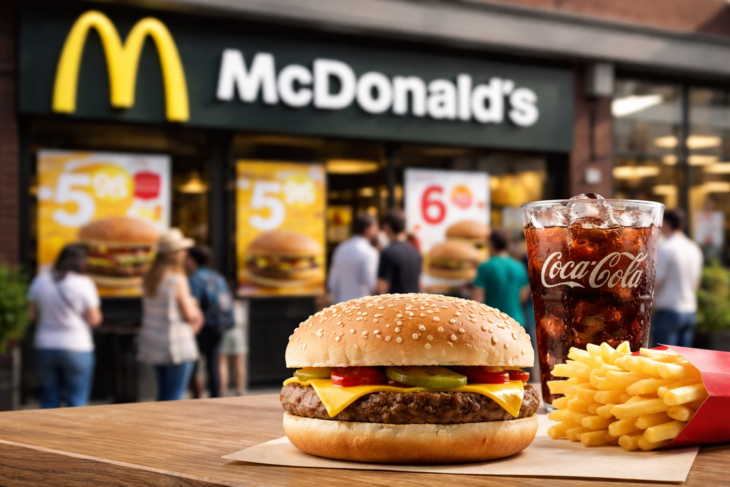
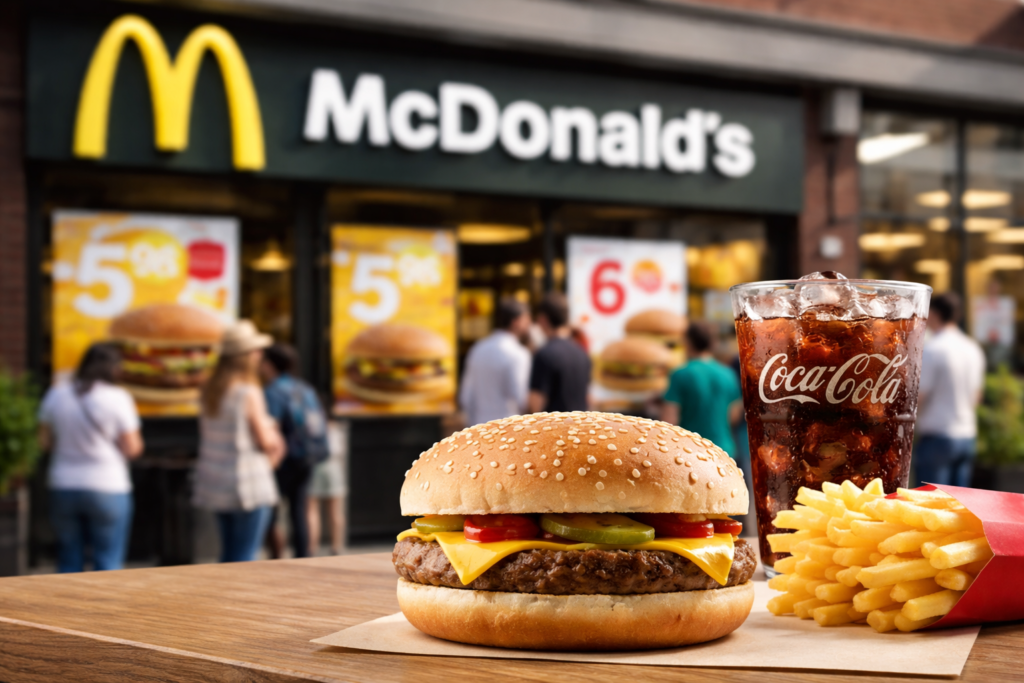
After sustained price hikes across burgers, burritos and chicken products, many lower income consumers and parts of the middle class have reduced how often they eat out. McDonald’s has responded by leaning heavily into value oriented meals, offering combinations designed to keep headline prices low and traffic flowing.
Chief executive Chris Kempczinski told investors that traffic trends diverged sharply by income group. Higher income customers continued to visit restaurants at stable rates, while lower income consumers proved far more sensitive to affordability. In December, McDonald’s gained market share among these value focused customers, according to management.
The strategy reinforces McDonald’s positioning as a defensive name in a more fragile consumer environment, where price clarity and perceived value increasingly determine where people choose to spend.
Promotions amplify volume
Sales were also supported by high visibility marketing campaigns. The return of the Monopoly promotion and a limited time Grinch themed meal helped drive customer traffic during the quarter.
The Grinch campaign included branded socks and generated unexpected volume. Executives said McDonald’s briefly became the world’s largest seller of socks by unit volume, moving around 50 million pairs globally in the early days of the promotion. The campaign highlights how the company pairs low prices with novelty to stimulate impulse purchases.
Margin pressure beneath the surface
Discount driven growth comes at a cost. Labor expenses, beef prices and other inputs remain elevated. To support franchisees offering value meals, McDonald’s spent roughly 75 million dollars in the fourth quarter to cover part of the associated costs.
Around 93 percent of McDonald’s restaurants worldwide are owned by franchisees. These operators face rising wages, higher food costs and ongoing fees paid to the parent company, leaving margins under pressure even as sales volumes improve.
McDonald’s steps back from subsidies
Looking ahead, McDonald’s plans to significantly reduce and ultimately end financial support for value meal pricing. Management argues that franchisees now have sufficient cash flow to sustain the strategy without direct subsidies.
Kempczinski described the support as temporary and targeted, stressing that McDonald’s does not subsidize menu pricing on a permanent basis. Financial support will continue in a limited form through the first quarter, focused on restaurants with negative cash flow, before ending entirely.
Chief financial officer Ian Borden said franchisees will ultimately decide how to proceed once support expires, but added that the economics of the national value meal platform remain compelling.
Risk shifts to local operators
The withdrawal of subsidies places greater responsibility on franchisees to assess whether higher traffic offsets thinner margins. While increased volume can lift overall revenue per restaurant, profitability will vary by location and local cost structure.
For McDonald’s corporate results, the picture is more favorable. Global revenue, including franchise fees, rose 10 percent in the quarter to 7 billion dollars. Net income increased 7 percent to 2.2 billion dollars.
The stock market has rewarded the approach. McDonald’s shares are up 4.7 percent over the past year, while restaurant chains that resisted discounting have seen sharp declines, with some peers down more than 30 percent.
A signal to the wider restaurant industry
McDonald’s performance underscores a broader shift across the sector. In an environment marked by high interest rates, slower real wage growth and cautious consumers, pricing flexibility has become a key competitive advantage.
At the same time, the company’s decision to scale back support shows the limits of value driven strategies. McDonald’s wants traffic and market share, but not at the cost of permanently absorbing higher expenses.
Balancing value and profitability
For franchisees, the coming months will test whether value meals can sustainably drive higher overall spend per visit without eroding margins. If customers consistently add items beyond the discounted offers, the strategy may hold. If not, local operators may be forced to adjust pricing or scale back promotions.
For McDonald’s as a global brand, the message is clear. In a pressured consumer landscape, value attracts customers, but long term profitability depends on careful cost discipline and a willingness to pass operational risk down the system.