


Written by Frode Skar, Finance Journalist.
Google Pixel 10A rumors point to early launch with limited upgrades
Pixel 10A may arrive much sooner than expected
Google’s lower priced Pixel A series has traditionally launched in the spring or early summer. A growing body of leaks now suggests that the Pixel 10A could arrive as early as mid February, marking a significant shift in Google’s release strategy. If confirmed, the device would launch close to Samsung’s Galaxy S26 lineup, placing it directly into one of the most competitive windows of the smartphone calendar.
According to multiple reports, including information attributed to European retail listings, Google may be accelerating the A series cycle rather than waiting months after its flagship launch. Some sources point specifically to February 17 as a possible announcement or release date, with accessories and cases already appearing in retailer databases.
Design continuity over reinvention
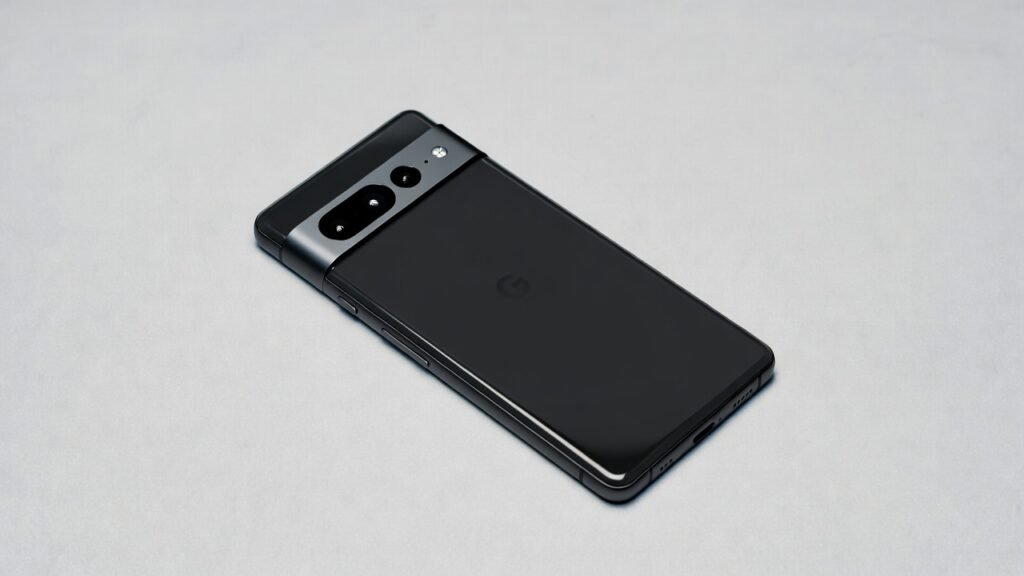
Early leaks indicate that the Pixel 10A will look strikingly similar to last year’s Pixel 9A. Renders and component details suggest that Google is sticking with the flat camera module design that allows the phone to lie flat on a surface without a case. This practical design choice was well received by users and appears set to carry over unchanged.
The display is expected to remain a 6.3 inch panel, matching the Pixel 9A exactly. Camera hardware also appears largely unchanged, with a 48 megapixel main sensor and a 13 megapixel ultra wide camera. On the front, leaks point to a 13 megapixel selfie camera housed in a simple cutout.
Taken together, the design choices suggest that Google sees little need to materially change the Pixel 9A formula, instead refining and extending it.
Processor strategy signals cost control
One of the more notable rumors concerns the chipset. Unlike previous generations where A series devices often shared the same processor as the flagship line, the Pixel 10A is expected to diverge from the Pixel 10.
Rather than adopting a new Tensor generation, the phone is rumored to use a slightly enhanced version of the Tensor G4, the same processor found in the Pixel 9 lineup. Reports describe it as a modestly boosted variant, designed to improve efficiency and sustained performance rather than deliver a major leap in raw power.
This approach points to tight cost discipline and suggests that Google is prioritizing thermal stability and manufacturing yields over headline benchmark gains in the mid range segment.
Battery and core hardware remain unchanged
Battery capacity is expected to remain at around 5,100 milliampere hours, identical to the Pixel 9A. That figure already places the phone competitively within its class and supports Google’s apparent strategy of minimizing risk by reusing proven components.
Storage options are expected to include 128 gigabytes and 256 gigabytes, covering the needs of most mainstream users. No credible leaks suggest a higher tier or expandable storage.
Overall, the hardware profile reinforces the idea that Pixel 10A is an incremental update rather than a generational shift.
Color options target broad appeal
Leaks point to four color options: obsidian, berry, fog, and lavender. These align closely with Google’s established naming and branding conventions and are consistent with the company’s efforts to balance visual variety with manufacturing simplicity.
The color selection further signals that the Pixel 10A is aimed squarely at the mass market rather than at enthusiasts seeking bold design statements.
Pricing will be the decisive factor
The Pixel 9A launched at $499, and recent history suggests Google may keep the Pixel 10A at the same price point. In prior years, Google has continued selling older A series models at the same price even after introducing newer versions, limiting the incentive to upgrade.
At the same time, retailers have begun offering significant discounts on the Pixel 9A, in some cases cutting prices by $100 to $150. If Pixel 10A launches at full price with only modest improvements, it may struggle to justify itself against discounted inventory of its predecessor.
From a financial perspective, this could indicate that Google is more focused on defending margins than driving rapid unit growth in the A series.
Strategic implications for Google
An earlier launch may help Google compete more aggressively in the mid range Android market, especially against Samsung and fast moving Chinese brands. However, the lack of substantial hardware innovation suggests a conservative approach shaped by rising component costs and tighter global consumer spending.
Pixel 10A appears positioned as a stabilizing product rather than a growth engine. It reinforces Google’s ecosystem presence without requiring heavy investment in new silicon or manufacturing processes.
Tempered expectations for consumers
For consumers hoping for a dramatic upgrade, the Pixel 10A may disappoint. Current information points to a device that closely mirrors the Pixel 9A, with timing rather than technology as the primary differentiator.
That said, this predictability has long been part of the A series appeal. A clean Android experience, reliable camera performance, and solid battery life at a moderate price remain the core value proposition.
Whether that will be enough in an increasingly crowded mid range market will depend largely on pricing, availability, and how aggressively Google supports the device over its lifecycle.