Germany’s Merz Calls to Strengthen NATO in Europe and Warns Against External Pressure
Written by Frode Skar, Finance Journalist.
Background
German Chancellor Friedrich Merz delivered a wide-ranging government address to the Bundestag, outlining his assessment of a rapidly changing global order. According to Merz, Europe is entering a new geopolitical phase defined by rising power politics, growing economic pressure, and increasing security risks.
The speech comes at a time of heightened uncertainty for Europe. The war in Ukraine continues, trade disputes are intensifying, and the transatlantic relationship has become more unpredictable. Against this backdrop, Merz argued that Europe can no longer rely primarily on external actors to guarantee its own security.
What was said
Merz described the current transformation of global politics as structural rather than temporary. He warned of an emerging world dominated by great powers, where raw power increasingly challenges the rule-based international order. At the same time, he stressed that Europe still possesses significant strengths—economically, institutionally, and normatively.
A central message of the speech was that Europe must learn to “speak the language of power” if it is to remain secure and relevant. According to Merz, this requires progress in three areas: stronger security and defence capabilities, renewed economic competitiveness, and greater political unity within the EU and NATO.
Defence, NATO and European responsibility
Merz made clear that Europeans must assume greater responsibility for their own security. He highlighted Germany’s decision to raise defence spending to as much as 5 percent of GDP, describing it as a strong signal to allies and adversaries alike.
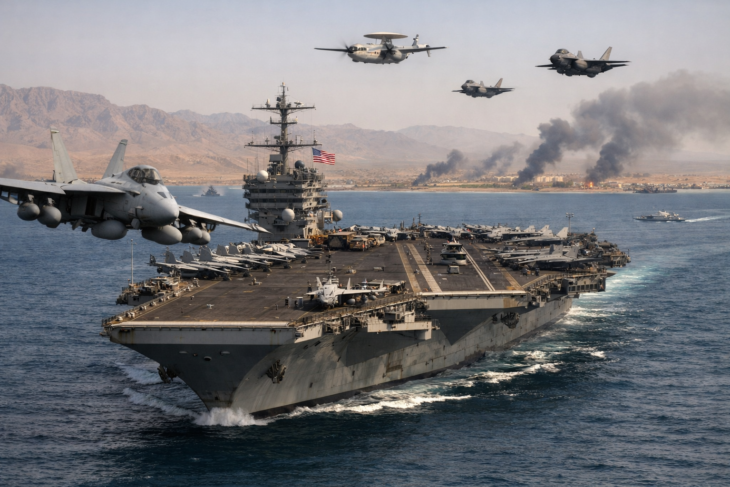
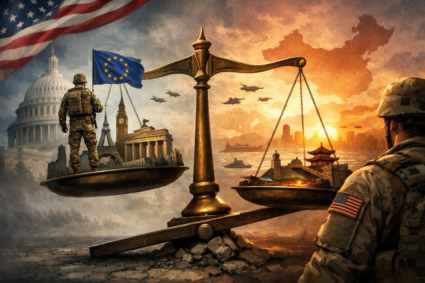
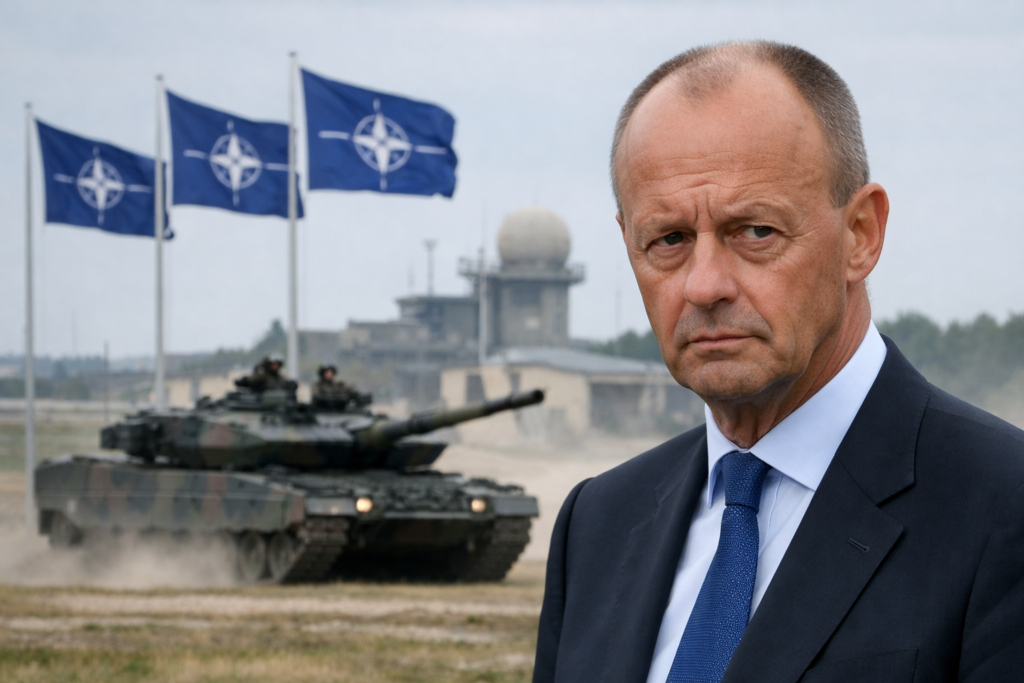
At the same time, he emphasised that NATO remains the cornerstone of European security. Merz rejected any notion of weakening the transatlantic alliance, but insisted that it must be reinforced from the European side. Europe, he argued, must act as a partner rather than a subordinate within NATO.
Economic competitiveness as a power base
Economic strength was another recurring theme. Merz pointed out that the European Union has lost competitiveness relative to the United States and China over more than a decade, and warned that this trend must be reversed. Without economic power, he argued, Europe cannot exercise geopolitical influence.
He called for removing internal barriers within the EU, simplifying regulation, and completing the single market. Reports by former Italian prime ministers Enrico Letta and Mario Draghi were cited as roadmaps for restoring European competitiveness through reform, investment, and reduced bureaucracy.
Trade, tariffs and the global economy
Merz also took a firm stance against the use of tariffs as a political weapon. He warned that Europe must be prepared to respond decisively if trade measures are used to exert pressure on the EU.
At the same time, he strongly defended free and rules-based trade, highlighting the continued relevance of the World Trade Organization. Merz argued that Europe must actively pursue new trade agreements, including with India, to secure access to growth markets and reduce strategic dependencies.
Ukraine and alliance credibility
The Chancellor also defended Germany’s past and present role in NATO operations, particularly its long-term engagement in Afghanistan. He strongly rejected attempts to belittle the sacrifices made by European soldiers in joint missions with the United States.
This point carried strategic significance as well as emotional weight: alliance credibility, Merz argued, is built over decades and can be quickly undermined if past commitments are later dismissed or devalued.
Domestic opposition and political pressure
The address was met with sharp criticism from parts of the opposition, especially the Alternative for Germany (AfD), which accused the government of economic mismanagement, rising taxes, and an expanding public sector. The criticism reflects deep domestic tensions between reform ambitions, social policy, and fiscal discipline.
For investors and market participants, this political backdrop is crucial. The success or failure of the government’s reform agenda will largely determine whether Germany can restore economic momentum and reinforce its strategic position.
Analysis: Europe between values and realpolitik
Merz’s speech signals a more assertive and self-aware Europe. The underlying message is that values alone are insufficient in a world increasingly shaped by power politics. At the same time, he sought to avoid abandoning the rule-based international system that has underpinned European stability since the Second World War.
The challenge lies in execution. Higher defence spending, economic reform, and social stability must be balanced carefully to avoid fuelling domestic political backlash. The risk is that geopolitical ambition collides with limited political room for manoeuvre at home.
What this means going forward
If Merz’s approach gains traction, Europe could move towards greater strategic autonomy, both militarily and economically. For NATO, this would imply a stronger European pillar and higher expectations of internal coordination.
For markets and businesses, the implications are significant. A more competitive and unified Europe could emerge as a stabilising force in an increasingly fragmented global economy. Whether these ambitions translate into tangible outcomes will depend on the implementation of reforms and the durability of political consensus.