

Keir Starmer meets Xi Jinping as the UK seeks a new balance between trade, security, and geopolitical risk
Written by Frode Skar Finance Journalist.
Background
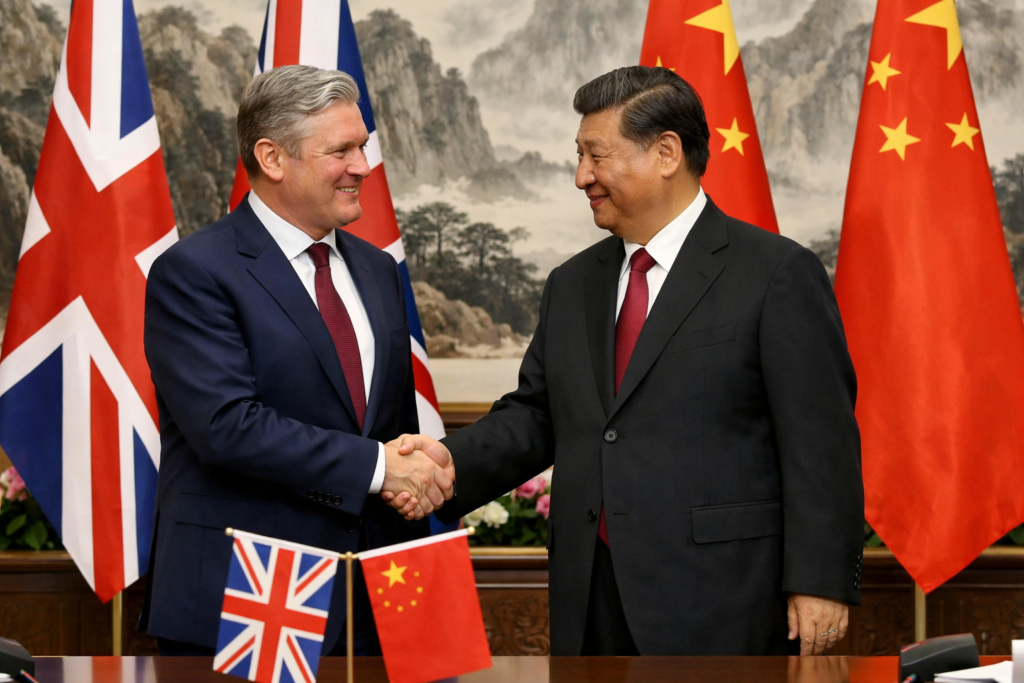
UK Prime Minister Keir Starmer has met Chinese President Xi Jinping in Beijing, marking the first visit by a British prime minister in eight years. The meeting comes at a time of accelerating global realignment, as Western governments reassess economic and strategic relationships amid growing uncertainty in international politics.
For London, the visit represents an attempt to stabilise a relationship that has remained strained by security concerns, political disagreements, and mutual distrust. At the same time, it underlines how difficult it has become for Western countries to separate economic engagement with China from broader geopolitical and ideological considerations.
What has happened
During talks at the Great Hall of the People, Starmer described China as a vital actor on the global stage and expressed a desire for a more sophisticated and pragmatic bilateral relationship. President Xi responded by acknowledging that UK–China relations have experienced unnecessary turbulence in recent years and signalled Beijing’s willingness to develop a long-term strategic partnership.
Both sides highlighted cooperation in trade and multilateral institutions such as the United Nations. Starmer also confirmed that he raised sensitive human rights issues, including the case of Jimmy Lai, illustrating the diplomatic balancing act the UK government is attempting to maintain.
An economically driven approach
Economic considerations are central to the visit. China remains one of the world’s largest markets, and the UK government is seeking to expand exports, investment flows, and business cooperation. Discussions included potential reductions in tariffs on British whisky, visa-free travel arrangements, and deeper collaboration in information exchange and transport.
The strong presence of British business leaders underscores the commercial priorities of the trip. A series of memoranda of understanding are expected across sectors such as electric vehicles, agriculture, education, and pharmaceuticals, with further announcements anticipated during meetings in Shanghai.
Security, technology, and strategic risk
Behind the emphasis on trade lies persistent concern over security and technology risks. Chinese cyber activity, industrial espionage, and influence operations in Western countries have been widely documented, including in UK intelligence assessments.
Experts stress that China represents a fundamentally different political and ideological system from liberal democracies. While the risks are considered manageable, this depends on the resilience of British institutions and a willingness to respond firmly when Chinese actions conflict with UK national interests.
The broader geopolitical context
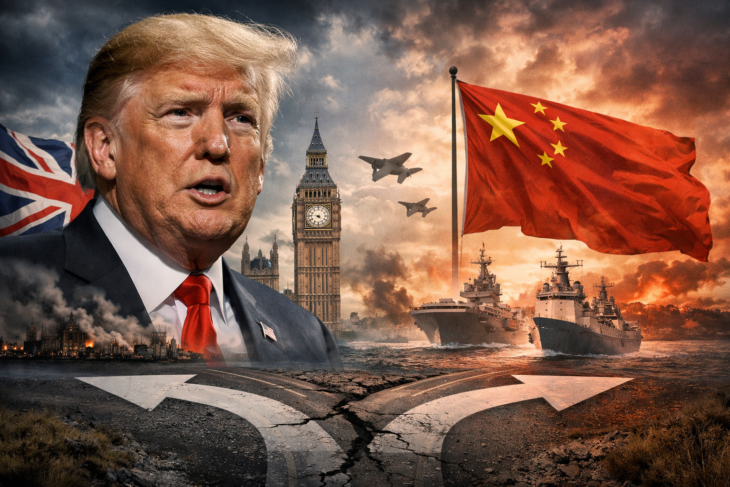
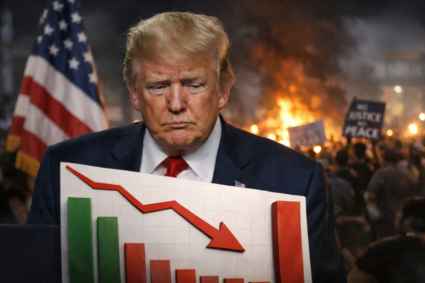
The Starmer–Xi meeting must also be viewed against a shifting global backdrop. Several Western governments are seeking closer economic ties with China partly because they no longer regard the United States as a consistently reliable partner under Donald Trump.
For Beijing, this creates an opportunity to present itself as a supporter of free trade and multilateralism, contrasting with US protectionism. For the UK, engagement with China is seen as a way to preserve economic flexibility without abandoning security commitments or political values.
Market and investor perspective
Markets are watching developments closely. A more stable and predictable UK–China relationship could reduce uncertainty and open new commercial opportunities for investors. However, any escalation of political or security tensions would quickly reverse market sentiment.
As a result, relations between London and Beijing are increasingly assessed through a risk-pricing lens, where political stability, regulatory clarity, and national security concerns are weighed against growth potential.
Risk and analysis
The principal risk for the UK lies in underestimating the long-term strategic consequences of deeper economic dependence on China. At the same time, disengagement carries its own costs, given China’s central role in global supply chains and technological development.
The Starmer government appears to be pursuing a middle path: engagement without naïveté, cooperation without submission. The success of this approach will depend on political discipline, institutional strength, and the ability to enforce clear red lines.
What this means going forward
The Beijing visit marks a significant moment in UK foreign and trade policy. It signals an effort to normalise relations through pragmatic engagement while acknowledging enduring differences in values and governance.
For China, the meeting reinforces its position as an unavoidable global partner. For the UK, it reflects a strategic attempt to remain economically relevant in a world where power balances are shifting rapidly and where geopolitics and economics are increasingly intertwined.