
Trump approval rating falls amid Minnesota unrest and growing distrust in federal authorities
Written by Frode Skar Finance Journalist.
Background
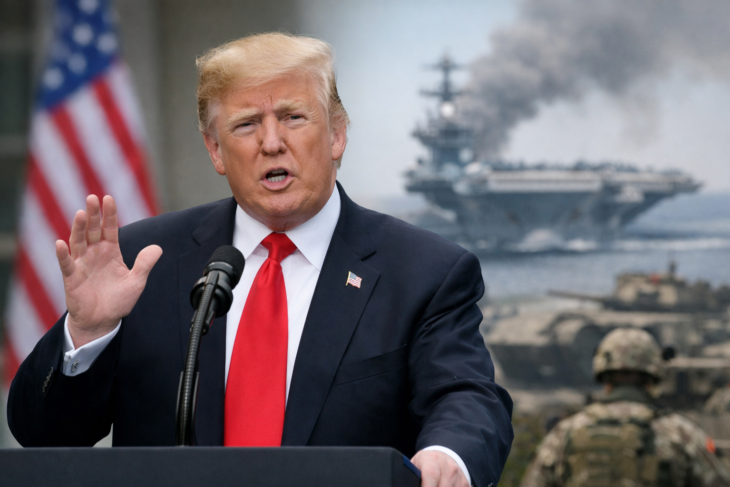
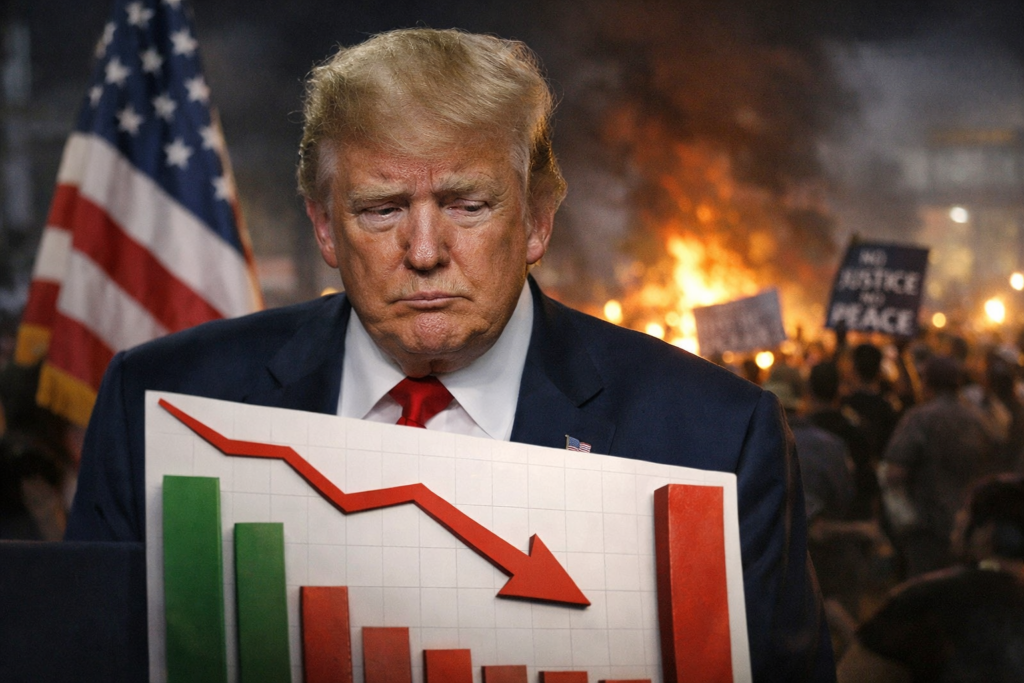
The political climate in the United States has long been marked by deep polarization, but recent developments have pushed tensions to a new level. Unrest in the state of Minnesota, combined with growing public criticism of federal immigration enforcement, has contributed to a noticeable decline in trust toward President Donald Trump and his administration. New polling now shows that Trump approval rating has fallen to one of the lowest levels of his current presidential term.
Much of Trump’s political identity has been built around themes of law and order, strong federal authority, and strict immigration control. When public confidence weakens precisely in these areas, it sends a powerful signal that extends beyond day-to-day politics. It raises broader questions about institutional legitimacy, governance, and long-term political stability in the world’s largest economy.
What has happened
According to a recent Reuters/Ipsos poll, only 38 percent of Americans approve of the job Donald Trump is doing as president. This ties the lowest approval level recorded during his current term. The numbers are even more striking when it comes to immigration policy. Just 39 percent approve of Trump’s handling of immigration, while 53 percent disapprove.
Public sentiment toward Immigration and Customs Enforcement (ICE) has also shifted. The poll shows that 58 percent of respondents believe ICE agents have gone too far in their enforcement efforts, while only 26 percent say the actions have been appropriate. These figures suggest a significant change in public attitudes, particularly given how central aggressive immigration enforcement has been to Trump’s political platform.
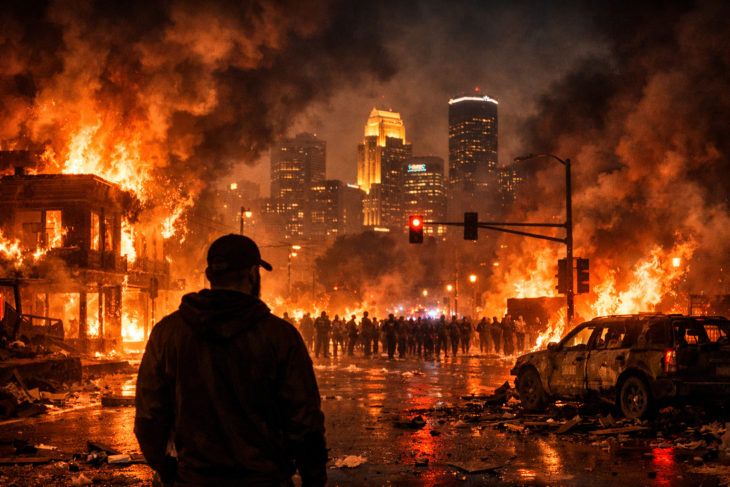
The backdrop to the poll includes rising unrest in Minnesota, where federal operations and law-enforcement actions have sparked protests and widespread public debate. Images and video footage from the events have circulated widely, shaping a narrative of escalating force and limited political oversight.
Minnesota unrest as a political trigger
Minnesota has become a focal point for broader concerns about federal authority and the use of force within US borders. For many Americans, the unrest is not viewed as an isolated incident, but as part of a larger pattern in which federal power is exercised in ways that create fear, instability, and social tension.
This dynamic has proven particularly damaging for Trump, whose rhetoric has consistently emphasized strength and control. When the outcome is perceived as disorder rather than security, the credibility of that message erodes. As a result, Trump approval rating is increasingly influenced not only by policy outcomes, but by perceptions of leadership and judgment.
Political dynamics and Republican response
The situation has also placed the Republican Party under growing pressure. While a small number of Republican lawmakers have voiced concern, most have remained publicly cautious. This limited response has reinforced the impression of a party reluctant to challenge the president, even as public dissatisfaction grows.
For voters, this silence may be interpreted as a lack of accountability. For Trump, it means that declining approval ratings are no longer solely about his personal leadership, but about broader confidence in the political system surrounding him. In this context, Trump approval rating functions as a proxy for institutional trust, not just electoral popularity.
Economic and institutional implications
Declining political support carries economic implications. The United States remains the world’s largest economy, and investor confidence is closely tied to perceptions of political stability and effective governance. When Trump approval rating falls alongside visible domestic unrest, the risk of policy uncertainty increases.
Political instability can lead to legislative gridlock, unpredictable executive actions, and strained relations between federal and state authorities. For businesses and investors, this creates a more complex operating environment. Sectors that rely heavily on regulatory clarity—such as finance, energy, infrastructure, and large-scale manufacturing—are particularly sensitive to these conditions.
Internationally, developments in US domestic politics are closely monitored. A sustained decline in trust toward American institutions can influence capital flows, risk premiums, and global perceptions of the United States as a stable anchor in the international financial system.
Market reactions and investor sentiment
So far, financial markets have responded cautiously rather than dramatically. However, periods of heightened news coverage related to Minnesota unrest and declining Trump approval rating have coincided with increased volatility in US equity markets.
Investors tend to reassess risk during times of political uncertainty, even when economic fundamentals remain relatively strong. Small shifts in perceived political risk can lead to changes in asset allocation, greater demand for safe-haven assets, and more conservative investment strategies.
From a global perspective, uncertainty surrounding US governance has broader implications. The credibility of American political institutions has long underpinned confidence in US markets. Any sustained erosion of that credibility is therefore closely watched by international investors.
Risk and analysis
The most immediate risk is further loss of public trust. When a majority of citizens believe federal authorities have overreached, the legitimacy of state power is called into question. This can lead to additional protests, legal challenges, and deeper political polarization.
Over the longer term, prolonged low approval ratings can weaken a president’s ability to govern effectively. History suggests that periods of declining public confidence often coincide with reduced investment, slower economic momentum, and heightened uncertainty.
For Trump personally, the decline in Trump approval rating represents a narrowing of political room for maneuver. His leadership style has relied heavily on projecting authority and decisiveness. As confidence in that image fades, maintaining internal cohesion and external credibility becomes more difficult.
What this means going forward
The coming months will be critical. Future polling, policy decisions, and the federal response to unrest will shape whether public trust can be restored. If dissatisfaction continues to grow, it may force changes in tone or policy, particularly as political pressure intensifies.
Alternatively, continued escalation could deepen political and economic risk, both domestically and globally. In this sense, Trump approval rating is more than a political metric—it is an indicator of institutional confidence in the United States at a time of heightened internal tension.