India–EU trade deal reshapes global commerce after two decades of negotiations
Written by Frode Skar, Financial Journalist.
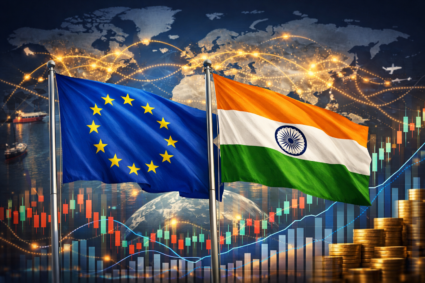
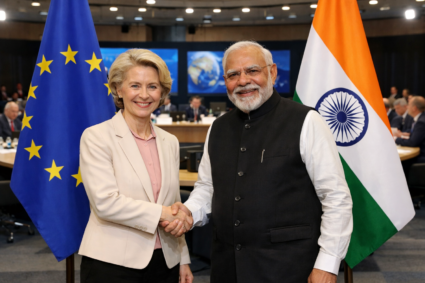
India and the European Union have concluded what many are calling the “mother of all trade deals,” ending more than 20 years of negotiations. The agreement brings together two of the world’s largest economies in a strategic partnership with far-reaching implications for global trade, investment, and economic security.
A landmark agreement years in the making
The deal follows decades of complex talks, often hindered by India’s historically high tariffs and protective trade policies. Under the new agreement, both sides commit to cutting or eliminating tariffs on the vast majority of traded goods.
The European Commission says tariffs on over 96 percent of EU goods exported to India will be reduced or removed entirely, granting the EU unprecedented access to the Indian market.
Major tariff cuts across key sectors
One of the most significant changes affects the automotive sector, where Indian import duties of up to 110 percent will gradually fall to around 10 percent. In agriculture, wine tariffs will be reduced from 150 percent to 75 percent and eventually to 20 percent.
Olive oil tariffs will drop from 45 percent to zero within five years. Overall, EU exporters are expected to save around €4 billion annually in tariff costs.
Two economic giants with strong growth potential
India is the world’s most populous country and one of its fastest-growing major economies. With GDP exceeding $3.4 trillion and growth of around 7.4 percent in 2025, the country offers vast opportunities for European businesses.
Currently the EU’s ninth-largest trading partner, India has already seen bilateral goods trade grow by roughly 90 percent over the past decade, with significant room for further expansion.
India’s gains from deeper EU access
For India, the agreement opens up greater access to the EU market, particularly for pharmaceuticals, textiles, and chemicals. Studies suggest Indian exports to the EU could increase by up to €50 billion by 2031.
More than 92 percent of India’s tariff lines to the EU will see duties reduced or eliminated, while the EU retains safeguards for sensitive sectors such as autos, steel, and agriculture.
A strategic response to global uncertainty
The deal comes amid rising protectionism and trade tensions involving the United States and China. For both India and the EU, the agreement represents a strategic effort to diversify trade relationships and reduce external vulnerabilities.
India has accelerated trade diversification following US tariff pressure, while the EU is pursuing similar strategies through agreements with Mercosur and other regions.
Beyond trade: a political signal
The India–EU agreement goes beyond tariffs and exports, serving as a statement in favor of rules-based international cooperation. Leaders on both sides emphasize that open trade and shared standards can still deliver growth and stability.
In an increasingly fragmented global economy, the deal positions India and the EU as key proponents of multilateral trade and long-term economic collaboration.