ICE funding dispute raises shutdown risk what the removal of citizen protections means for the US and UK economy in 2026
Skrevet av Frode Skar Finans Journalist.
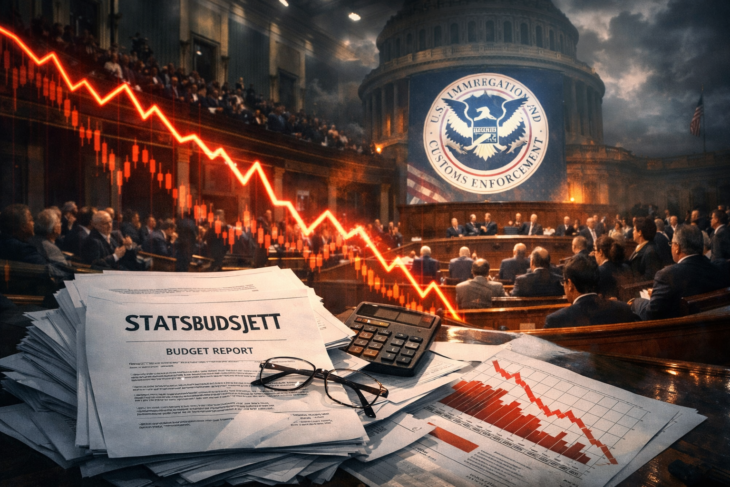
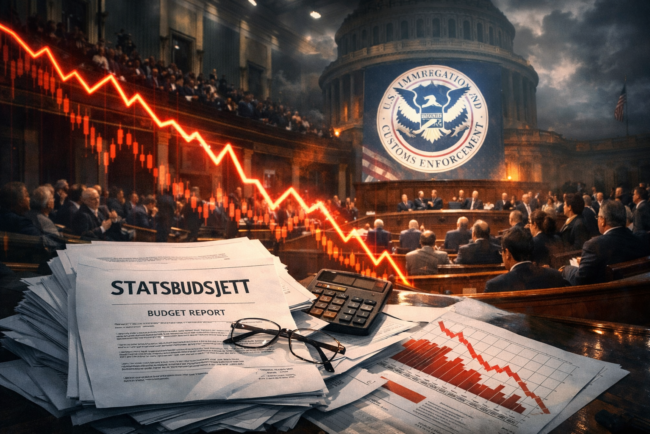
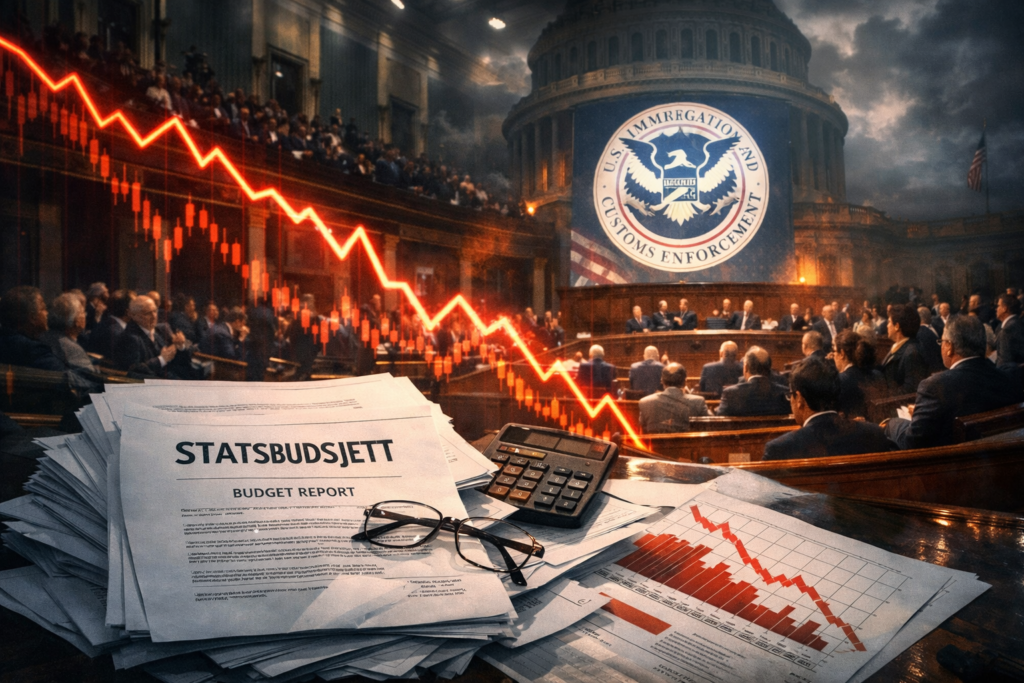
A growing political confrontation in Washington over funding for the Department of Homeland Security and ICE has escalated into a broader economic risk. The removal of explicit language preventing the arrest and deportation of US citizens has intensified partisan tensions, increased the likelihood of a partial government shutdown, and injected new uncertainty into the economic outlook for 2026.
Congresswoman Veronica Escobar has warned that an amendment she successfully added during committee proceedings was stripped from the final bill at the insistence of the White House. The amendment was narrowly focused on clarifying that ICE could not detain or deport US citizens. Its removal has sparked serious concerns about executive overreach and institutional stability.
The bill has passed the House of Representatives but now faces a difficult path in the Senate, where 60 votes are required to avoid a shutdown. Senate Democrats have made clear they will not support the funding package as long as the ICE provisions remain unchanged. This standoff significantly raises the risk of at least a partial government shutdown.
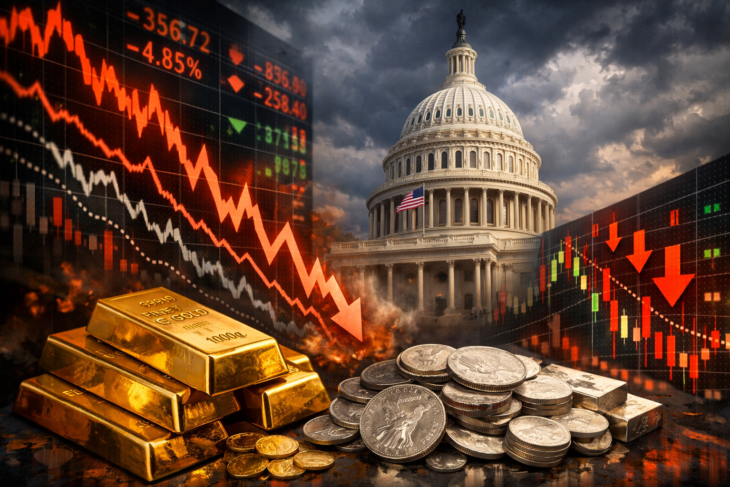
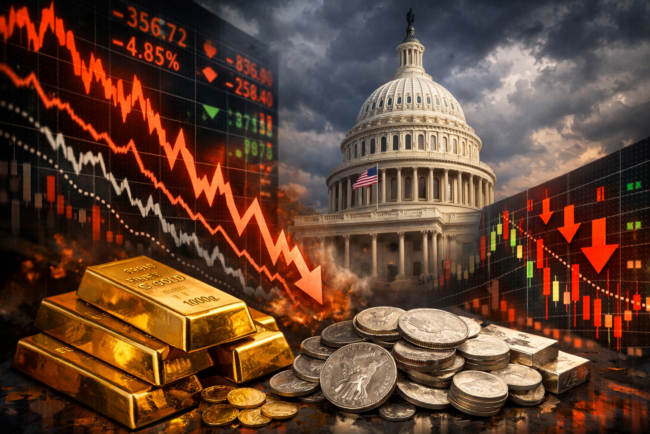
From an economic perspective, the implications are substantial. Previous US government shutdowns have disrupted liquidity, weakened consumer and investor confidence, and increased market volatility. In 2026, with global growth already under pressure, another shutdown would add further strain to financial markets.
For the UK economy, the consequences are indirect but real. The United States remains a central pillar of the global financial system. Political dysfunction in Washington often translates into heightened risk aversion, currency volatility and shifting capital flows. British markets, highly exposed to international sentiment, are not immune to these shocks.
The dispute also highlights a broader trend: political risk is becoming an increasingly important factor in economic forecasting. When fundamental legal protections become bargaining chips in budget negotiations, the perceived reliability of institutions is weakened. Investors respond by demanding higher risk premiums or reallocating capital.
UK businesses with significant exposure to the US, particularly in finance, technology and trade, must factor in the potential consequences of policy paralysis. Even short shutdowns can disrupt regulatory processes, government contracts and cross-border cooperation.
Beyond the immediate budget battle, the ICE funding dispute reflects deeper divisions over immigration, executive authority and the rule of law. These issues carry long-term implications for economic governance and market confidence.
If the standoff escalates into a shutdown, the economic impact could be felt rapidly, reinforcing volatility across global markets. In such an environment, uncertainty itself becomes a drag on growth.
What we think
The ICE funding dispute underscores how political decisions in Washington can quickly evolve into economic risks. For the UK economy in 2026, this means heightened exposure to US-driven volatility and a growing need to account for political instability in economic planning.