Carney pushes back on Trump and prepares for hard USMCA talks what the Canada US trade dispute means for the UK economy in 2026
Written by Frode Skar Financial Journalist.
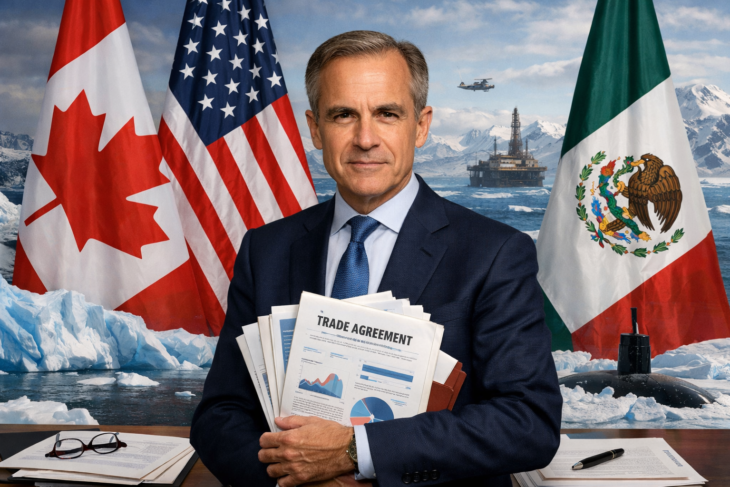
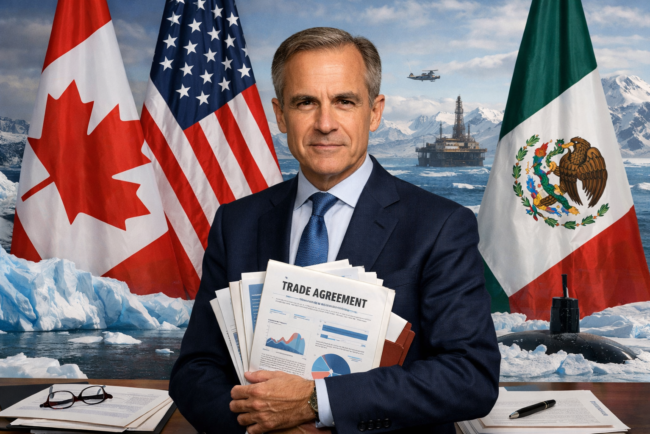
Canadian Prime Minister Mark Carney has drawn a clear line in response to recent remarks from US President Donald Trump, while simultaneously preparing markets for a difficult review of the USMCA trade agreement. His message is unambiguous: Canada has already adapted to a world where US trade policy is more confrontational and less predictable.
The upcoming USMCA review between the United States, Canada and Mexico is shaping up to be one of the most consequential trade events of 2026. While centred in North America, its implications extend far beyond the region, affecting global trade flows, investor confidence and financial markets.
A shift in global trade assumptions
Carney argues that Canada recognised the scale of change in US trade policy earlier than many of its peers. As a result, Ottawa has focused on strengthening domestic capacity and diversifying trade relationships abroad.
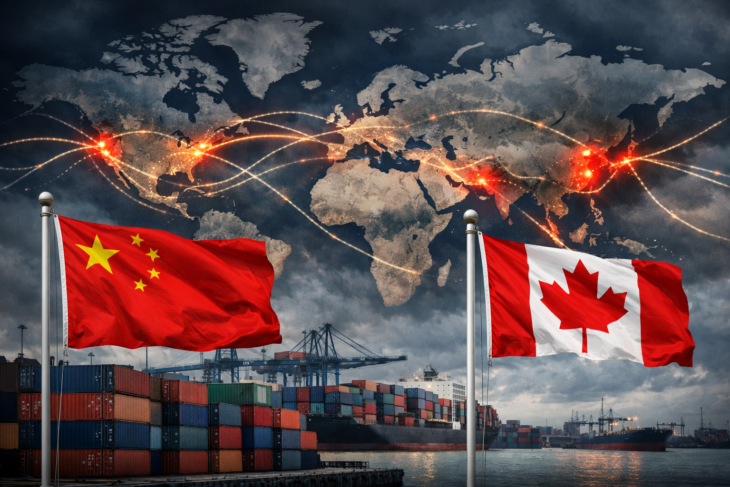
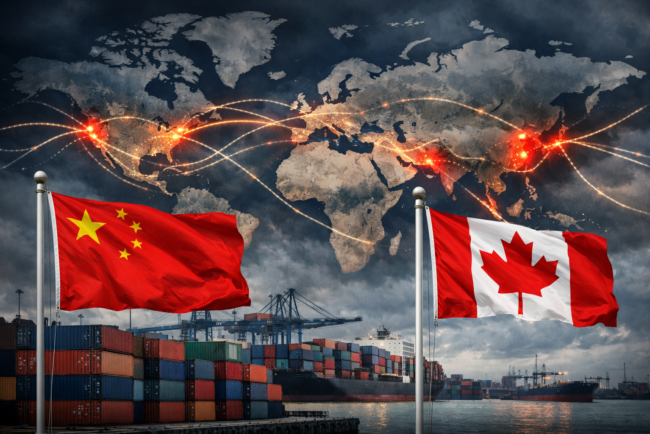
Over the past six months alone, Canada has signed twelve new trade and security agreements across four continents. The strategy is designed to reduce dependence on the US market and enhance long-term economic resilience.
USMCA review signals rising trade tension
The forthcoming USMCA review is expected to be highly contentious. The Trump administration has repeatedly shown its willingness to use trade agreements as leverage, both economically and politically.
For Canada, this raises the risk of new tariffs and reduced market access. Carney’s response suggests an effort to calm investors while acknowledging that negotiations will be tough.
Trade as a geopolitical tool
The dispute highlights a broader trend: trade policy has become a key instrument of geopolitical influence. Tariff threats and renegotiations now play a central role in international relations.
This shift increases uncertainty across global markets, affecting countries well beyond those directly involved in the negotiations.
Arctic security and economic implications
Carney also linked trade tensions to security issues, particularly in the Arctic. Canada has increased its focus on Arctic defence and cooperation with NATO and Nordic partners.
For the UK, heightened geopolitical focus on strategic regions underscores how security considerations increasingly shape economic decision-making.
What this means for the UK economy
Although the UK is not part of USMCA, escalating trade tensions in North America can disrupt global supply chains and investor sentiment. Increased volatility may affect sterling, investment flows and broader financial conditions.
At the same time, the UK could benefit from its position as a diversified and globally connected economy if businesses seek stable alternatives amid trade uncertainty.
Our assessment
Carney’s response signals that Canada is no longer willing to rely on assumptions of US trade stability. Diversification and strategic autonomy are becoming central pillars of economic policy.
For the UK, the unfolding USMCA dispute serves as a reminder that trade in 2026 is inseparable from geopolitics and long-term economic security.