Written by Frode Skar Financial Journalist.
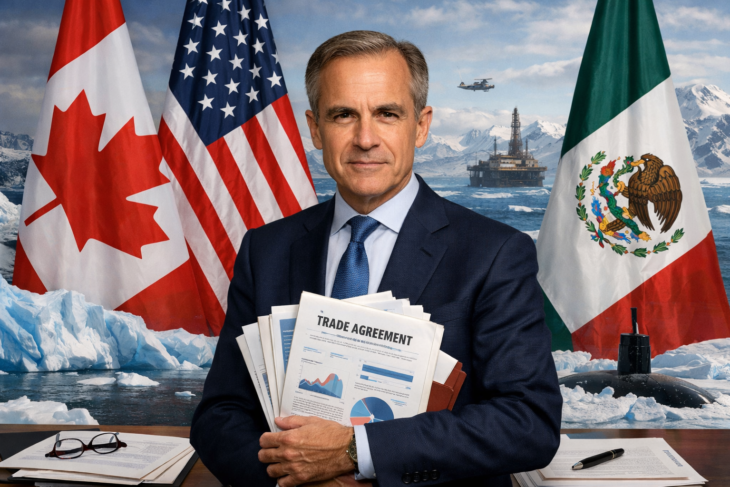
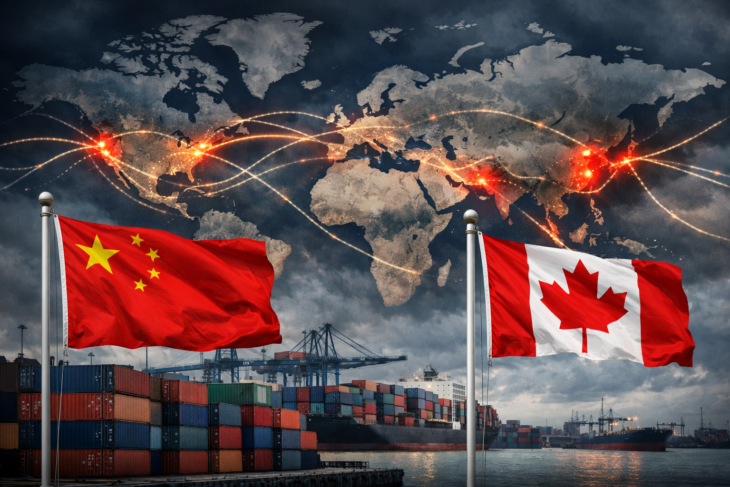
China has moved to reject claims that its new trade agreement with Canada is aimed at any third country. The statement comes amid escalating global trade tensions and explicit threats from US President Donald Trump to impose punitive tariffs on Canadian exports.
While formally bilateral, the agreement must be understood within a broader geopolitical and economic context. Trade agreements today are strategic instruments, and their implications reach far beyond the signatory states.
Trade agreement
The agreement is presented by Beijing as a framework for mutual benefit, equality and openness. Chinese officials stress that it is designed to stabilise relations and resolve concrete trade frictions rather than isolate other economies.
For Canada, the deal represents an attempt to diversify trade exposure at a time when reliance on the US market has become a strategic vulnerability.
Implications for the UK economy
For the United Kingdom, rising trade fragmentation increases uncertainty for exporters, investors and financial markets. The UK remains deeply integrated into global supply chains that are increasingly vulnerable to political disruption.
Escalating trade disputes can weaken global growth, reduce demand for British exports and add volatility to currency and equity markets.
Global trade under pressure
The dispute illustrates how global trade is increasingly shaped by power politics. Agreements framed as cooperative are often interpreted through a lens of strategic rivalry.
Our assessment
China’s denial does little to ease the structural tension in global trade. For the UK economy, 2026 is shaping up as another year where geopolitical risk, rather than fundamentals alone, will influence trade, investment and growth.