

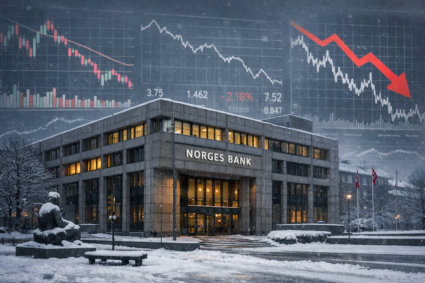
The United States threatens Europe with economic countermeasures: What the trade conflict means for the UK and European economy in 2026
Skrevet av Frode Skar Finans Journalist.
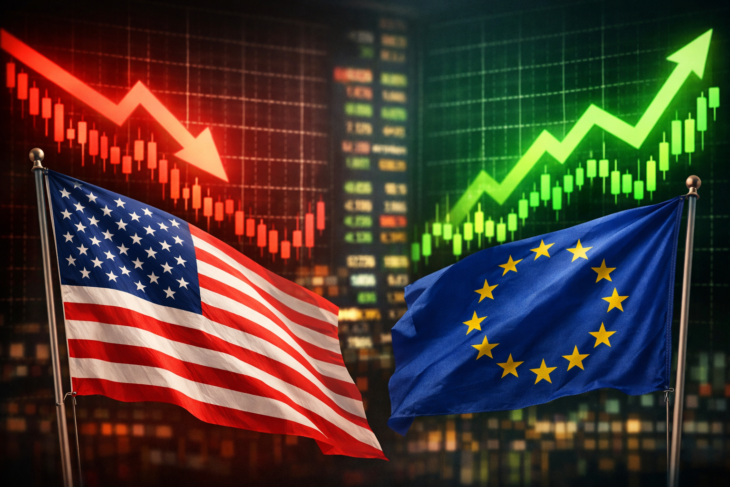
In January 2026, tensions between the United States and Europe escalated following renewed signals from Washington regarding potential economic countermeasures. Statements referring to tariffs, trade barriers and financial retaliation unsettled global markets and revived memories of earlier trade conflicts between major economic powers.
For the United Kingdom and Europe, this is far more than a diplomatic dispute. An escalating trade conflict between the world’s largest economies risks affecting exports, investment flows, currency markets and overall economic stability at a time when growth remains fragile.
The trade conflict
The trade conflict between the United States and Europe extends well beyond isolated tariff measures. It reflects deeper disagreements over industrial policy, subsidies, energy strategy, technology regulation and geopolitical influence.
In 2026, the dispute appears increasingly embedded in a broader fragmentation of the global economy, where economic policy is used as a strategic tool alongside diplomacy and security.
The background to US threats
US authorities have expressed growing dissatisfaction with European trade and industrial policies. Areas of concern include state support for domestic industries, regulatory barriers, energy policy choices and Europe’s strategic positioning in global security matters.
Economic instruments such as tariffs and restrictions are increasingly employed as tools of political leverage. This marks a shift away from cooperative trade frameworks towards more confrontational economic diplomacy.
Europe as a key trading partner
The European Union collectively remains the United States’ largest trading partner. A direct conflict would therefore have substantial consequences for global supply chains, industrial production and financial markets.
Markets react quickly to signs of rising protectionism, particularly when tensions involve the world’s largest consumer and capital markets.
The UK positioned between major powers
Although the UK operates outside the EU framework, its economy remains deeply intertwined with European markets while maintaining close economic and security ties with the United States.
This positions the UK in a strategic cross-pressure scenario should the conflict intensify, potentially forcing difficult trade, regulatory and diplomatic balancing acts.
Implications for exports
European and British exports rely heavily on predictable trade conditions. Sectors such as manufacturing, technology, pharmaceuticals, energy and food products are particularly sensitive to trade disruptions.
New tariffs or indirect barriers could weaken competitiveness and disrupt established export flows, even if the measures are formally directed at the EU rather than individual countries.
Energy and commodities
Europe remains heavily dependent on stable energy markets. Geopolitical trade tensions may cause short-term price volatility while increasing long-term uncertainty for investment in energy infrastructure.
Energy-related trade disputes risk delaying investment decisions and raising financing costs across the sector.
Financial markets and investors
Financial markets are highly sensitive to political risk. Trade conflict rhetoric tends to increase volatility, particularly in equity, currency and commodity markets.
In 2026, investors increasingly seek safe-haven assets when uncertainty rises, which can amplify market swings and capital reallocation.
Currency effects and capital flows
Heightened global uncertainty often strengthens major reserve currencies while weakening smaller and more open economies. Capital tends to move towards perceived stability.
This dynamic affects import prices and inflationary pressures across Europe and the UK, with potential spill-over effects on monetary policy.
Inflation and interest rates
Trade conflicts frequently lead to higher costs for imported goods. Tariffs, logistical disruptions and regulatory barriers contribute to inflationary pressure.
Central banks may face difficult trade-offs in 2026, balancing inflation control against already weak economic growth.
Corporate adaptation
European and British companies must increasingly operate in a more unpredictable trade environment. Diversification of markets, suppliers and production locations becomes more important.
These adjustments often raise costs in the short term, even if they strengthen resilience over time.
Public finances and economic policy
Rising uncertainty can weigh on tax revenues and economic growth. Governments may need to prepare for counter-cyclical measures if trade tensions escalate further.
Fiscal policy flexibility and coordination become critical discussion points in 2026.
Europe’s response
European leaders have signalled a willingness to respond collectively to US measures. Retaliatory actions risk deepening the conflict and prolonging economic uncertainty.
This raises the probability of a broader trade confrontation with global repercussions.
Lessons from history
Past trade conflicts demonstrate that prolonged protectionism tends to reduce global growth and investment over time.
Despite this, trade policy continues to be used as a political instrument during periods of strategic competition.
Geopolitics and economics
The distinction between economic policy and security policy has become increasingly blurred. Trade measures are now regularly employed to influence strategic outcomes.
This trend defines much of the global economic landscape in 2026.
Implications for sovereign wealth and pension funds
Large institutional investors with global exposure face increased volatility during periods of trade tension. While long-term strategies mitigate risk, short-term fluctuations remain likely.
The role of stability-oriented economies
Countries with an interest in rules-based trade systems increasingly emphasise diplomacy and multilateral cooperation.
In 2026, this approach gains renewed importance as global fragmentation accelerates.
Structural changes ahead
Persistent trade conflicts may reshape global value chains. Regionalisation of trade and production is likely to accelerate.
Such changes could alter the economic models of open European economies over time.
Summary
The United States’ threats of economic countermeasures against Europe in 2026 mark a new phase in an already tense global trade environment. An escalating trade conflict would extend far beyond the directly involved parties.
For Europe and the UK, the risks include weaker exports, volatile investment flows, currency pressures and renewed inflationary challenges. Governments and businesses alike must prepare for more unpredictable economic conditions.
How the conflict evolves will be a key determinant of economic stability throughout 2026 and beyond.