

New EU Sustainability Reporting Rules Take Effect: What the Requirements Mean for the UK Economy in 2026
Skrevet av Frode Skar Finans Journalist.
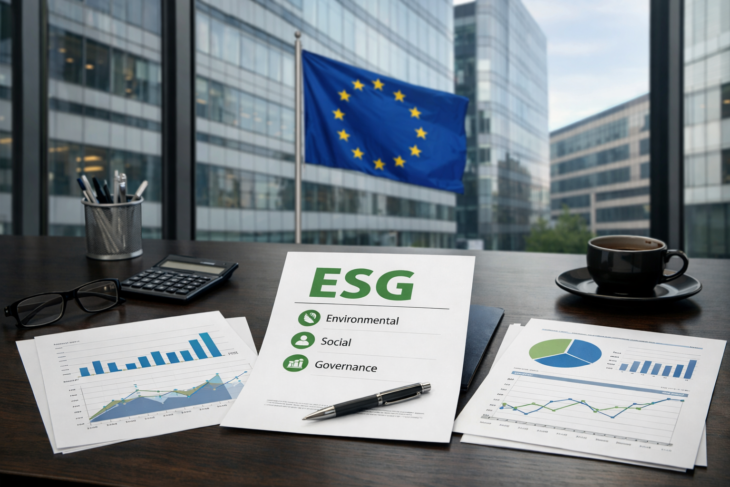
From 2026, new and significantly more comprehensive EU sustainability reporting rules will come into force. The regulatory framework represents a clear shift in how companies must document and report their impact on the environment, society, and corporate governance. For UK businesses with operations in the EU, European investors, or exposure to European capital markets, the changes bring higher compliance requirements, increased costs, and greater accountability.
Although the UK is no longer a member of the EU, the new reporting regime will still have wide-ranging implications. Through market expectations, investor standards, and cross-border operations, sustainability reporting is moving from a strategic choice to a practical necessity for large parts of the UK economy.
Sustainability Reporting
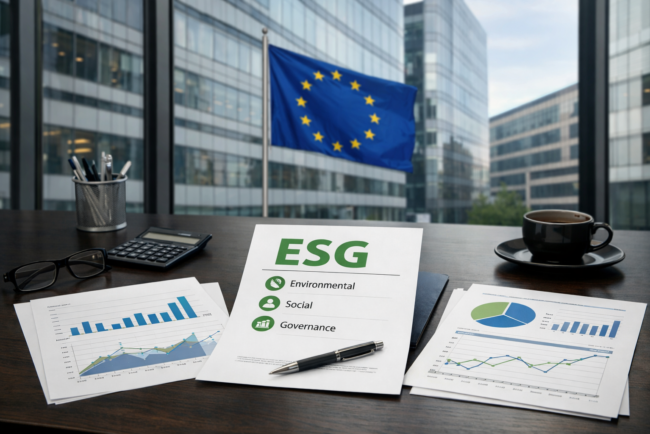
Sustainability reporting involves the systematic disclosure of how companies affect climate, natural resources, working conditions, human rights, and broader societal outcomes. In 2026, these disclosures will become far more closely integrated with financial reporting than in the past.
The new EU rules require detailed, standardised, and verifiable data. Companies must go beyond general statements of ambition and instead provide measurable outcomes, quantified indicators, and clear assessments of sustainability-related risks.
The Background to the New Rules
The tightening of requirements reflects the EU’s ambition to steer capital towards more sustainable economic activities and to reduce the risk of greenwashing. Inconsistent and incomplete reporting has made it difficult for investors to assess real risks and long-term value creation.
Sustainability reporting is now viewed as a financial governance tool rather than a voluntary disclosure exercise. By imposing stricter transparency standards, regulators aim to improve the efficiency of capital markets and accelerate economic transition.
Which Companies Are Affected
The rules initially apply to large companies and listed entities, but their impact will extend well beyond this group. Over time, smaller firms will be affected indirectly through supply-chain requirements, financing conditions, and investor expectations.
UK companies with subsidiaries in the EU, significant exports to EU markets, or European shareholders will need to comply with the requirements from 2026. Many businesses will find themselves subject to the rules in practice, even without a formal legal obligation.
Implications for Capital Access and Investment
Sustainability reporting is becoming a central input in investment decisions. Banks, asset managers, and institutional investors increasingly rely on sustainability data when assessing risk, pricing capital, and allocating funds.
Companies that fail to provide sufficient and credible reporting may face higher financing costs or restricted access to capital. Conversely, firms with robust and transparent disclosures may benefit from more favourable financing conditions.
This makes sustainability reporting a direct economic factor rather than a reputational issue alone.
Effects on UK Businesses
For UK businesses, the new rules imply substantial adjustment costs. Data collection systems, internal controls, and reporting processes must be strengthened, while demand for specialised expertise is rising.
Sectors such as energy, manufacturing, transport, and financial services are expected to be particularly affected. At the same time, higher transparency may strengthen trust in UK companies operating in international markets.
Consequences for Households and the Labour Market
Indirectly, stricter sustainability reporting may affect households. Higher compliance costs for companies could feed into prices, profitability, and investment levels in the short term.
At the same time, the new regulatory environment is expected to create jobs in reporting, data analysis, auditing, and sustainability advisory services. Over time, this may strengthen the skills base and employment structure of the UK economy.
Macroeconomic Spillover Effects
At a macroeconomic level, the objective of enhanced sustainability reporting is to improve capital allocation and reduce systemic risk. By making climate and social risks more visible at an early stage, the economy may become more resilient.
The transition will not be frictionless. In 2026, many companies are likely to devote significant resources to compliance, potentially dampening investment activity in the short term.
Our Assessment
The new EU sustainability reporting rules coming into force in 2026 represent a fundamental shift in the relationship between finance and regulation. For UK businesses, this is not a matter of choice but a structural reality that must be addressed strategically.
In the short term, the framework increases costs and reporting complexity. Over the longer term, it may strengthen market confidence and contribute to more sustainable value creation.
How UK companies adapt to these requirements will have implications for competitiveness, access to capital, and the broader development of the UK economy in the years ahead.