Oil investments level off after years of growth: What this means for the energy sector and the UK economy in 2026
Skrevet av Frode Skar Finans Journalist.
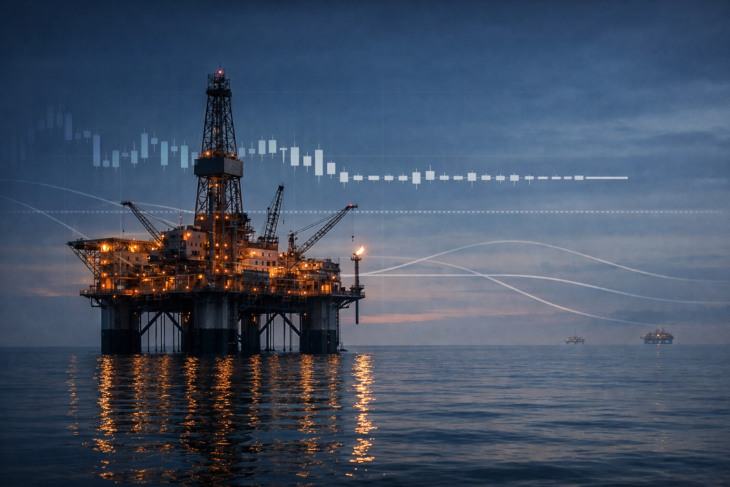
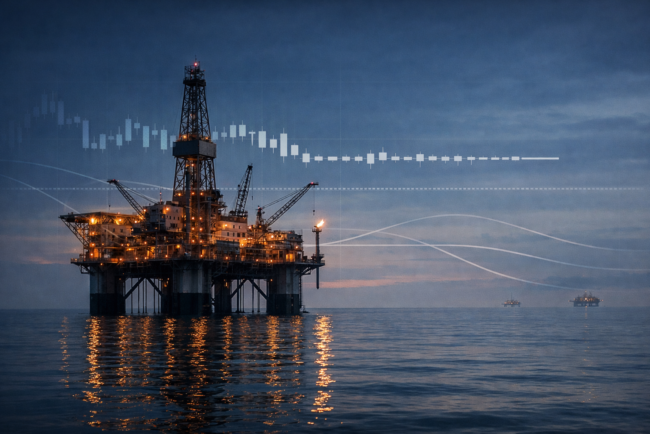
After several years of strong growth, new projections indicate that oil investments will level off in 2026. This marks a clear shift for the European energy sector, which in recent years has been driven by high energy prices and heightened geopolitical tensions. While investment levels remain historically elevated, the direction is now towards consolidation rather than expansion.
For the United Kingdom, this development is particularly relevant. As a major energy producer in the North Sea and a large industrial economy, the UK is closely connected to investment trends in offshore oil and gas. A stabilisation in investment alters the outlook for energy security, employment and long-term industrial strategy.
Oil investments
Oil investments include the development of new fields, upgrades to existing infrastructure, maintenance activity and exploration. In the post-pandemic period, investments surged as energy security became a political priority across Europe.
In 2026, however, several major projects are approaching completion, while new investment decisions are increasingly postponed or scaled down. The result is a stable, but no longer expanding, level of activity.
Why investment growth is slowing
The primary driver behind the levelling off is increased capital discipline among energy companies. Following a period of exceptional profitability, firms are prioritising cash flow, shareholder returns and balance-sheet strength over volume growth.
Regulatory uncertainty also plays a significant role. Stricter climate policies, higher taxation and growing expectations around emissions reductions make long-term fossil fuel investments more complex and risk-intensive.
Internationally, long-term demand for oil and gas is increasingly questioned as the energy transition accelerates and consumption patterns evolve.
Impact on employment and supply chains
A stabilisation in oil investments directly affects employment across the energy sector and its supply chains. After years of strong demand for labour, hiring momentum may slow.
For suppliers, competition for contracts intensifies and margins come under pressure. At the same time, a more stable investment environment can provide predictability, even if growth moderates.
In the UK, regions with strong exposure to North Sea activity are likely to feel these effects most clearly.
Implications for public finances
Oil investment levels are closely linked to future production and government revenues. When investment growth slows, the long-term potential for output expansion diminishes.
In the near term, revenues remain supported by existing production and gas exports. Over time, however, lower investment momentum could translate into declining output and fiscal receipts.
Effects on households
For households, the impact is initially indirect. Slower growth in the energy sector may dampen wage growth and employment in related industries.
At the same time, reduced pressure on labour markets could ease inflationary pressures, potentially supporting lower interest rates in the medium term.
Macroeconomic implications
At a macro level, stabilising oil investments signal a transition towards a more balanced economic structure. Dependence on fossil energy diminishes, while other sectors gain importance.
For the UK, this reduces vulnerability to commodity price swings but increases the need for productivity growth and industrial diversification.
Outlook for 2026
Analysts expect oil investments to remain broadly stable through 2026, with adjustments driven by energy prices and policy developments. Significant new growth impulses appear unlikely in the short term.
Focus is shifting towards efficiency, electrification and emissions reduction rather than large-scale new developments.
Our assessment
The levelling off of oil investments in 2026 reflects a sector entering a more mature phase. Growth slows, but stability increases.
For the UK economy, this transition is manageable, but it reinforces the importance of energy transition, innovation and diversification. Oil and gas remain relevant, but no longer serve as primary growth engines.
How effectively this transition is managed will be critical for long-term economic resilience.