


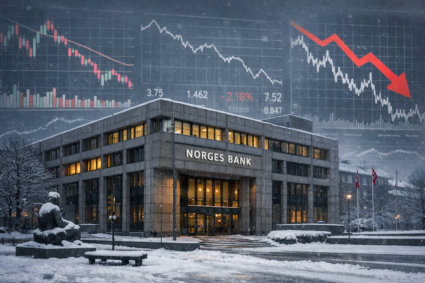

EU tightens bank stress test requirements: What this means for Norway’s financial sector in 2026
Skrevet av Frode Skar Finans Journalist.
The EU enters 2026 with stricter requirements for banks’ stress tests. The objective is to strengthen financial resilience in an increasingly unpredictable economic environment marked by geopolitical tensions, high debt levels and persistent interest rate uncertainty. Although Norway is not an EU member, the changes will have direct implications for Norwegian banks and the domestic credit market.
Stress tests are used to assess how banks would cope with severe economic downturns. As requirements become more demanding, pressure on banks’ capital buffers and risk management intensifies.
Stress tests
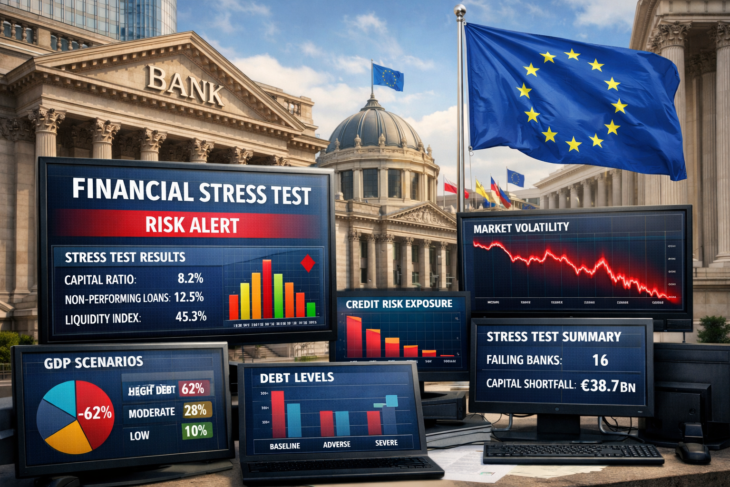
Stress tests are regulatory assessments that simulate extreme but plausible economic scenarios. Banks’ ability to withstand sharp declines in house prices, rising unemployment, higher default rates and market turmoil is central to these analyses.
In 2026, the EU is introducing more demanding scenarios than before. The tests incorporate deeper recessions, longer periods of elevated interest rates and larger financial shocks than those previously applied.
The rationale behind the tightening
The stricter requirements are driven by concerns over systemic risk. High levels of household and corporate debt, combined with rising geopolitical tensions, have increased the need to ensure that banks can absorb substantial losses without threatening financial stability.
EU authorities have also recognised that earlier stress tests, in some cases, underestimated risk. Experience from the post-pandemic rate hike cycle has shown how rapidly economic conditions can change.
Consequences for Norwegian banks
Norwegian banks are closely integrated into the European financial system and largely follow EU regulations through the EEA framework. More stringent stress tests may require banks to hold higher capital buffers.
This strengthens resilience, but may also reduce banks’ willingness and ability to extend new credit. Lending to real estate, commercial property and highly leveraged households could be particularly affected.
Effects on lending and interest rates
Higher capital requirements and tougher stress tests may lead to increased lending costs. As banks’ capital costs rise, part of the burden may be passed on to customers through higher interest rates and fees.
For households and businesses, this could mean more limited access to credit at a time when the economy is already under pressure. Investment decisions may be postponed and consumption kept subdued.
Implications for household finances
For household finances, stricter banking regulation may provide greater long-term security, but higher short-term costs. Mortgage borrowers may face tougher requirements for debt servicing capacity and equity contributions.
At the same time, the risk of banking crises is reduced, which is essential for protecting deposits and maintaining overall economic stability.
Macroeconomic ripple effects
At the macroeconomic level, tougher stress tests contribute to a more robust financial system, but also to slower credit growth. This may dampen economic activity during a period already characterised by weak growth.
Policymakers must therefore balance the need for stability against the risk of exacerbating economic downturns.
Our assessment
The EU’s tightened requirements for bank stress tests in 2026 reflect a more risk-aware financial regulatory regime. The measures enhance the resilience of the banking system, but not without costs.
For the Norwegian economy, this implies tighter credit conditions and increased pressure on households and businesses. At the same time, the likelihood of severe financial crises is reduced.
In an unsettled global economic climate, stricter stress tests appear to be a necessary, though challenging, policy instrument.