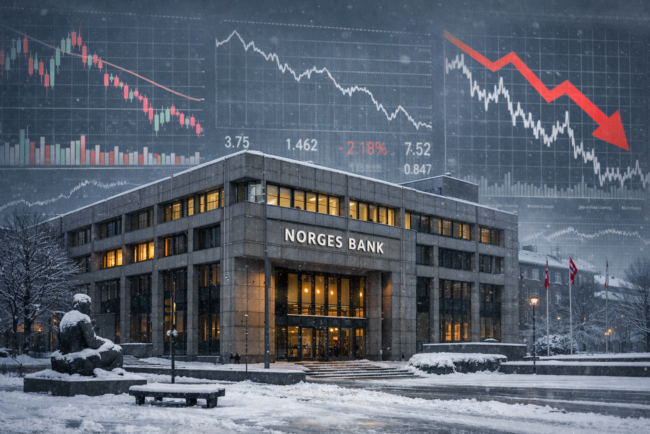




Norges Bank signals a longer interest rate pause than expected: What this means for Norway’s economy in 2026
Skrevet av Frode Skar Finans Journalist.
Norges Bank is now sending clearer signals that interest rates will remain at current levels longer than many market participants previously assumed. After a period of aggressive rate hikes to combat inflation, expectations of rapid rate cuts were strong throughout autumn 2025. These expectations are now being significantly scaled back as 2026 approaches.
The central bank points to persistent price pressure, a weak Norwegian krone and uncertain international developments as key reasons why a prolonged interest rate pause appears to be the most responsible monetary policy choice. The message is clear: the policy rate is intended to remain restrictive over time.
Interest rate pause
An interest rate pause means that the policy rate is kept unchanged for an extended period, even though inflation has moderated somewhat. Norges Bank now signals that rates will not necessarily be cut until inflation is sustainably close to target and wage and cost growth are clearly under control.
This breaks with earlier market assumptions that the first rate cut could come as early as the beginning of 2026. Instead, autumn or late in the year is suggested as a more realistic timeframe, provided developments move in the desired direction.
For Norwegian households, this implies that the period of high interest rates will be prolonged. Mortgage rates are set to remain at levels that place significant strain on household finances, particularly for those with high debt and variable-rate loans.
The background to Norges Bank’s assessment
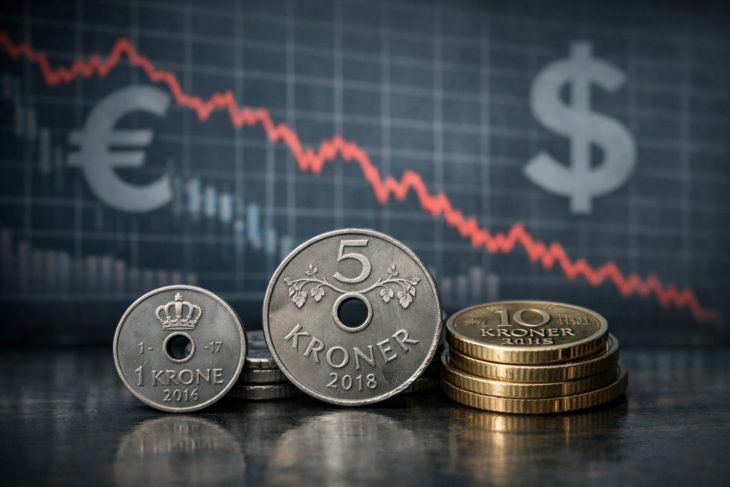
Norges Bank places significant weight on developments in the exchange rate. A weak krone contributes to higher imported inflation and reduces the effect of previous rate hikes. The central bank therefore assesses that cutting rates too early could lead to further currency depreciation, which would in turn push prices higher.
At the same time, wage growth in the Norwegian economy remains elevated. Although headline inflation has declined from its peak, underlying price growth is still above target. This leaves limited room for monetary easing.
Internationally, uncertainty remains high. Both the US and the EU are grappling with weak growth combined with persistent inflation. Norges Bank aims to avoid falling behind in the fight against price pressures, even if this entails short-term economic pain.
Consequences for household finances
A longer interest rate pause means that many households must prepare for high housing costs throughout much of 2026. For first-time buyers and young families, this may further delay homeownership.
Consumption is expected to remain subdued. When a larger share of income is devoted to interest payments and debt servicing, the scope for other spending is reduced. This may further weaken parts of the retail and service sectors.
At the same time, households with savings and low debt levels may benefit from higher deposit rates. The interest rate pause therefore contributes to widening disparities between different groups in society.
Effects on the housing market
The housing market is directly affected by interest rates. Signals of a prolonged rate pause reduce the likelihood of a rapid price rebound in 2026. Many potential buyers remain cautious, while sellers in pressured markets may need to adjust price expectations further.
The effect may be particularly pronounced in major cities, where debt levels are high. In rural areas, the picture is more mixed, but activity is also dampened when financing costs remain elevated.
Consequences for investment and business
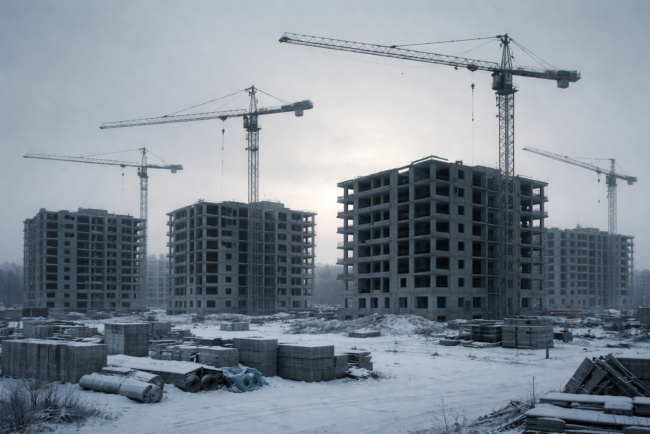
For businesses, a longer interest rate pause implies higher capital costs over time. This may lead to postponed or cancelled investments, particularly in capital-intensive sectors such as real estate and construction.
At the same time, predictability in monetary policy can support long-term planning. When market participants know that rates will remain stable, risks can be priced more accurately, even if levels are high.
Export-oriented companies may benefit somewhat from a weak krone, but this effect is partly offset by higher financing costs and weaker demand in key markets.
Macroeconomic ripple effects
At the macroeconomic level, the interest rate pause helps keep inflation in check, but at the cost of lower economic growth. Norges Bank is balancing price stability against the risk of rising unemployment.
Several forecasts point to weak growth in the Norwegian economy throughout 2026. The interest rate pause reinforces this outlook, but the central bank assesses that the alternative – persistently high inflation – would be more damaging in the long run.
Our assessment
Norges Bank’s signals of a longer-than-expected interest rate pause appear to be an attempt to regain control over inflation expectations and the exchange rate. While this imposes significant strain on households and parts of the business sector, it is consistent with sound monetary policy.
For household finances, this means that adapting to higher interest rates is not temporary but structural. Households should plan for rates to remain elevated and prioritise financial buffers and debt reduction.
In the longer term, a clear and firm stance from Norges Bank may lay the groundwork for more stable economic conditions, but 2026 will be a challenging year for many.