Written by Frode Skar, Finance Journalist.
European countries unite on low cost air defense
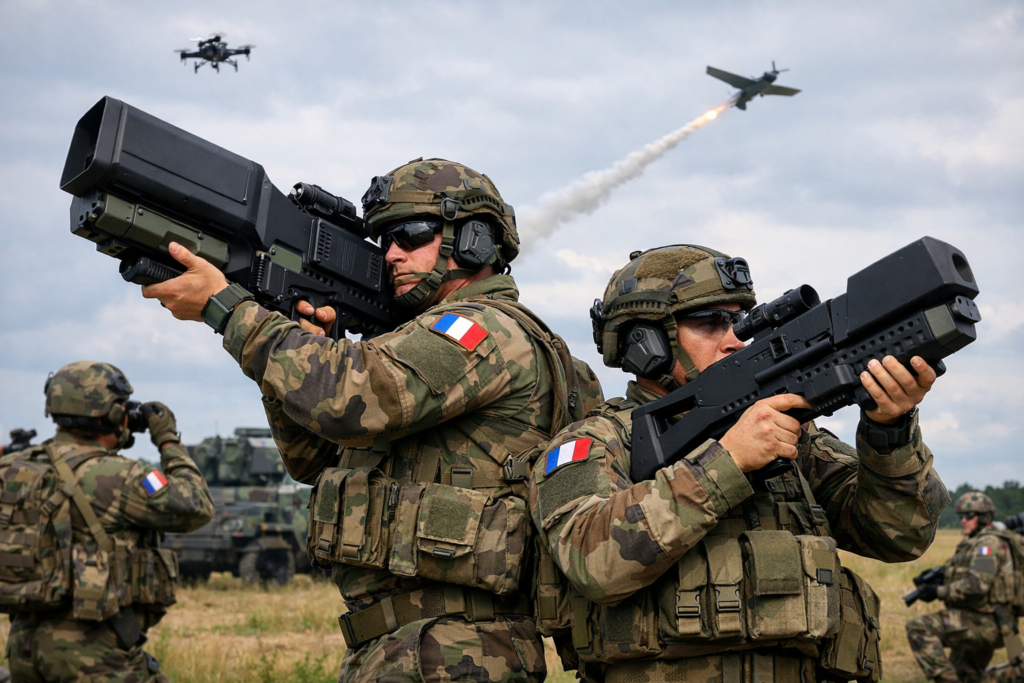
European countries unite on low cost air defense after drone warfare reshapes modern conflict
Five of Europe’s largest military powers have launched a joint initiative to rapidly develop more affordable air defense systems. The move follows hard lessons from the war in Ukraine, where the widespread use of drones has transformed both battlefield tactics and the economics of modern warfare.
Defense ministers from the United Kingdom, France, Germany, Italy and Poland announced the cooperation on Friday. They said the initiative will strengthen collective security within NATO while deepening European defense integration.
At its core, the project focuses on building what officials describe as low cost air defense systems that can be produced quickly, at scale, and deployed efficiently against small and medium sized drone threats.
Drones have changed the cost structure of war
The conflict in Ukraine has exposed a fundamental imbalance in Western air defense strategies. In many cases, highly sophisticated and expensive missiles have been used to shoot down drones that cost only a fraction of the price.
This creates a long term economic vulnerability. Using multi million dollar interceptors against low cost drones is not sustainable in a prolonged conflict. Over time, such asymmetry can drain resources and undermine strategic endurance.
Low cost air defense is therefore not just a technological upgrade. It is a financial necessity in an era where inexpensive autonomous systems can inflict outsized damage.
Speed and scale are now decisive
Germany’s Defense Minister Boris Pistorius emphasized that the goal is to rapidly and affordably develop innovative systems, particularly for drone defense, and then produce them in large quantities as quickly as possible.
This signals a shift away from traditional, slow moving procurement cycles toward more agile and industrialized defense production models. The war in Ukraine has demonstrated that volume and adaptability can be as important as technological sophistication.
Poland’s Defense Minister Wladyslaw Kosiniak Kamysz highlighted how drone systems have revolutionized warfare in the region and already forced changes in armament strategies across Europe.
Toward a more European NATO
Beyond the technical aspects, the initiative carries political significance. European governments are under increasing pressure to assume greater responsibility for their own security.
The ministers stated that the project will contribute to a more European NATO, strengthening Europe’s ability to act within the alliance framework while reducing reliance on external suppliers.
In a period marked by geopolitical volatility, ongoing war in Ukraine and rising tensions in other regions, the push for low cost air defense reflects a broader effort to build resilience and strategic autonomy.
Industrial and economic implications
The development of low cost air defense systems could trigger significant industrial and economic effects across Europe. Potential outcomes include:
- Increased investment in European defense technology
- Expansion of domestic production capacity
- New high skill manufacturing jobs
- Stronger competitiveness against American and Asian defense contractors
Mass production of more affordable systems could also help manage defense budget pressures that have intensified since 2022. Governments are seeking ways to enhance military capabilities without triggering unsustainable spending growth.
A structural shift in air defense strategy
The rise of drones has fundamentally altered how airspace must be protected. Traditional air defense systems were designed primarily to counter fighter jets and ballistic missiles. They are not always optimized for swarms of small, low cost, fast moving aerial systems.
The European initiative on low cost air defense represents a recognition that future conflicts will likely involve asymmetric and technology driven threats. Flexibility, scalability and economic sustainability will be as important as raw firepower.
If successful, this effort could redefine not only Europe’s air defense architecture but also its defense industrial strategy for decades to come.