

Written by Frode Skar, Finance Journalist.
USA Iran war risk rises sharply in the Middle East
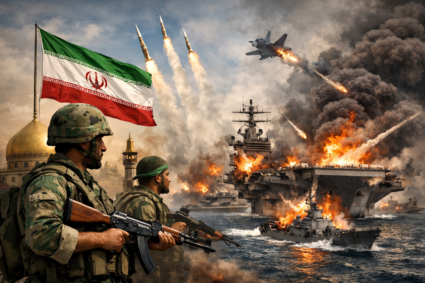
USA Iran war risk increases after major American military buildup
The USA Iran war risk has escalated significantly after Washington deployed the largest concentration of combat aircraft to the Middle East since the 2003 Iraq invasion.
President Donald Trump has stated that the United States is “ready, willing and able” to strike Iran if Tehran refuses to agree to what he calls a “fair and reasonable” nuclear deal.
The combination of military buildup and intensified rhetoric has sharply increased concerns that the USA Iran war risk is no longer theoretical.
Largest US air presence since 2003
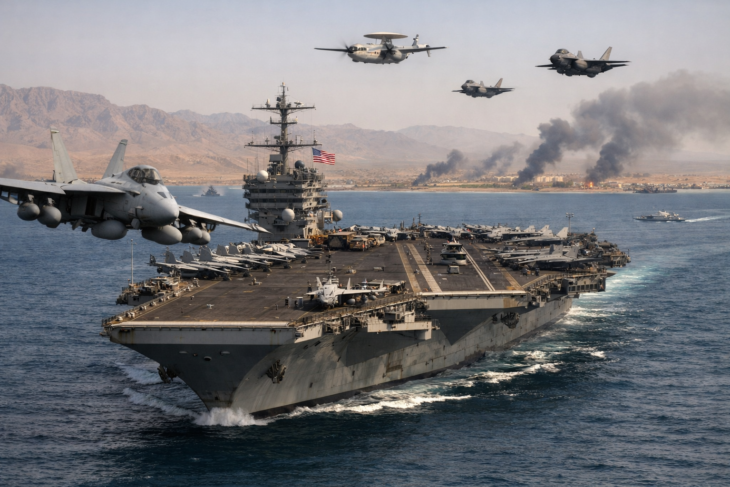
Since January, the US has deployed dozens of additional fighter jets, refueling aircraft and naval assets to the region. The aircraft carrier USS Abraham Lincoln is operating in the Arabian Sea, escorted by destroyers, while the USS Gerald R. Ford has been dispatched toward the Middle East.
According to US media reports, the scale of the deployment is the largest in the region since the Iraq War.
Such force projection, combined with direct threats, signals that the USA Iran war risk must now be taken seriously by markets and policymakers alike.
Political pressure and military signaling
President Trump has suggested that a decision could come “within about ten days,” warning that “bad things” will happen if negotiations fail.
Reports indicate that the administration is weighing options ranging from limited precision strikes to a broader air campaign targeting military and state infrastructure.
This strategic ambiguity reinforces the perception that the USA Iran war risk is rising as diplomatic channels narrow.
Iran’s potential response
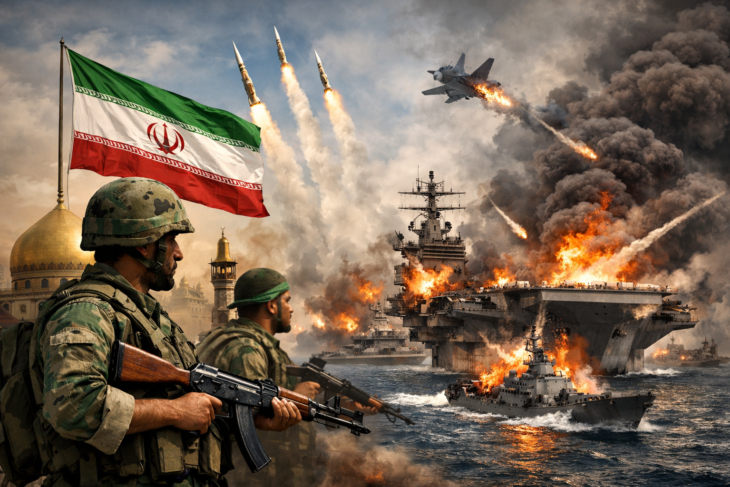
Iran has warned it would respond immediately and forcefully to any US attack.
The country possesses medium-range missile capabilities that can reach US military bases across the Middle East. American forces are stationed in:
- Bahrain
- Kuwait
- Qatar
- United Arab Emirates
- Jordan
These installations could become targets in the event of escalation.
Economic consequences could be severe
An armed confrontation would have immediate global economic repercussions.
The Strait of Hormuz, through which a significant portion of the world’s oil supply flows, could be directly affected. Even limited disruptions could trigger:
- A surge in oil and gas prices
- Renewed inflation pressures
- Sharp declines in global equity markets
- Increased geopolitical risk premiums
For Europe and Asia, energy security concerns would intensify rapidly.
A pressured but resilient regime
Iran’s government is politically and economically strained, facing sanctions and international isolation. However, the country has spent decades building resilience under external pressure.
Analysts suggest Tehran is attempting to keep diplomatic avenues open while simultaneously strengthening defensive capabilities.
This dual-track approach reflects awareness of the growing USA Iran war risk while seeking to avoid full-scale confrontation.
High risk, but not inevitable war
Several experts warn that the current environment increases the probability of miscalculation.
At the same time, neither Washington nor Tehran appears eager for a prolonged regional war. Domestic political considerations, economic stability and global market reactions all act as constraints.
Nevertheless, with unprecedented military deployments and escalating rhetoric, the USA Iran war risk is clearly higher than it has been in recent years.
The coming weeks may determine whether diplomacy prevails — or whether the Middle East faces another major conflict.