

Written by Frode Skar, Finance Journalist.
Iran warns of immediate response to potential US attack
Iran warns of immediate response to potential US attack after Trump military threat
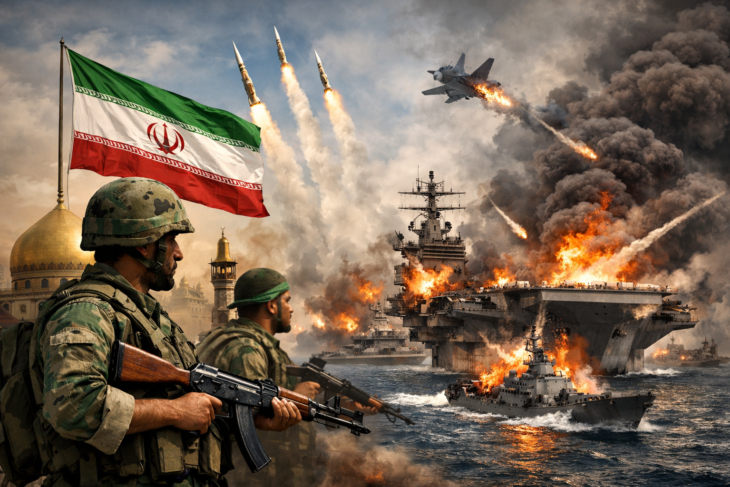
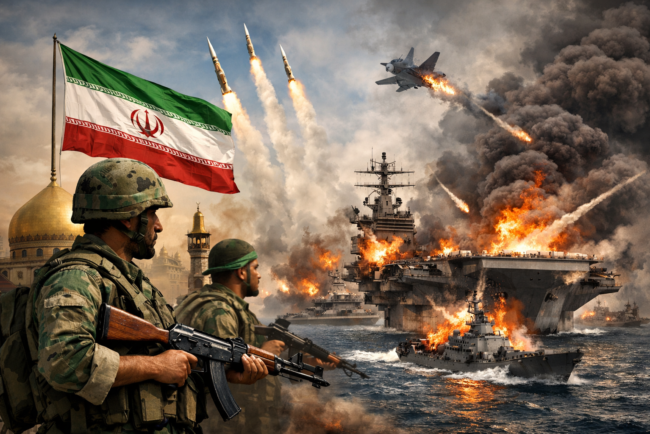
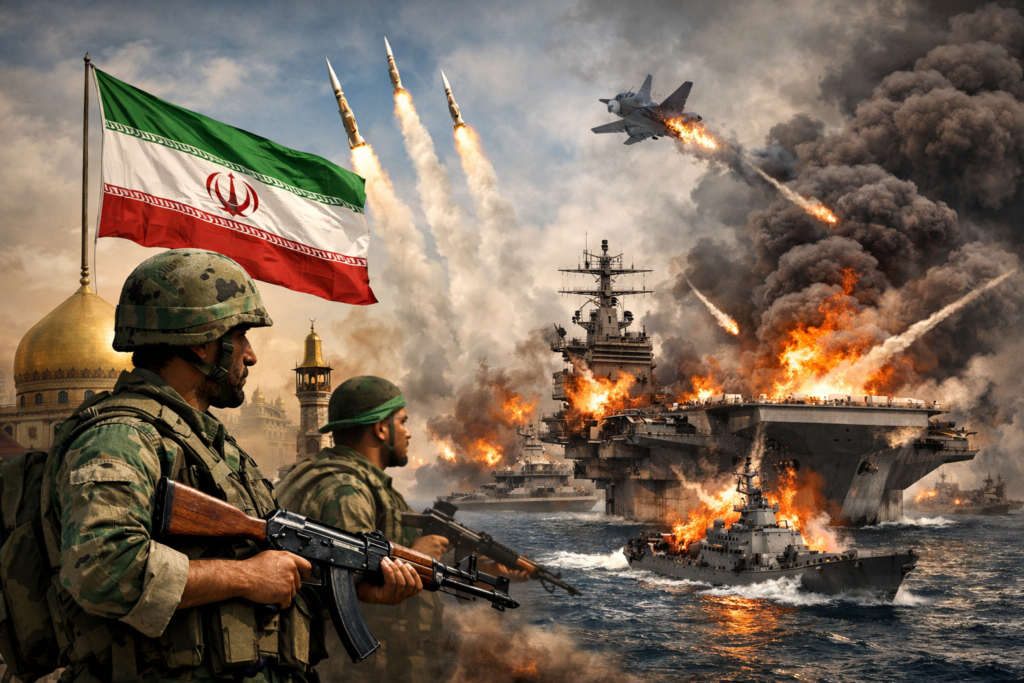
President Donald Trump has escalated tensions with Iran, warning that the United States is “ready, willing and able” to use military force if Tehran refuses to agree to what he calls a fair and reasonable nuclear deal. Iran has responded by pledging an immediate and crushing retaliation should Washington follow through.
The exchange of threats is unfolding in a region where the United States maintains extensive military infrastructure, including bases, troops and naval forces. Any escalation would therefore carry consequences far beyond bilateral relations, potentially affecting global energy markets and financial stability.
Trump’s ultimatum and rising pressure
In late January, Trump stated that a massive armada was moving toward the region. He emphasized that time is running out for Iran to reach a nuclear agreement acceptable to Washington.
Iranian officials rejected the pressure and made clear that a US strike would not be met with a symbolic or limited response. According to Tehran, American assets across the Middle East are within range of Iranian missile systems.
The message is intended as deterrence. Yet it also raises the stakes in an already fragile geopolitical environment.
Extensive US military footprint in the Middle East
If hostilities were to break out, the United States would not be operating from a distance. It maintains a wide network of strategic installations across the region.
Bahrain
The US Navy’s Fifth Fleet is based in Bahrain, with around 10,000 military and civilian personnel connected to its facilities. The ports are capable of hosting aircraft carriers and other large naval vessels.
Iraq
Approximately 2,000 US troops remain in northern Iraq, primarily tied to operations against extremist groups. Although some bases have been closed, the remaining presence represents significant strategic capability.
Kuwait
Camp Arifjan hosts around 10,000 US personnel and serves as a forward headquarters for American army forces in the region. The Ali al-Salem Air Base functions as a major logistical and operational hub.
Qatar
Al-Udeid Air Base houses roughly 10,000 US troops and civilians and acts as the forward headquarters of US Central Command. It supports combat aircraft, surveillance planes and refueling operations.
United Arab Emirates
Al Dhafra Air Base near Abu Dhabi hosts American fighter jets, drones and regional air warfare command structures.
Saudi Arabia
The Pentagon maintains several facilities in Saudi Arabia, including missile defense installations, with approximately 2,700 personnel stationed in the country.
Jordan
Nearly 3,000 US troops are stationed in Jordan, where air bases play a key role in intelligence gathering and regional defense operations.
Israel
The United States operates radar installations and maintains military infrastructure in Israel, along with prepositioned equipment stockpiles.
This network forms a dense military architecture that would likely be targeted in any large-scale confrontation.
Naval forces positioned near Iran
The aircraft carrier USS Abraham Lincoln, carrying nearly 5,700 crew members and approximately 90 combat aircraft, has been operating near the coast of Oman. Several destroyers are deployed alongside it.
Another carrier, the USS Gerald R. Ford, is reportedly en route to the broader region.
Iranian officials have warned that US bases and naval vessels would be legitimate targets in the event of a strike. Aircraft carriers, while powerful, are also highly visible and strategically sensitive assets.
Not a limited retaliation
Iranian military representatives have indicated that a response would not resemble previous limited exchanges. Instead, they suggest a broader and more coordinated retaliation targeting multiple US installations simultaneously.
Such a scenario would risk drawing in regional actors and potentially escalating into a wider conflict.
Economic and market implications
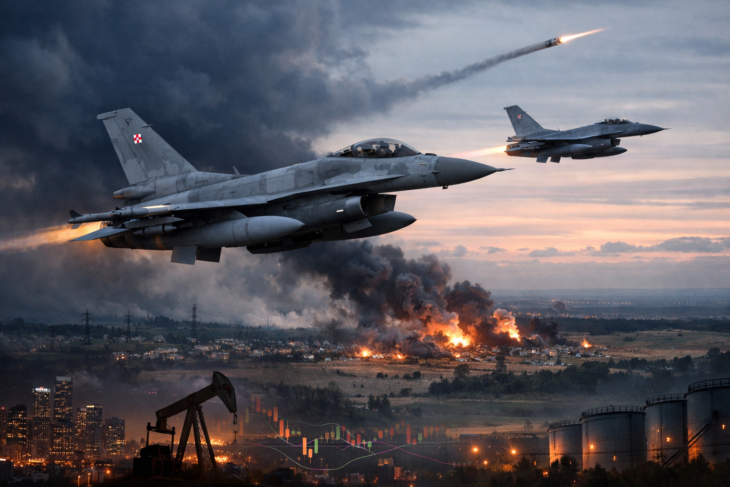
Beyond the military dimension, the economic stakes are considerable. The Strait of Hormuz, located near Iran, remains one of the most critical chokepoints for global oil shipments.
An escalation could:
Increase global oil prices sharply
Add renewed inflationary pressure
Trigger volatility in equity markets
Strengthen the US dollar and defense-related stocks
Reduce risk appetite in emerging markets
For Europe and Asia, energy security concerns would quickly resurface if shipping routes were disrupted.
A geopolitical test in a fragile global order
The confrontation unfolds at a time when global tensions are already elevated. Additional instability in the Middle East would test alliances, diplomatic channels and financial resilience.
For now, the rhetoric may serve as leverage in negotiations. But both sides have signaled red lines that leave limited room for miscalculation.
Iran’s position is clear: any attack will be met with immediate retaliation.