Written by Frode Skar, Finance Journalist.
Marco Rubio Europe must survive and rebuild the economic foundation of the West
Marco Rubio Europe must survive as an industrial and political power
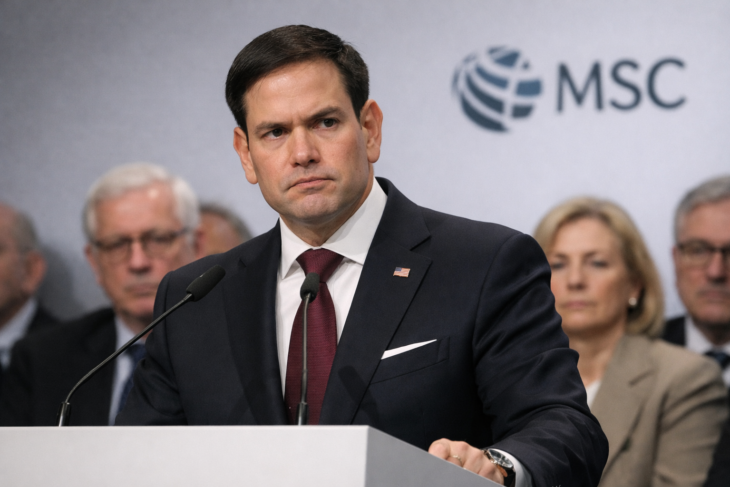
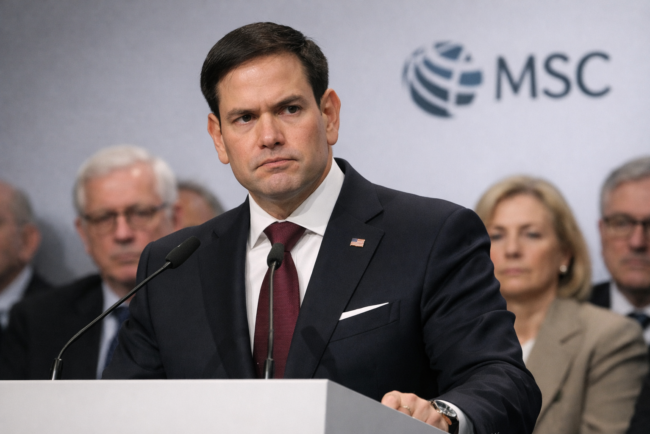
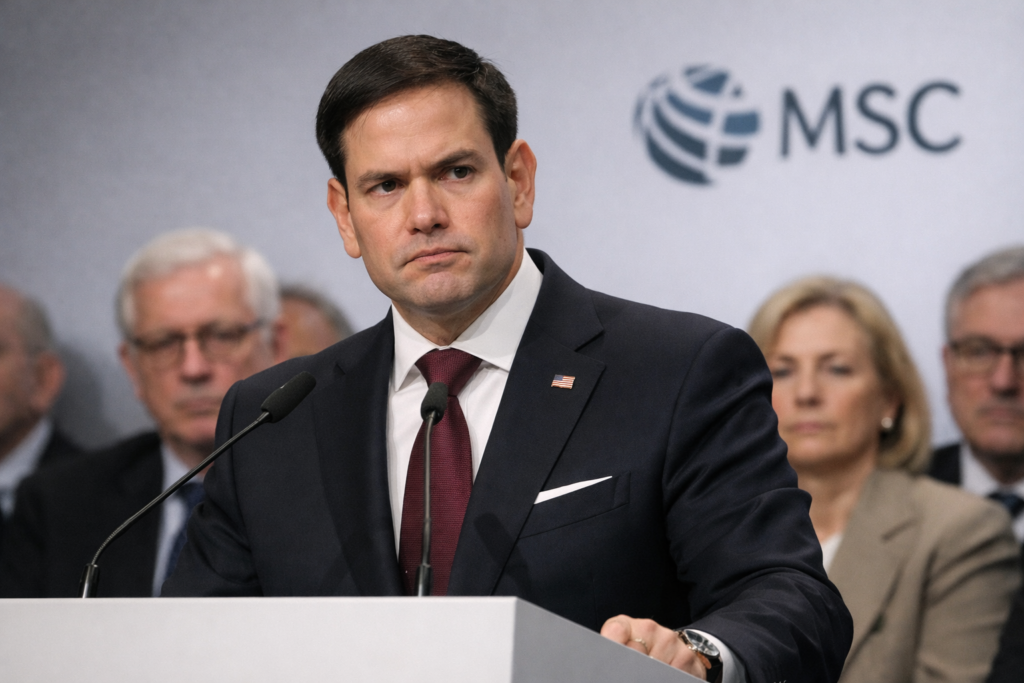
US Secretary of State Marco Rubio used his speech in Munich to frame a message that went far beyond traditional security policy. Marco Rubio Europe must survive was not merely a diplomatic slogan. It was a call for Europe to restore industrial strength, economic sovereignty and political will in order to remain relevant in a new century defined by geopolitical competition and technological acceleration.
Rubio described the transatlantic bond as cultural and historical, arguing that the fate of Europe will never be irrelevant to the United States. The two world wars of the last century, he said, remain a permanent reminder that instability in Europe eventually becomes a strategic problem for America. The argument was clear: security and economic resilience are inseparable.
In Rubio’s framing, survival does not mean preserving existing systems unchanged. It means reforming institutions, rebuilding production capacity and reasserting national sovereignty within a revitalized Western alliance.
What are we defending
Early in the speech, Rubio posed a foundational question. National security is not only about defense budgets and troop deployments. The deeper question is what exactly is being defended. Armies, he argued, do not fight for abstractions. They fight for a people, a nation and a way of life.
He linked this to a civilizational narrative, celebrating Europe as the birthplace of the rule of law, the scientific revolution, universities, artistic genius and political liberty. This was not nostalgia for its own sake. The historical reference served a strategic purpose. Pride in shared heritage, he suggested, must translate into confidence about shaping the economic and political future.
In that context, Marco Rubio Europe must survive becomes a statement about identity and policy. Survival requires economic control, political autonomy and the willingness to act.
Deindustrialization as a policy choice
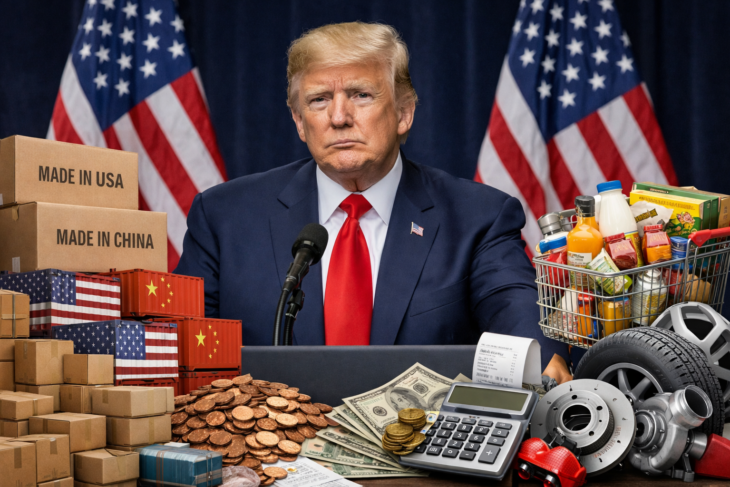
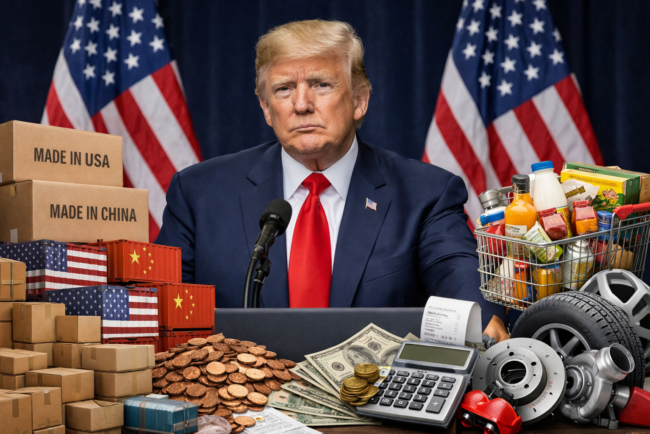
One of the most economically concrete elements of the speech was Rubio’s critique of deindustrialization. He described it as a conscious policy decision spanning decades, one that stripped Western nations of productive capacity, wealth and independence.
Loss of supply chain sovereignty, he argued, was not the natural outcome of healthy global trade. It was a voluntary transformation that left nations dependent on external actors for critical needs. From a financial perspective, this is a critique of capital allocation and strategic risk management.
When production shifts abroad and supply chains concentrate in geopolitical rivals, vulnerability increases. Crises become more expensive, inflationary shocks intensify and national security costs rise. Rubio framed reindustrialization as both an economic necessity and a security imperative.
Marco Rubio Europe must survive therefore includes rebuilding manufacturing, restoring industrial depth and securing access to critical inputs.
Competing in the industries that define the century
Rubio emphasized that a renewed alliance must look beyond reclaiming past industries. The focus must also be on advancing into emerging sectors that will define the twenty first century. He referenced commercial space travel, advanced artificial intelligence, industrial automation, flexible manufacturing and Western controlled supply chains for critical minerals.
These references reflect a strategic industrial vision. Control over advanced technologies, data infrastructure and resource access will determine geopolitical leverage. For Europe and the United States, coordination in these areas would reduce dependency on rival powers and strengthen their position in global markets.
He also pointed to competition in the economies of the global south, highlighting the need for Western countries to compete for market share and influence. In macroeconomic terms, this suggests more active industrial policy, deeper capital investment in strategic sectors and tighter alignment between security and trade strategy.
Borders and sovereignty
Rubio argued that regaining control of national borders is a fundamental act of sovereignty. He rejected the notion that border control is rooted in xenophobia, presenting it instead as a core responsibility of any state.
He described mass migration as a destabilizing force across Western societies and linked border management directly to societal cohesion and long term survival. Economically, this connects labor markets, fiscal policy and public services to national security considerations.
Marco Rubio Europe must survive, in this framework, includes regaining confidence in border policy and aligning immigration systems with economic and social capacity.
Reforming institutions rather than abandoning them
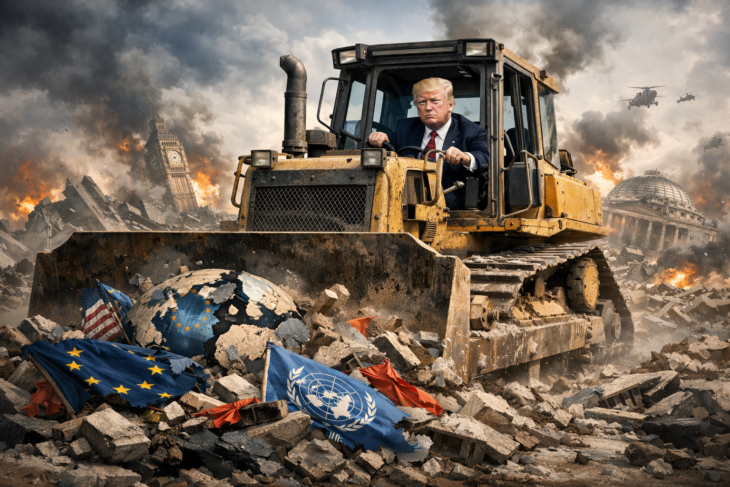
Rubio did not call for dismantling the international system built after the Second World War. Instead, he called for reform. He cited the United Nations as an institution with significant potential but limited practical impact in resolving major conflicts such as Gaza and Ukraine.
He argued that in a perfect world, diplomacy and resolutions would be sufficient. But in reality, he said, American leadership was required to address urgent security threats. The implication is a more transactional approach to international law and multilateralism. Institutions must deliver results or be restructured.
For Europe, which has long emphasized rules based order, this presents a strategic dilemma. Cooperation remains possible, but it must align with tangible outcomes and national interests.
Rejecting managed decline
Rubio rejected the idea that the United States should act as a polite caretaker of Western decline. Instead, he called for revitalizing old friendships and renewing what he described as the greatest civilization in human history.
He warned against paralysis driven by fear. Fear of climate change, fear of war, fear of technology. In his view, an effective alliance must boldly move into the future, aiming to leave nations stronger, prouder and wealthier for the next generation.
This rhetoric signals a policy orientation toward growth, defense capability, industrial expansion and assertive geopolitical positioning. For markets, that may imply higher defense spending, increased public investment in strategic industries and a more confrontational trade environment.
A conditional but renewed alliance
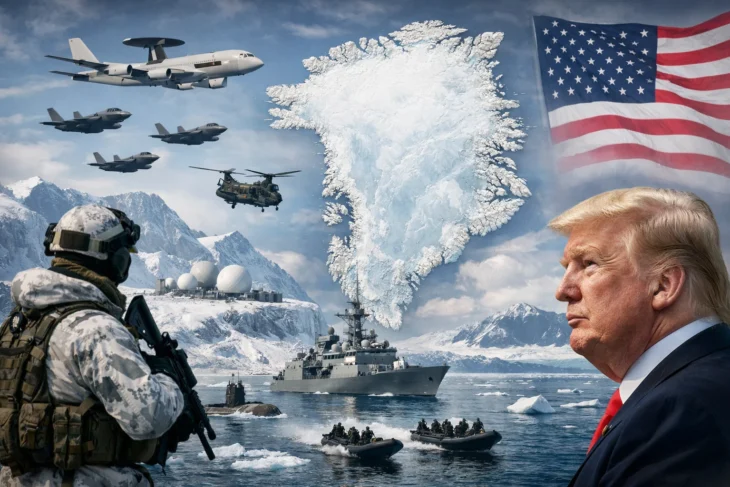
Rubio’s speech attempted to balance reassurance with pressure. The United States wants Europe as a strong ally, but strength is now defined in terms of self defense capability, industrial capacity and sovereign decision making.
Marco Rubio Europe must survive is therefore both an invitation and a warning. The transatlantic alliance remains central, but it will operate under new expectations. Europe must invest more, reform more and act with greater strategic clarity.
By closing with a reminder of shared history and intertwined destinies, Rubio sought to anchor this new direction in continuity rather than rupture. Yet the message was unmistakable. The past century’s structures are not sufficient for the next. Survival will depend on renewal.