Written by Frode Skar, Finance Journalist.
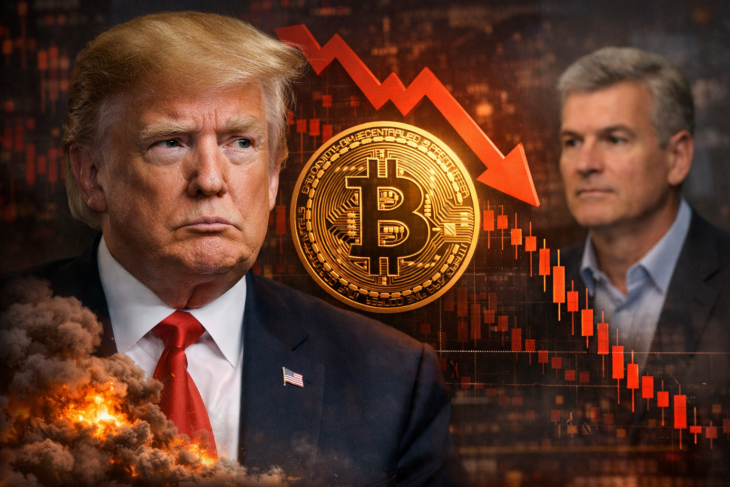
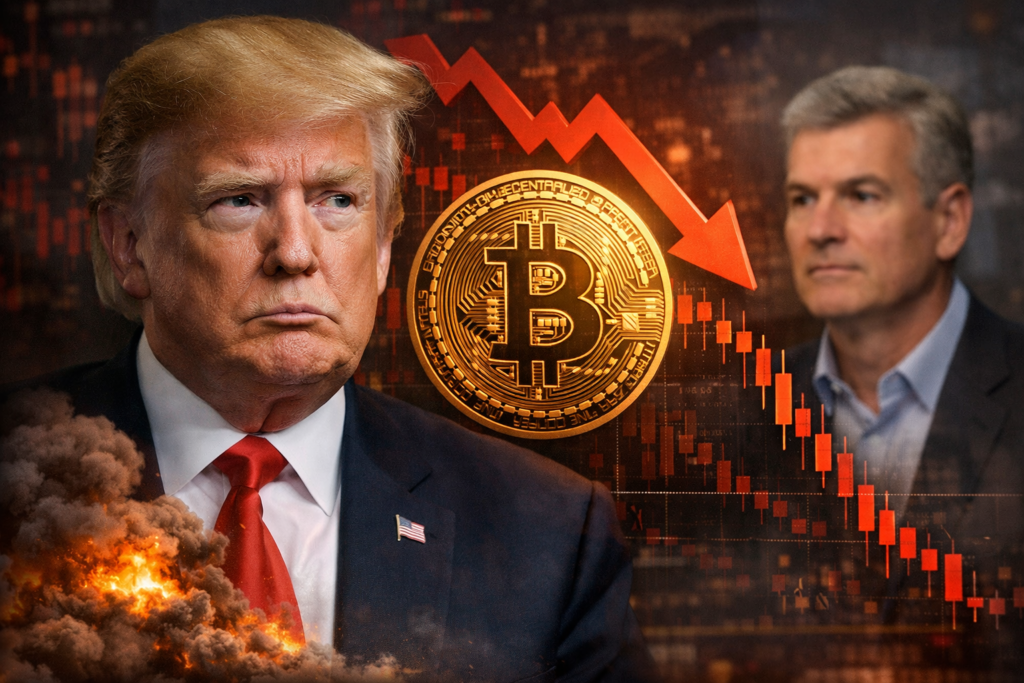
Mark Yusko says Trump could trigger another bitcoin shock in 2026
Markets price politics through liquidity and liquidity through price
Bitcoin enters 2026 with a widening gap between narrative and mechanics. Headlines focus on politics, regulation and personalities. Price action increasingly reflects liquidity conditions, derivatives positioning and the rules that shape market access. In a widely circulated conversation featuring investor Mark Yusko, the core claim is not that one leader can directly control bitcoin, but that political decisions can change the environment in ways that make another shock more likely.
Yusko’s framing is built around incentives and power. Pro crypto messaging can coexist with policy that favours control, centralisation and the preservation of dollar dominance. For bitcoin, the practical impact shows up through liquidity, risk appetite and the plumbing of the market. In that context, the question is not whether the market likes a president. The question is whether policy choices increase or reduce the probability of forced selling, volatility spikes and abrupt shifts in positioning.
Volatility as a signal of thin liquidity
Yusko describes a familiar pattern. A sharp drop is followed by a period of stabilisation. Many market participants treat that pause as proof the bottom is in. Then another sharp drop arrives. The point is not that the market must repeat the same sequence, but that fragile liquidity can create deceptive calm. When bitcoin can move thousands of dollars in minutes, it raises a straightforward issue. Who is providing depth when the marginal buyer steps away.
He also connects the crypto tape to broader markets. When large stocks gap down ten to twenty percent in a single session, it is not only a crypto story. It is a risk regime story. In that environment, bitcoin tends to trade like a high beta risk asset rather than a defensive store of value. Capital that is reducing exposure to volatility does not always distinguish between speculative pockets. It often exits the highest convexity first.
A 2026 setup where consensus may already be priced in
Yusko’s approach relies on identifying what the consensus expects and then asking what happens if the opposite occurs. When everyone expects the same outcome, that outcome is often embedded in valuations. The surprise is not random. The surprise is what the market has not fully priced.
In 2026, he points to a consensus that US equities will do well, and that the largest technology names, particularly those linked to artificial intelligence, will outperform. A plausible surprise is the reverse. Traditional software names have been pressured as investors fear that new AI tools and workflows could reduce the need for subscriptions. At the same time, the biggest AI beneficiaries may already reflect optimistic assumptions in their valuations.
For bitcoin, this matters because liquidity and risk appetite are shared across markets. If equity leadership fractures, correlation can rise at the wrong time. If capital rotates away from crowded trades, the same process can weigh on crypto, especially during periods when leverage is high and spot demand is uncertain.
AI infrastructure as a hidden bottleneck and a useful analogy for crypto
Yusko highlights a theme that is not purely about crypto. In AI, the constraint is not only compute. It is memory bandwidth, storage and the movement of data. When systems scale, the bottleneck shifts. That shift can make less glamorous infrastructure assets perform better than headline names.
The analogy in bitcoin is structural. Traders often focus on stories, elections and headlines. The market can be decided by the less visible layer, derivatives positioning, liquidation risk, exchange liquidity, stablecoin rails and custody rules. When the market structure becomes the bottleneck, outcomes can diverge from the narrative.
The 311 cycle and the case for a slower bottoming process
A central element in Yusko’s framework is a cycle concept often described as three years and eleven months, tied to block production rather than the calendar. The idea is that halving dynamics change miner economics, supply flow and the incentives that shape speculative behaviour. The cycle also reflects human behaviour. Momentum attracts leverage, leverage attracts volatility, volatility eventually cleans out excess risk, and the next phase begins.
He rejects the recurring claim that the cycle is dead because institutions are present. Institutional activity can grow while volatility persists if leverage and derivatives dominate. The presence of exchange traded funds does not automatically create durable price support. It can coincide with hedged flows and market neutral strategies that do not behave like long only conviction buying.
Within this frame, a market can drift, chop, and remain fragile longer than most participants want. The bottom is not a date on a calendar. It is a condition where forced selling diminishes, liquidity returns and risk is repriced to a point where long term buyers are willing to absorb supply.
Derivatives can dominate spot in price discovery
One of Yusko’s most pointed claims is that bitcoin price discovery is increasingly shaped by futures and related derivatives rather than spot trading alone. In such a regime, paper exposure can grow far beyond immediate spot flow. That has two consequences.
First, large reported institutional interest does not necessarily translate into directional upward pressure. If an institution is long a spot linked product and short futures as a hedge, the net effect on price can be muted. Second, derivatives dominated markets can experience abrupt liquidations. When leveraged positions are forced to close, selling becomes mechanical, not discretionary. That is how violent moves emerge even in the absence of fresh negative information.
Yusko draws parallels to classic commodity markets where futures allow synthetic supply and where the behaviour of large participants can press prices down or cap rallies until a short squeeze forces a reset. Regardless of the moral judgement, the investor takeaway is operational. If derivatives dominate, watching spot flows alone is not enough to understand volatility risk.
Regulation, stablecoins and the dollar centric incentive structure
Yusko’s political argument is ultimately about incentives. If US policy makers see monetary dominance as strategic, regulation can be shaped to protect the role of the dollar. Pro crypto optics can coexist with rules that centralise control and channel activity through a narrow set of regulated intermediaries.
Stablecoins sit at the centre of this discussion because they function as liquidity rails for crypto markets. If policy favours a small set of issuers, or tightens constraints on self custody, the market can become easier to supervise and easier to restrict in moments of stress. That may reduce some risks while increasing others. It can also change the character of crypto from open bearer style ownership toward permissioned financial infrastructure.
Yusko expresses unease about a path where centralisation increases under the banner of clarity. In this view, the most important risk is not day to day volatility. The risk is a structural shift in how liquidity is allowed to move.
Why institutional dip buying may not appear when retail expects it
Another recurring pattern is the absence of aggressive dip buying in heavy drawdowns. Yusko argues that this is not mysterious. Many large players are rules based, hedged, or cautious about stepping in before leverage is flushed out. If liquidations are still rolling through the system, buying too early can be punished.
When leverage unwinds, a market can fall far below what long term holders consider fair in the short run. The bottom typically forms when forced sellers exhaust, volatility compresses and liquidity providers regain confidence. Until then, the market can remain vulnerable to another cascade.
Positioning for 2026 with structure in mind
Yusko’s broader message is that bitcoin remains a human market, but it is becoming more mechanised through derivatives and institutional infrastructure. That combination can preserve cycles while changing their expression. It can also amplify the distance between what investors believe should happen and what market structure allows to happen.
The risk for 2026 is not a single political headline. The risk is a policy and liquidity environment that encourages centralisation, reduces the resilience of the market’s rails and increases the probability of forced selling events. In that environment, volatility can reappear quickly, even after periods of calm.
Conclusion: politics matters because it shapes liquidity and rules
The claim that Trump could crash bitcoin again should be read as a market structure argument, not a personality argument. Political choices can shape regulation, custody, stablecoin rails and investor behaviour. Those variables influence liquidity. Liquidity defines the boundaries of price moves.
If 2026 remains a year of uncertainty across equities, rates and global capital flows, bitcoin is likely to remain sensitive to risk sentiment. If regulation channels the market toward tighter control and more derivatives dominated activity, the probability of sharp dislocations rises. The practical conclusion is simple. Bitcoin risk is not only price. It is structure, liquidity and policy.