Written by Frode Skar, Finance Journalist.
Disney Names Parks Chief Josh D’Amaro as CEO in Pivotal Leadership Shift
A long awaited succession is finalized
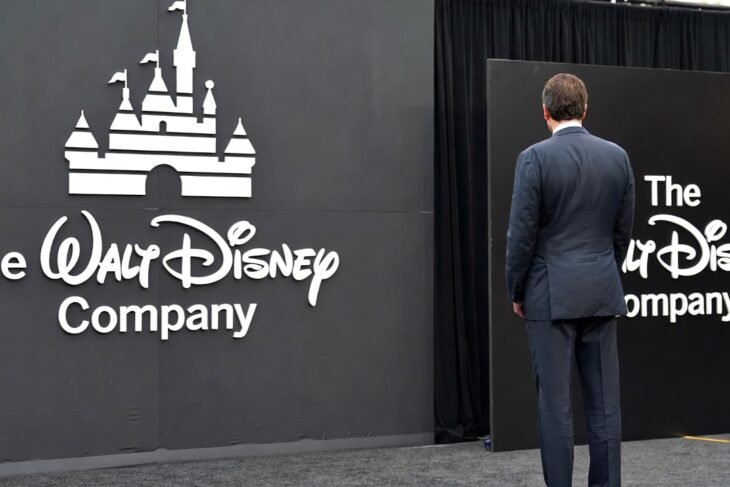
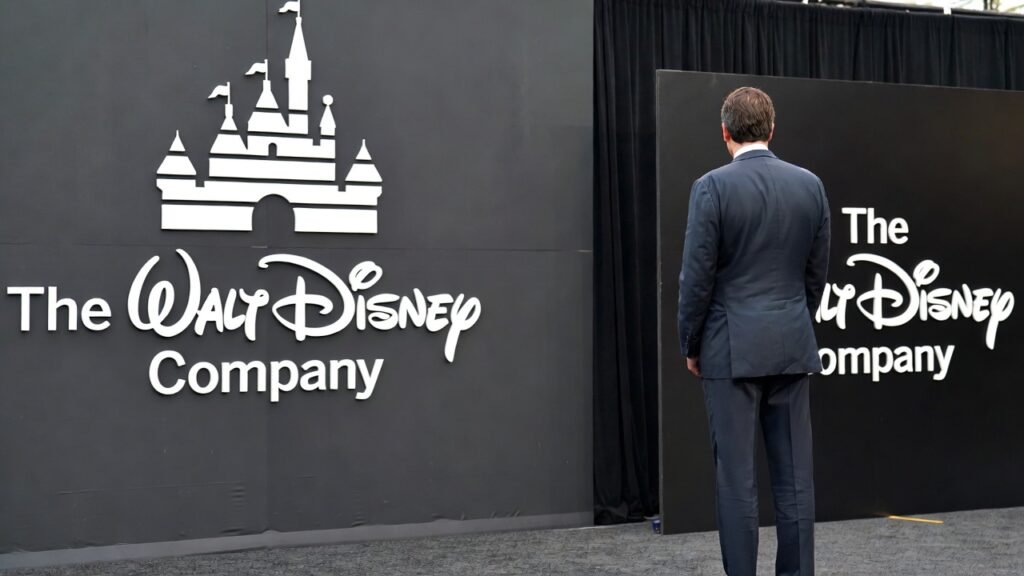
The Walt Disney Company has confirmed that Josh D’Amaro will succeed Bob Iger as chief executive, ending years of speculation around the leadership of one of the world’s most influential entertainment groups. D’Amaro will formally take over on March 18, while Iger remains as a senior adviser and board member until the end of his contract later this year.
The announcement closes a sensitive chapter for Disney. The company’s last succession attempt, when Bob Chapek replaced Iger in 2020, collapsed into internal conflict and strategic confusion, ultimately forcing Iger’s return in 2022. This time, the transition has been carefully managed, with the board signaling stability, continuity, and a clear strategic direction.
Why parks matter more than ever to Disney
D’Amaro’s elevation is a strong endorsement of Disney’s parks and experiences division, which has become the company’s most reliable source of cash flow and profitability. While film studios and streaming platforms face volatile demand, rising costs, and intense competition, Disney’s theme parks and cruise business has delivered consistent growth and pricing power.
Under D’Amaro’s leadership since 2020, Disney Experiences has expanded margins, driven higher per guest spending, and justified massive capital investments. The company is currently committing tens of billions of dollars to park expansions, new attractions, and additional cruise ships, reflecting management’s belief that physical experiences deepen customer loyalty and strengthen the Disney brand across all platforms.
In recent earnings calls, Iger repeatedly highlighted the parks division as the backbone of Disney’s financial resilience. With D’Amaro now at the helm, that emphasis becomes institutional rather than tactical.
A different profile from the last transition
D’Amaro is the second parks executive to ascend to Disney’s top job, but the comparison with Chapek largely ends there. Chapek was seen as a cost focused operator who struggled to balance creative culture with financial discipline. D’Amaro, by contrast, is widely regarded as a bridge between creativity and execution.
Iger described him as a leader with an instinctive understanding of the Disney brand and the operational rigor required to deliver large scale projects. Within the company, D’Amaro is known for high visibility, frequent park visits, and public recognition of frontline employees, reinforcing a leadership style grounded in culture and customer experience.
That cultural alignment matters. Disney’s workforce and fan base are unusually sensitive to leadership signals, and morale was damaged during the Chapek era. The board’s decision suggests a desire to restore trust internally as much as to reassure investors.
Dana Walden’s expanded creative authority
Alongside D’Amaro’s appointment, Disney announced that Dana Walden will become president and chief creative officer, a newly defined role described as a historic first for the company. Walden will oversee storytelling and creative strategy across all of Disney’s platforms, reporting directly to D’Amaro.
This restructuring creates a clearer division of responsibility. D’Amaro assumes overall corporate leadership and operational execution, while Walden consolidates creative authority across film, television, and streaming. The move appears designed to address criticism that Disney’s content strategy has become fragmented and inconsistent.
For years, creative decisions were dispersed across multiple divisions, sometimes diluting brand coherence. By centralizing creative oversight, Disney is attempting to restore a unified voice while preserving scale.
The broader strategic context
Disney’s leadership shift must be viewed against the backdrop of profound industry change. Streaming growth has slowed, subscriber churn has increased, and profitability remains elusive for many platforms. Traditional television continues to decline structurally, while theatrical releases face unpredictable box office performance.
In contrast, parks and cruises offer tangible assets, predictable demand, and inflation linked pricing power. Consumers may cancel subscriptions, but premium experiences retain emotional and social value. Disney’s strategy under D’Amaro appears to lean into this asymmetry.
The company’s recent announcement of a new theme park destination in Abu Dhabi, its first new park in fifteen years, underscores that ambition. D’Amaro’s involvement in that project alongside Iger highlighted his role as a central architect of Disney’s physical expansion.
Challenges waiting for the new CEO
Despite the strengths of the parks division, D’Amaro inherits a complex portfolio. Disney’s streaming business still faces margin pressure, rising content costs, and strategic uncertainty about bundling and pricing. The film division must rebuild confidence after a series of underperforming releases, while navigating political and cultural scrutiny across global markets.
There is also the question of capital allocation. Massive investment in parks must be balanced against the need to rationalize spending elsewhere. D’Amaro’s track record suggests comfort with long term investment cycles, but investors will expect discipline as borrowing costs remain elevated.
Managing these competing priorities will test whether D’Amaro can scale from division leader to enterprise wide chief executive.
Investor expectations and market perception
From a financial perspective, the appointment is likely to be viewed as conservative rather than disruptive. Markets typically reward predictability during leadership transitions, and Disney’s board has emphasized continuity.
Iger’s decision to step back earlier than required was framed as confidence that the next generation of leadership is ready. That message is intended to avoid the uncertainty that surrounded previous transitions.
For investors, the key question is whether Disney can translate the operational excellence of its parks into broader corporate performance. D’Amaro’s challenge will be to extend the discipline and customer centricity of experiences into content and technology driven businesses.
The end of an era, carefully managed
Bob Iger’s tenure defined modern Disney. He oversaw transformative acquisitions, global expansion, and the rise of the company as a dominant entertainment ecosystem. His return in 2022 stabilized Disney after internal turmoil, but succession remained unresolved.
This transition appears designed to avoid repeating past mistakes. By keeping Iger involved as an adviser while clearly empowering D’Amaro, Disney aims to ensure continuity without undermining authority.
What the appointment ultimately signals
D’Amaro’s promotion is not just a personnel change. It signals a belief that Disney’s future growth will be anchored in experiences that cannot be replicated digitally, supported by storytelling that reinforces the brand across platforms.
The company is effectively doubling down on what works best, while attempting to restore coherence in areas that have struggled. Whether this strategy can deliver sustainable growth across all divisions remains uncertain, but the direction is now unmistakable.
Disney enters its next chapter with a leader shaped by parks, culture, and execution rather than media disruption alone. In an industry defined by volatility, the board is betting that stability, scale, and physical experiences will matter more than ever.